by Annette Huenke and Ana Wolpin | Oct 14, 2025 | General
When Jefferson County PUD customer-owners who opted out of “communicating” smart meters were notified between September 6th and 12th that their $5 monthly opt-out fee was proposed to triple, more than 70 letters responded to a request for feedback.
Most letter writers raised objections to the proposed hike, with concerns voiced that not enough time was given for feedback — asking for a delay on the decision slated for the meeting just days later on Sept. 16. Some questioned the validity of the fees proposed based on consultant FCS’s report. Many suggested that a simple self-read option be made available as described in our Sept. 10 article, PUD to Triple Monthly Smart Meter Opt-Out Fee?
This article will examine:
- the Sept. 16 PUD meeting and decisions,
- the inflated costs attributed to opt-out customers for manual meter reads,
- the focus on opt-out customers in the larger context of the PUD’s overall outlays,
- cost recovery inequities, and
- the industry agenda to create a punitive climate to discourage opt-outs and force all electric customers into the smart grid.
Recap of the September 16th Meeting
It was announced at the outset of the Sept. 16 meeting that staff had come with an alternative resolution to the one initially proposed. The new proposal still called for the immediate implementation of every-other-month reads, done by meter readers on even-numbered months, with usage charges estimated on odd-numbered months.
However the implementation of the $15 opt-out fee increase would be postponed until July 2026. Staff continued to recommend that the low-income discount no longer apply to the opt-out fee.
Eight opt-out supporters showed up to the meeting, with an additional dozen or so appearing on the Zoom platform, some wishing to voice their opinions. Between that modest in-person showing and those on Zoom, commission chair Jeff Randall decided to reduce the time for public comments from three minutes to two, even though it was unclear how many of that total would want to speak.
Most commenters mentioned the desire to assist the PUD in lowering costs by reading their own meter, as is available with the Snohomish PUD. After the comment period closed, General Manager Joe Wilson explained the genesis of Snohomish PUD’s self-read program (at 105 min.).
The reasons given for why we will not be going down the SnoPud “take a photo of your meter” path was as follows, in GM Wilson’s words:
“[At] Jefferson PUD, we’re very stretched financially, and we’re using off-the-shelf utility software. We don’t customize it, we’re trying to be economical in our software expenses. So while I understand that it was being perceived in the community to be very straight-forward, staff at Jefferson PUD don’t see a clear path to be able to feasibly do this economically. We believe that there’d be software development charges, union negotiations because this would transfer from a particular union representing the meter readers to a different union, may transfer to a different union processing internally or we’d still have to have the meter readers sit in a terminal. So we have to be respectful to our unions where this work is potentially bridging a gap, and develop new processes to make this happen. At a high level, it doesn’t seem economic to try to do that work, and frankly, then we, following these same cost of service principles, expect the folks that are requesting the service to cover those costs. I see a very high probability that those costs would be higher than the costs of this [current proposal].”
SnoPud has roughly 18 times the customer base of JPUD, which confers a great deal more resources, many more employees and a much larger budget. Wilson pointed out that this affords them the luxury of “specialized products like this” (customized software to accept photographic reads).
Little did we know, the notion of self-reads of any sort was Dead On Arrival.
Regarding staff’s stated plan to allow two weeks for feedback and incorporation of that input into subsequent resolutions not being honored, GM Wilson offered “apologies for if I misspoke.”
Staff was tasked by the commission to bring the finalized resolution to the regular meeting on October 21st, with Commissioners Jeff Randall and Dan Toepper expressing their sustained reservations about the $15 fee.
GM Wilson recommended comments be sent to the commissioners and staff by October 15th for consideration of incorporation into the new resolution. You can write your commissioners at any time to express your concerns.
What Does a Manual Read Actually Cost?
Consultant FCS asserted that it costs the PUD $28.30 to provide on-site meter reads. Staff’s proposal to raise the current $5 charge to $15 is based on reducing those on-site reads by half to every other month.
But that $28 figure is inflated. Regional corporate utilities price their manual reads from $7.50 to $10, as we will see below.
Let’s look at FCS’s cost breakdown of the $28.30.
We’ll discuss just two of these categories here.
$16.37 Meter Reading:
When the opt-out policy was adopted in 2019, the PUD was paying meter company Landis+Gyr somewhere in the $4.50-$4.80 range for their meter readers to manually read some hundreds of our meters every month. If it is now costing in excess of $16 for a PUD meter reader to do the same, there are clearly efficiency issues that have not been addressed.
According to former GM Kevin Streett, every opt-out read requires an individual service order to be generated every month. From the discussion at the PUD’s Aug. 5 special meeting it also appears the reads are mixed in with other business in the field.
Why is there not a schedule and program designed to maximize efficiency? The same question applies to the customer service charge. Why no automated system?
$8.91 A & G Overhead:
Commissioner Randall noted at the August 5 special meeting that administrative overhead such as “the commissioners spending time discussing this topic” (an example the consultant used to justify this charge) is already built into electric customers’ base rate. The recent hike in that base rate, now set at $33.50 for residential customers, covers meeting time and all other administrative costs. And, as we will see below, it also subsidizes other non-electric services within the PUD.
Charging opt-out customers a second time for administrative overhead when we are already paying for that in our base rate is “double dipping,” Randall rightly contended. FCS arguing to charge us twice for this demonstrates an agenda that we will speak to later.
Opt-Out Customers Singled Out for Scrutiny
At the Sept. 16 meeting, co-author Annette Huenke commented on the PUD’s outsized focus on the relatively piddly cost of the opt-out program compared to the multi-million-dollar broadband project. She challenged the PUD to run the same fine-toothed comb through that service category’s figures and ask the broadband customers to cover all the costs the electric customers have borne for them for the last five years — including the time commissioners have spent at broadband meetings.
GM Wilson highlighted that comment, saying that “cost recovery in our service lines is an area of passion for me, too.” He continued, “the reason we’re not doing that well in broadband is that the community sees an opportunity to capture a lot of grant money, but I agree with you that we need to get back to cost recovery in our service lines.”
One doesn’t hear the same sense of urgency for correcting that situation, though the cost to the PUD and the customer-owners is orders of magnitude greater.
What about those “smart” meters that are currently requiring manual reads?
When the Smart Meter Objectors’ Group (SMOG) first got involved at the PUD, the utility had enlisted meter manufacturer Itron to begin replacing the malfunctioning meters within the leftover PSE inventory. Itron was also a front-runner for winning the contract for upgrading our system to smart meters.
Our digging revealed that a Radio Frequency Propagation Study (Rf Prop Study) had been requisitioned some years earlier. These studies are critical to understanding how terrain could impact frequency transmissions from distances promised by industry. Iowa and Nebraska — where the landscape is flat as far as the eye (or radio frequency) can see — is one thing; the Pacific Northwest and specifically Jefferson County is another.
We’d already heard of the tens of thousands of meters that were failing to communicate with receivers in the massive rollout in British Columbia, where the terrain is very similar to western Washington. Radio frequencies are hampered by moisture, foliage and elevation changes. Over greater distances, structures can be problematic, too.
Itron conducted its Rf Prop Study using satellite data, rather than an on-site visit, in 2014. A records request revealed that, on July 2, 2014, JPUD’s contracted representative, Byron Howells, wrote to Itron’s rep, inquiring about that matter:
Rob —
Did the Rf Prop Study Report show up today?
Itron’s rep, Rob Rickard, responds:
Prop completed but it does not look good for FN [frequency network] — I’ll call you later when I’m driving.
Half an hour later, Byron Howells replies:
No it does not look promising.
Based on what I am seeing with the MCLite, the count is about 150 more collection/repeater points than I thought we would require.
Using the study numbers we would need a CCU for every 100 Meters. In the sparsely populated South that ratio could drop below 50:1.
Any chance of a Pilot to see what the RF Prop is really like?
The rest of the discussion was off the record, in a phone call. Though this contains a lot of industry jargon, our research at the time showed that the collectors were quite expensive. This may help explain why this system that serves roughly 21,000 customers cost $5 million.
What we learn from this is that our PUD knew more than a decade ago that, at best, there would be holes in their mesh network, and a significant number of meters would have difficulty communicating with radio receivers assigned to them. Thus the meters would have to be read manually.
Why don’t we have consultant FCS run their fine-tooth comb over those manual reads and give us an estimate of what they are costing the utility each month? As reported in our Sept. 10 article, a records request from August 14th showed 310 meters “offline” at that particular moment in time, ie. not communicating with the PUD. That’s 60% of the opt-out meter customers! Surely they also require a service order to initiate the truck rolls. What happens if the meter transmission is simply not capable of reaching the collectors?
Opt-out customers are basically being told they will have to subsidize the smart meters that can’t function as designed, as well as those that do. It should be noted here that the commissioners have asked staff what the cost savings amount to from the smart meter rollout, and are told that this number is not known.
Cost Recovery Across Service Divisions is a Pipe Dream
A brief discussion ensued at the Oct. 6, 2025 budget hearing regarding the fiscal status of the PUD’s water and broadband divisions. There are roughly 5,000 water customers (versus ~21,000 electric customers) and the department runs a chronic deficit. The electric side, primarily through the base rate, is fully subsidizing the water side.
Fewer than half of county residents needed the PUD’s broadband program, as they were already being served by various carriers. The broadband division is also running a deficit. The electric side is subsidizing broadband, too.
It gets worse.
The percentage of property taxes Jefferson County allocates to the PUD (.75) amounted to $605,702 for 2025 (assessed in 2024). A full 80% of that is going to broadband; 20% goes to the water department. Exactly zero of the property taxes we pay go to offset the base rate for electric customers.
GM Wilson noted that “opt-out [meter] readers are not doing a task that benefits all electric customers.” Neither are broadband technicians and water meter readers. And technicians that attend to malfunctioning “smart” meters are not doing a task that benefits those who chose not to have a transmitting meter.
When we raise the issue of the unfairness of opt-out customer-owners having to help foot the bill for a system they don’t benefit from in addition to the one they do, commissioners nod in agreement and say “you’ve got a point.” When the commissioners raise the issue of the electric side subsidizing the other services, staff nods, makes modest excuses and goes back to work. That’s just the way it is, fellas.
The playing field cannot be leveled. So let’s stop the pretense that parity is possible, and accept the existing inequalities — across the board.
The Planned Phase-out of Analogs Continues Apace
The PUD has now halved the cost to the utility for opt-out reads by reading meters every other month. At the last several meetings, GM Wilson has made it abundantly clear that he intends to phase out the electro-mechanical (analog) meters before long. The reason drifts from there not being spare parts, or that we won’t be refurbishing “obsolete” meters (though the near-new malfunctioning digital meters are regularly refurbished), to the need for all the meters to be the same. However, at the Sept. 16 meeting, one of the commissioner questions that Wilson read aloud asked if there was a charge for installing an electro-mechanical meter. He said that was not an option, and that “the PUD has an inventory of Itron non-communicating meters that would get deployed.”
Those non-communicating meters are digital one-way transmitting meters, the same type that the PUD was using prior to the smart meter rollout. So the meters won’t all be the same after all — until they insist that we submit to having smart meters installed with the outgoing transmitter turned off.
They will still need to be read manually (just like all the smart meters around the county that don’t work properly now), but the incoming transmitter will not be turned off. What you do in your home will not be secure from surveillance, and voltage transients (dirty electricity) will be transferred throughout the home’s wiring by the meter’s power supply (SMPS).
The Industry Agenda Behind the Singular Opt-Out Scrutiny
The FCS consultant emphasized the four utilities on their comparison slide showing $25 opt-out fees (bars at right) as a way to justify their inflated $28.30 figure (far right) at Jefferson PUD.
We know that’s what many utilities typically charge, but that those $25 fees are not based on costs. It is a nationwide strategy to discourage—and eventually eliminate—opt-outs by an industry that does not want holes in its smart grid.
In our prior process, when JPUD initiated an opt-out survey of all Washington state PUDs, one utility even said it out loud — they added a written note that they’d set their punitive fee “to discourage opt-outs.” And it worked. Very few customers had opted out.
One need only look at true costs for manual meter reads identified by for-profit corporate utilities PSE (Puget Sound Electric) and PG&E (Pacific Gas & Electric) to see the game. PSE and PG&E charge initial one-time fees (see chart above), but ongoing monthly charges are modest. PSE’s monthly read fee is $7.50; PG&E’s is $10. Those costs are all-inclusive — meter reading, customer service, overhead and taxes.
At Jefferson PUD, opt-outs are the only group of customer-owners accused of not paying their fair share. The much larger subsets of water and broadband customers, both subsidized by electric customers, do not receive equivalent treatment. Inflated calculations for opt-out customers are contrived to relieve a supposed burden on the larger customer base — costs which are minuscule in the context of the utility’s spending. That is in keeping with the industry narrative to drive opt-outs from the mix.
The PUD’s announcement proposing to triple the current $5 charge had the desired effect. Quite a few customers responding to the request for feedback said they couldn’t afford the increase and would be forced to accept a smart meter instead.
Given the volume of inequities within the system, those who choose to opt-out need to stand firm that we should not be the sole targets of the PUD’s sudden fiscal scrutiny.
Keep the fee at $5/month until the other, far costlier inequalities within the system are resolved. If this doesn’t happen, we can presume that the opt-out fee is indeed punitive, intended to drive everyone into the smart grid, despite our legitimate concerns around the “smart” meter technology.
by Ana Wolpin and Annette Huenke | Sep 10, 2025 | General
Allowing only days for customer-owner feedback, Jefferson County PUD is proposing a significant hike in fees for those who opted out of smart meters.
In a letter dated September 3, 2025, the PUD just informed customers with non-transmitting electric meters of an impending cost increase — tripling their current $5 per month opt-out fee to $15 per month. Low-income customers who previously had no monthly read fee would see an even greater increase, from zero cost to $15.
The letter invites customer feedback:
“I am reaching out today regarding upcoming changes to our communicating meter opt-out policy. You are receiving this letter because you have been identified as one of our customers who has chosen to opt-out of a communicating electric meter.”
“In an effort to maintain full transparency and receive feedback from community members impacted by possible upcoming changes, I am inviting you to provide feedback to the PUD regarding proposed changes…”
“We want to partner with you. If you have any suggestions or questions, please reach out to us at customerservice@jeffpud.org with the subject line of “Opt-Out Feedback” on or before September 12th, 2025. We will take this feedback into consideration.”
We received this letter on September 6th, leaving six days for feedback. One opt-out customer contacted us today, September 10th, saying they had just gotten the letter, leaving two days to respond. Interestingly enough, at the most recent regular meeting (@139 min. mark) on September 2nd, new General Manager Joe Wilson said we would be given two weeks to provide feedback.
The PUD’s “effort to maintain full transparency and receive feedback” hadn’t materialized as a news alert about the opt-out rate in any of the PUD’s monthly newsletters. Nor can we find this proposed fee increase/invitation for feedback on the PUD’s website. The only notice regarding these proposed changes has come in a last-minute letter offering less than a week for responses.
Why this extra cost?
Scientific evidence remains clear that transmitting (“communicating”) meters affect biological systems, not just in humans, but flora and fauna as well. For those of us opting to avoid the dangers of transmitting meters by choosing either a relatively benign non-communicating digital meter or an even safer analog meter, a meter reader comes to our homes to read electrical usage every month. The $5 fee was established to cover the cost of this monthly read. It was based on what it cost the PUD in 2020 when manual reads were contracted out and the opt-out policy was adopted.
The PUD’s letter informs us that according to a 2025 consultant’s report, the actual cost of the monthly read is now $28.30. The utility’s proposal is to reduce that cost to $15 by cutting the onsite visits in half, “sending technicians to manually read the meters every other month” instead of every month. Six readings a year rather than twelve.
The authors of this article are two of the founders of SMOG — Smart Meter Objectors Group. We worked from 2017 to 2020 to prevent a smart meter rollout in Jefferson County and develop an opt-out from transmitting meters.
Through these efforts, in late 2019 a pause was put on pursuing a smart meter program and in January 2020 the existing opt-out policy was adopted. When Covid lockdowns hit, community input was decimated. The PUD’s Citizen Advisory Board (CAB) was disbanded, in-person PUD meetings ceased, and direct communications with our commissioners was compromised. In the absence of community engagement, the utility resumed its smart meter efforts, starting a rollout in 2022.
Previous articles we’ve written about SMOG’s history, about the smart meter replacement program, and about the dangers of smart meters include Smart Meters Coming to a Neighborhood Near You! and Will a Smart Meter Harm Your Health?
Simple Solutions to Meter Reading Fees Already Exist
According to a recent Public Records Request, there are 486 PUD customer-owners currently opting out of transmitting meters. For many of these customers, this proposed fee hike is significant. Going from $60/year to $180/year, that’s another $120 increase on top of the general rate hikes that began this July. And for low income residents who have not had to pay any extra fees, it will create an even greater hardship, increasing their annual utility costs by $180.
From our research, this financial hit is easily avoidable.
Simple, low-cost alternatives to PUD employees reading meters onsite are already successfully employed by other utilities. These models do not require monthly or even every other month meter reader visits.
A Washington state PUD we spoke to when we first organized SMOG, which then had mostly analog meters, had its customers read their own meters every month — they are called self-reads. A customer could either call in or send their reading to the utility by a certain date. No technician was required onsite for 11 months. Once a year they sent a meter reader to make sure the customer was providing accurate readings. That PUD has since replaced all their analogs with transmitting meters and no longer uses that system.
But an even easier method is currently in use by Snohomish PUD. They began a smart meter rollout in 2023, and expect to complete the installation of 380,000 meters by the end of 2026. They offer two meter reading choices for opt-outs.
From Snohomish PUD’s website:
• Customer can have a PUD meter reader read their meter for a monthly fee of $25, or
• Customer can submit a picture of their meter and perform a self-read each month for a monthly processing fee of $5 per meter.
Snohomish PUD has 346,094 residential customers. It is the largest of the 28 PUDs in Washington state, the second largest publicly owned utility in the Pacific Northwest and the 12th largest in the nation. We spoke with one of the staff managing the opt-out program for clarification on their photo submission process.
In lieu of a meter reader coming to a customer’s property, the customer submits a photograph once a month showing their power usage through a convenient online portal at SnoPud’s website. Customers are given a 5-day window each month to make their submissions.
Simple. Easy. Snap a photo once a month, submit it electronically.
For Jefferson County PUD customer-owners, all that is needed is for our PUD to set up an online portal and/or provide an email address where we can submit the meter photo. A five-minute or less effort for the customer twelve times a year.
On the PUD’s end, no PUD meter reader is needed. No travel is required, no fuel is consumed, there are no complicated meter access issues.
That’s one consideration. But there is also an argument to be made that the current meter-reading program is more than fair — without increasing opt-out charges.
The True Cost of Opt-Outs Versus Smart Meters
Before Jefferson County’s smart meter rollout, we argued for a self-read option like the one described above as a NO-cost solution to minimize the need for monthly meter readers. Management felt that a $5 read fee was reasonable enough to bypass that approach. And low-income customers were given a break from that extra $5 charge.
The $5 figure was based on what the PUD was already contractually paying Landis+Gyr for reading a large portion of the meters that still had Puget Sound Electric transmitters on them. The cost they charged the PUD for reading each meter, many of which were failing, was actually slightly less than $5. While they were using a mechanical interrogation method for the transmitters still functioning, a significant number had to be physically read.
Now they claim we are not bearing the true cost of our choice to opt out. “Without these necessary changes,” the letter reads, “the option to opt-out of our communicating meters is not financially sustainable.”
But what ARE opt-out customers costing the utility versus smart meter customers? Are the opt-outs an unreasonable drag on the line?
To start, the $28.30 cost for monthly meter reads estimated by the consulting firm is debatable. On August 5th a special PUD meeting was held to discuss the opt-out policy (video here). The consultant presented their report and some discussion followed the presentation.
Of that $28.30, the expense for actually reading the meter — which the PUD paid less than $5 for in 2020 — is itemized as now costing $16.37. The remaining $12 includes items such as administrative overhead.
An example of administrative overhead given by the consultant at the August 5th presentation was the cost of “the commissioners spending time discussing this topic”! But these costs are already covered in our base rate, what one commissioner rightly described as “double dipping.”
Whatever the true cost, it doesn’t begin to compensate for the increased energy rates that opt-out customers are already bearing for a $5 million rollout of smart meters we don’t use or need. And beyond this massive outlay which has driven higher rates that we are ALL paying, we are also subsidizing extra costs from failure of the smart meter technology to live up to its hype.
Issues we warned about like meters failing to “communicate” likely create more demands on staffing than 486 non-transmitting meter reads once a month. On any given day, according to our recent Public Records Request (PRR), 300 or more smart meters may need attending to because they are “experiencing connectivity issues.”
As shown in this screenshot, on August 14 there were 310 smart meters offline (see blue bar, far right). Representing “a moment-in-time yesterday,” wrote the PUD Administrative Assistant who responded to the PRR, “310, this number fluctuates continually.” Sometimes it will be lower, sometimes it will be higher.
That figure is 64% of the total number of opt-outs! How much staff time is required to respond to hundreds of smart meters with connectivity issues that are not performing as needed? No such problem plagues our steady, reliable “non-communicating” analog and digital meters.
At the September 2nd regular meeting, staff gave a PowerPoint presentation that included this verbiage on a slide:
Continuing to allow Jefferson County Customers to offset the cost of customers choosing not to have a communicating meter goes against our desire to have customers generating the cost pay for the cost.
The opt-out fee is being treated as though it’s an anomalous inequity within the system. But is it? The fee is punitive, though not intentionally on the part of the PUD. It’s a misguided attempt to level a playing field that cannot be leveled.
• It is not fair that everyone is paying the same base rate that covers the cost of that $5 million smart meter rollout, when we who opt out aren’t using it.
• It’s not fair that when a few hundred of those meters regularly fail to communicate, those truck-rolls are considered the cost of doing business… but the truck-rolls for reading analog meters is considered a privileged gift.
• It is not fair that electric customers subsidized the build-out of broadband. How many hours (administrative overhead) did the commissioners spend in meetings discussing broadband? How will electric customers be reimbursed for that, applying the formula that was used to arrive at the opt-out cost?
• There’s unfairness in the higher cost of delivering services to all those spread-out homesteads in the south county.
These disparities cannot easily be remedied. That’s what the base rate is for.
Providing Feedback on Proposed Opt-Out Rates
The September 3rd unsigned letter quoted at the beginning of this article — “I am reaching out today” — appears to have come from staff, not from the PUD commissioners or the general manager whose names are at the top of the letterhead. It outlines the proposed rate hike discussed the day before at the September 2nd general meeting.
For those inclined toward number-crunching, here is the spreadsheet provided to the Commissioners by PUD consultant, FCS, to support their findings.
It was agreed at that meeting that a resolution on these proposed rates would soon be presented to the commissioners, possibly for a vote at their Tuesday, September 16th regular meeting, which takes place from 4pm-6pm. The meeting room is at the 310 Four Corners Road office building, to the right of reception.
We have learned through calls to the commissioners that feedback to them does not have to be received by September 12th, despite that deadline being given to respond to customer service. But it is critical that commissioners hear from opt-out customer-owners both AHEAD OF and AT the upcoming meeting. They plan to vote on this resolution at that meeting.
Email and phone contacts for our three PUD commissioners are:
Jeff Randall, District 1 – jrandall@jeffpud.org / 360-316-6694
Kenneth Collins, District 2 – kcollins@jeffpud.org / 360-316-1475
Dan Toepper, District 3 – dtoepper@jeffpud.org / 360-302-0448
You can cc emails to GM Joe Wilson at jwilson@jeffpud.org
Written feedback to the commissioners should be sent by Monday, September 15th to receive considered attention. At the meeting on Tuesday public comments are limited to three minutes. You can comment in person or via Zoom. More information about the meeting and about joining Zoom can be found here.
Addendum / Friday, September 12:
A Violation of Trust
At the PUD’s September 2 general meeting, when GM Joe Wilson said that a letter to opt-out customers would be going out with a two-week window for responses, he explained that after that two-week collection period, staff would go through a process of incorporating the feedback into a proposed resolution he would bring to the commissioners:
“After a two-week period hearing feedback, staff would attempt to incorporate that feedback into a proposal and bring it back to the board as a resolution for consideration.”
No such process took place. Not only was the stated two-week response time reduced to a matter of days, NO public feedback has been incorporated as part of the proposed rate changes.
Wilson did not even wait for the truncated Sept. 12 deadline to pass before putting the resolution that had been recommended on Sept. 2 in the Sept. 16 agenda packet. This morning, a full working day before the feedback deadline, the opt-out resolution was posted as an agenda item for Tuesday night’s meeting with the “Recommended Action” that the commissioners approve it as previously presented:
8.2 Opt-Out Presentation, Resolution & Calculations
Presenter: Joe Wilson, General Manager
Recommended Action: Make a motion to approve the Opt-Out Program Resolution as presented.
The resolution (p. 69) is exactly as discussed on Sept. 2 — no consideration or inclusion of customer feedback. The accompanying materials in the packet show the same staff recommendations made at that meeting where GM Wilson assured the commissioners a proposal would be drafted after gathering customer feedback and incorporating it. His actions demonstrate an effort to advance a predetermined outcome while his words professed otherwise.
How can the public believe staff was sincere in their letter requesting input and their stated desire to “partner” with us when our feedback has been ignored?
How can our new GM — completely disregarding a process he claimed would be followed — be trusted?
by Annette Huenke | Apr 4, 2025 | General
Amidst recent reporting, here and in the Leader, on the looming collision course of the city’s increasing expenses and diminishing revenues, news leaked recently to the Port Townsend Free Press indicates that our fearless leaders are nowhere near applying the brakes on runaway spending for consultants.
Later this month, City Hall and the library will be closed for four-and-a-half hours for a compulsory DEIB training. You may be as surprised as I was to learn of the fourth character tacked onto the end of the all-too-familiar Diversity, Equity and Inclusion label. That’s “B” for Belonging. More about all that later in this article.
Our streets are in deplorable condition — embarrassing, really. Our infrastructure is crumbling. For years, piles of our money have been thrown at “affordable housing,” none of which has yet to materialize, nor looks to be in the offing. With City Hall already limiting its days open to the public to Monday through Thursday, this required “training” not only means an additional loss of public hours, it is arguably another top-down driven, unnecessary and wasteful drain of city resources.
Who? What? When? And How Much?
The DEIB training will be conducted by Tacoma/Seattle-based Potential Unleashed Consulting on Wednesday, April 23rd. This won’t be their first appearance here. The city hired them for a 90-minute workshop in December last year, to begin city employees’ “learning journey.” Here is the HR memo to staff for the April event:
23 Apr 11 AM (4h 30m) Save the Date – City Training RSVP Hello all,
We are excited to continue our learning journey with Jahmad Canley from Potential Unleashed Consulting. Jahmad will facilitate an interactive workshop designed to help us continue our goal of building teams and cultures of belonging by:
• Examining the difference and linkage between invitation, inclusion and belonging • Learning practical frameworks to help us be more intentional about creating belonging in our environments
City Hall and the library will be closed on April 23rd to allow employees to attend this workshop. This workshop is considered part of your workday, unless your absence has been approved by your supervisor.
We look forward to your participation as it will offer knowledge and tools to support both [sic] your personal growth, your professional development, and our team’s overall success.
Thank you for your continued commitment to excellence.
According to their Linkedin account, Potential Unleashed Consulting was founded in 2010 and is headquartered in Seattle. The company has 11-50 employees and 5 “associated members,” one of which is their founder, Jahmad Canley. Articles and archives on their website do not date back further than 2020. This article referencing the Chamber of Commerce also notes the founder as Tacoma-based. Their 90-minute and 4.5 hour workshops offer this boilerplate syllabus:
DEIB Foundational Workshop
We will design and facilitate training to ground all participants in a set of shared frameworks, common language, and initial skills to understand how the work of DEIB functions in society and within organizations.
Participants will:
• Unpack and reflect on how race, gender, age, and other social identities set up all people to have different degrees of power and privilege in society.
• Examine key “both/and” concepts that support authentic relationships across social and hierarchical power differentials.
• Recognize the difference between blame and responsibility, and use that as a platform for accountable relationships.
• Differentiate between racism, prejudice, discrimination, and oppression, and explore how different forms of oppression intersect.
• Examine unconscious bias and its impacts of it [sic] on our culture.
• Begin to examine how bias functions within society and within organizations.
• Understand how our social identities give us different but equally significant roles in the work of DEIB, and how we can work together, strategically, to create justice and liberation.
• Begin to develop a “journey mindset,” the understanding that becoming an organization rooted in diversity, equity, inclusion, and accessibility is a process that requires sustained commitment to a vision.
The 90-minute workshop in December 2024 cost $3,800 for the ‘training,’ $748.28 for lunch, and however much 90 minutes times 130± employees’ salaries and benefits add up to. American Rescue Plan Act (ARPA) funds were used to cover the “training” cost then. The contract for the upcoming April event lists $7,300.00 for the vendor. Lunch will be provided by the city (taxpayers).
Then we have the cost of 4.5 hours of 133 employees learning about oppression that does not exist in their workplace, instead of doing the city’s business. A rough guess at salaries, benefits and full versus part-time indicates the tab likely to be in the $20,000-$30,000 range. (I welcome anyone to sharpen their pencils on that.)
A Long and Winding Road
Diversity training in the workplace was an outgrowth of JFK’s Executive Order (EO) 10925, signed on March 6, 1961.
President John F. Kennedy issues Executive Order 10925, which creates the Committee on Equal Employment Opportunity and mandates that projects financed with federal funds “take affirmative action” to ensure that hiring and employment practices are free of racial bias.
This order required education of federal employees to ensure they were in compliance with the new regulations. However, JFK felt compelled to spell out his intentions, lest they be misunderstood:
In a White House memorandum on the same day, he called for the elimination of any program that “(a) creates a quota; (b) creates preferences for unqualified individuals; (c) creates reverse discrimination; or (d) continues even after its equal opportunity purposes have been achieved.
Civil rights leaders meet with President John F. Kennedy in the oval office of the White House after the March on Washington, D.C. 1963. Library of Congress
The pressure on Lyndon Johnson to take it a step further during the ensuing tumultuous years was successful. Passage of the Civil Rights Act in 1964 went beyond JFK’s EO focus on federal funding proscriptions, expanding non-discrimination orders to restaurants, theaters, transportation and other public accommodations.
…it authorized the government to withhold federal funds from schools that had not desegregated in compliance with the 1954 Brown decision. In all, it contained 11 sections or titles. Title VI and Title VII are most important to the evolving connection between Civil Rights enforcement and affirmative action. Title VI covers discrimination in federally assisted programs, and Title VII covers employment discrimination in all large and medium-sized private businesses. [source]
What was often referred to as the “soft power of affirmative action” gradually morphed into exactly what JFK warned about in his memorandum, with the imposition of quotas in the early ’70’s under Richard Nixon.
Thus, affirmative action evolved from a vague concept buried in an executive order, to a set of legal regulations and practices. The shift from “weak” to “strong” methods of policy enforcement, it is important to recognize, was largely the result, not of legislative action, but of decisions made in the executive branch of the federal government and in federal regulatory agencies… toward the goal of achieving a color-blind society, and as a necessary means of ensuring that Whites would not discriminate against Blacks… [source]
Six decades later...
On June 29th, 2023, the U.S. Supreme Court — siding with Students for Fair Admission — determined that, at least as far as college admissions are concerned, we seem to have come full circle to the vision for potential outcomes noted in JFK’s 1961 memorandum. Chief Justice John Roberts delivered the majority opinion of the court:
Because Harvard’s and UNC’s admissions programs lack sufficiently focused and measurable objectives warranting the use of race, unavoidably employ race in a negative manner, involve racial stereotyping, and lack meaningful end points, those admissions programs cannot be reconciled with the guarantees of the Equal Protection Clause.
At the same time, nothing prohibits universities from considering an applicant’s discussion of how race affected the applicant’s life, so long as that discussion is concretely tied to a quality of character or unique ability that the particular applicant can contribute to the university.
Many universities have for too long wrongly concluded that the touchstone of an individual’s identity is not challenges bested, skills built, or lessons learned, but the color of their skin. This Nation’s constitutional history does not tolerate that choice.
Dissecting the Details of Woke Language in the Realm of DEIB
Diversity, equity, inclusion, belonging. We’re all familiar with the classic definitions of those common words. But do they mean what we think they mean when it comes to DEI?
D — It’s doubtful that anyone who lives in Port Townsend is opposed to seeing a broader representation of women and non-white people in government, or anywhere else. Gays and lesbians have been welcome here for decades. It’s unclear exactly when the “trans” activists hitched their wagon to legacy diversity, but this broadening of the definition is not seen as legitimate or welcome by much of the wider society. Immutable characteristics appear to matter to most people. Look no further than Rachel Dolezal, who lost her career and a lot more for pretending to be black.
E — There’s a critical distinction between equity and equality. Equality provides the same opportunity, rules and standards for all. Equity guarantees the same outcomes despite qualifications, effort and time invested. In this After Skool video, Equity, the Thief of Human Potential, economist and author Thomas Sowell explains how visions of “fairness” often go sideways…
If you want one or the other [equity or equality] you can go for it, but the one thing you cannot do is pursue both simultaneously. At least you cannot successfully do that.
I — The standard definition of “inclusion” is “to be included.” That’s not enough for DEI activists. Dr. Peter Boghossian explains: “‘Inclusion’… has the common meaning of ‘all people are welcome’. But it also has the woke meaning of ‘a space that restricts speech’. How can everyone feel included if speech is allowed that causes members to feel offended, and therefore excluded? Not everyone can, or so runs the woke logic. Therefore, to be truly inclusive, speech needs to be restricted.”
Further, “inclusion” to the DEI industry includes literal “exclusion” — good old-fashioned segregation — where whites have been denied participation and opportunities due to their skin color. Reverse discrimination is still discrimination. B — Belonging is a feeling. It cannot be measured. In the typical (of woke discourse) circular argument, belonging means one feels included. As I cast about the web for the logic of adding a synonym, of all things, to the alpha-string “DEI,” I came upon this:
Author Liz Fosslien differentiates the terms by describing diversity as “having a seat at the table,” inclusion as “having a voice at the table”, and belonging as “having that voice being heard.”
A nano-second ago, “having a voice at the table” meant that your voice would be heard.
The DEI Dilemma
According to the New York Times on March 13, 2025, “So far this year the number of companies in the S&P 500 that used the phrase “diversity, equity and inclusion” in annual reports has fallen by nearly 60 percent from 2024…” The DEI industry was recently estimated to be in the $8 billion range. Potential Unleashed’s two highest-profile clients, Microsoft and Amazon, are following the trend and backing away from their former commitments. In July, 2024, Microsoft cut the DEI cord:
In a surprising yet increasingly common move, Microsoft has quietly dismantled its team dedicated to diversity, equity, and inclusion (DEI). The decision, communicated via email to the affected employees on July 1, [2024] cited “changing business needs” as the reason for the layoffs.
On February 7, 2025, “Amazon’s annual report filed with the Securities and Exchange Commission for 2024 omitted a section included in the company’s prior annual report, which indicated Amazon has a focus on “inclusion and diversity” in hiring…”
The writing was on the wall before the 2024 election. This article from just a few weeks ago documents the pruning or shedding of DEI by 68 organizations with over 1,000 employees since 2023. In her book of that same year, The Adversity of Diversity, co-authored with Mike Towle, award-winning political scientist Dr. Carol Swain drops the responsibility squarely in proponents of the ideology’s lap: “… companies and corporations cutting their DEI programs are doing it because they know those programs and trainings are useless. All they really accomplish is to keep conflict going because that’s exactly what their job is…”
She continues “If heterosexuals and homosexuals, and Whites and Blacks and Hispanics, get along, there’s no need for a diversity officer…” 2023 looks to have been a watershed year for nudges away from the trend. Undoubtedly, the costly blunder by Anheuser-Busch of having wannabe-woman Dylan Mulvaney promote Bud Lite beer was a cultural turning point. Shortly afterward, the Biden administration’s macabre “Pride” celebration, which devolved into something that disgusted many Americans, compounded the insult by an order of magnitude.
…Rose Montoya (biological man living as a woman), who was one of the many people invited by the Biden administration, was recorded pulling down his dress and exposing himself while standing alongside two biological females living as men who were doing the same to show off their removed breasts.
Rose Montoya on the White House lawn, June 2023
The pendulum had swung too far. These misguided efforts at psychological manipulation have not gone down well with the vast majority of voters, many of whom turned out last November to say they’ve had enough of woke. The ascendancy of the aggrievement cult looks to be over.
A Cure in Search of a Disease
In the early 2000’s, my partner and I hired an African-American man to join our employees at the gallery we owned on Water Street. He also worked for April Fool and Penny, Too, and was universally loved by his co-workers and the community. He and I often spoke about racism, a matter I’d taken seriously from an early age. He never felt unwelcome in Port Townsend, he reported. He was just another one of ‘us.’ The city was so lily white, it was refreshing to see a brown face.
Our gallery represented Native American and Canadian artists who were more likely to be honored than looked down upon. Has something drastically changed in twenty years? Has a tide of bigotry and intolerance swept through and infected City Hall? Is there a cadre of city employees who staunchly refuse to use preferred pronouns? Unlikely. Dissatisfaction with the representation of women and people of color throughout the upper tiers of all of society was not new in the first decades of the 21st century.
The halls of congress itself have been a glaring example of the lack of diversity in our nation. The 2020 murder of George Floyd in Minneapolis set a ready torch to simmering frustrations coast to coast. The Black Lives Matter activist movement spawned by the 2013 acquittal of Trayvon Martin’s killer, George Zimmerman, had found its new raison d’être (and millions in shadowy funding). That summer of lockdowns, “social distancing,” and limits on gathering sizes for the majority of U.S. citizens saw dozens of city centers burned and looted by scores of rioters using Floyd’s murder as an excuse to incinerate — in many cases — their own communities.
While legacy media, and the Biden administration, largely defended these violent crowds as “mostly peaceful,” damage to hundreds of cities was estimated to be well over a billion dollars. Meanwhile congress, police and college officials were “taking the knee” to demonstrate their virtue, or fealty, to the perpetrators. Thus they were emboldened to press for more concessions.
Many of those cities have not recovered. Most of the vandals were not prosecuted. Very soon, the country saw cities allowing looters to gang-rob downtown stores, promising no prosecution if the valuables stolen amounted to less than $1,000. Those claiming victimhood who victimize are shown limited sympathy by the law-abiding. These felonious episodes contributed to the public perception that the fruit of Critical Race Theory (CRT) and DEI — woke, in other words — had begun to rot.
Port Townsend saw its own BLM actions in 2020, with a willing and apparently guilt-ridden “progressive” white populace in full support. The BLM organizers went looking for their racists, but struggled in vain to find them in this community.
Likewise, a hate-filled mob with a number of violent members was summoned by local gender activists to a “Let Women Speak” rally at the Pope Marine park in August of 2022 (see here, here, here, here, here, here and here).
Alas, despite the dishonest label applied by the city administration and legacy media, it wasn’t an “anti-trans protest.” It was a small group of females and their supporters standing up for the free speech and privacy rights of women and girls.
Where are the Metrics?
For many years, analysts have been attempting to qualify and quantify the benefits and risks of diversity training (DT). Does it actually further “justice and liberation,” an expressed goal of Potential Unleashed founder, Jahmad Canley? Last November, evolutionary biologist Colin Wright penned an article for Reality’s Last Stand titled “Why was this groundbreaking study on DEI silenced?” His question was directed at the New York Times and Bloomberg, two legacy media outlets who are generally known for toeing the establishment line. The research paper, Instructing Animosity: How DEI Pedagogy Produces the Hostile Attribution Bias, was published Nov. 13, 2024. Colin Wright distills it here:
Through carefully controlled experiments, the researchers demonstrated that exposure to anti-oppressive (i.e., anti-racist) rhetoric—common in many DEI initiatives—consistently amplified perceptions of bias where none existed. Participants were more likely to see prejudice in neutral scenarios and to support punitive actions against imagined offenders. These effects were not marginal; hostility and punitive tendencies increased by double-digit percentages across multiple measures. Perhaps most troubling, the study revealed a chilling convergence with authoritarian attitudes, suggesting that such training is fostering not empathy, but coercion and control.
The counter-narrative issues raised by this study were apparently too hot for the big papers’ presses to handle. Their refusal to cover this news is not an aberration. It’s how we got here. Another lengthy meta-analysis of available literature was published in the journal Annual Review of Psychology in 2022. The authors report:
In examining hundreds of articles on the topic, we discovered that the literature is amorphous and complex and does not allow us to reach decisive conclusions regarding best practices in diversity training. We note that scholars of diversity training, when testing the efficacy of their approaches, too often use proxy measures for success that are far removed from the types of consequential outcomes that reflect the purported goals of such trainings.
Taken as a whole, our review of the literature on DT reveals that, in light of the overarching goals of DT in these settings, the evidence regarding the efficacy of DT is for the most part wanting.
More importantly, perhaps, their review of the literature revealed a dearth of evidence that DT was solving an existing problem:
…measurements of systemic bias—such as minority representation, prevalence of workplace discrimination, and the promotion rates of historically marginalized employees—were largely absent.
As with the city’s training, the public is right to ask — why are we doing this now? Unless bias and bigotry are a frequently documented problem among city employees, taxpayers should not be funding this “journey.”
Dumbing Down is a Dumb Idea, Not a Solution
Racism and sexism have been a dehumanizing scourge around the planet for just about as long as we’ve been upright. These injustices won’t be remedied by more of the same, simply by trading places, censoring majority views, or shoving DEI struggle sessions down peoples’ throats. Counter-discrimination is backfiring badly, ultimately harming the very people it’s intended to help. Lowering academic standards has been a disaster.
There is growing pressure now to do away with SATs, GPAs and now even any shared conception of Standard English. What kind of world are we creating? In what way could this utter condescension possibly render a historically oppressed people suddenly equal? — Thomas Chatterton Williams [source]
The mean grade at Harvard and Yale, and many other elite schools, is A-; grade point average (GPA), 3.8. In 1960, the national GPA was 2.4.
Source: Report on Grading at Harvard College • By Elias J. Schisgall
We’re being told that objectivity, punctuality and math are racist (ironic, given that math was apparently birthed in Mesopotamia). Amorphous “feelings” are more legitimate than facts. Guess we can forget about mass transportation like buses and airplanes; they do run on schedules, after all. Should we be thinking twice about that next surgery? “Many have become weary of DEI in medicine, as deviations from merit-based practices can put patients in harm’s way.” The list of occupations that will endanger peoples’ safety if DEI continues to rule the day is long. Contemplate them for a while. Blogger el gato malo (no capital letters is his personal gimmick) states it succinctly:
any system that is not consciously and deliberately a meritocracy will become an anti-meritocracy.
this is not up for debate. it’s just emergent fact. as soon as you put people in charge of anything for reasons other than “they are good at it” and make the desired outcome of a system anything other than “competence and achievement” you get a system that will focus on creating failure.
vitally, teaching needs to resume moving at very different levels. you cannot teach the best and brightest in a curriculum and pace that the 30th percentile can keep up with. you need to let them run hard and learn fast. it’s the core intellectual capital of america and stifling these students out of some misbegotten fantasy about “equity” is grossly unfair to them. this is why experimentation and leveling and standards based acceptances are so vital here and why DEI has so badly damaged once elite schools. you cannot run them for dimwits without sacrificing the bright lights.
Speaking of lights, there is one at the end of this tunnel — and no, it’s not a train. The North Carolina Community College System (NCCCS) is linking with City University of New York (CUNY) and willing students of North Carolina to kick off a promising program called Boost, which “stands out as an appropriate post-DEI measure that focuses on economic need rather than race…”
The model has a history of success elsewhere, demonstrating notable increases in post-grad earnings, sustained full-time enrollment and completed 4-year bachelor degrees. “Based on a program developed by City University of New York and promoted nationwide by Arnold Ventures, the NC Community Colleges Boost model is recognized as the gold standard in accelerated workforce development in higher education.” You can read more about that here.
——————————
What exactly is the problem that city administrators aim to address with costly DEIB training for all employees of the City of Port Townsend? Was it certain behavior that precipitated it? Is it simply virtue-signaling to their base? Perhaps the unquenchable social-engineering thirst of the devotees that inhabit that building during work hours?
I wonder how the employees feel about having to attend these sessions. By focusing them on a “journey mindset” to “create justice and liberation,” will the public be better served? Do P.T. residents believe DEI “training” to be a wise use of their tax dollars, considering all the rest of what needs fixing here? It’s time for the city to get back to basics — doing the peoples’ business — FIVE days a week!
by Jim Scarantino | Mar 31, 2025 | General
Port Townsend’s grandiose, extravagantly expensive vision for Evans Vista contravenes the wisdom of the Strong Towns and Smart Growth movements. The project has hit a brick wall of economic reality, which provides an opportunity to get things right.
Manufactured housing is the only practical way to create affordable housing. Pre-engineered, pre-fabricated housing offers a path forward at Evans Vista. Other communities are embracing this answer to their housing crisis. It is time Port Townsend got real and embraced a solution right in front of us.
In my article, “Evans Vista Doesn’t Pencil Out, No Affordable Housing Coming Soon,” I discussed why the city’s $111-126 million (and counting) master plan for its 14.4 acre Evans Vista property is unfeasible. It is just too expensive to build. In this article I will discuss alternatives to the city racking up another affordable housing flop.
Ignoring Low-Hanging Fruit
Before the city purchased the Evans Vista property, it had already installed sewer and water infrastructure in that area adequate to serve 100 homes. At its 12/6/2021 briefing on the project, City Public Works Director Steve King told city council that no off-site street improvements would be required. There was “good water supply — no problem with fire flow or access to water.” And a two-inch sewer line already had been extended to the area.
This briefing occurred before council approved the purchase. The primary objective driving the acquisition and subsequent development was, according to the subtitle of King’s presentation, “Supply of Affordable Housing with Land and Architecture.” Fifty affordable units (meaning affordable to households making 80% of the area median income) were foreseeable, with another 50-100 workforce housing units. In other words, most of the goals of the proposed project could be attained with the existing infrastructure.
This pragmatic goal was jettisoned a few years later after the city paid an architectural firm nearly $500,000. What started as an attempt to create much needed low-cost housing morphed into a grandiose master site plan to develop a village of multi-story apartment buildings, townhomes, retail shops and other structures, complete with a daycare center, dog park, amphitheater and other amenities. Economists hired by the city to judge the feasibility of the plan told the council it was too expensive to build. City council voted unanimously to approve the plan anyway.
The stated purpose of approving that plan was to allow city staff to apply for land use amenities, such as platting. But city staff have not done that. Late last year, council authorized the city manager to spend another $160,000 in an attempt to interest developers in maybe biting off smaller pieces which were not in any way tied to the unfeasible grandiose half-million dollar master site plan. There’s been no word on response to that marketing pitch.
The city’s most ambitious foray into the housing market was not even mentioned at the 2025 State of the City address until audience members asked about it. See our article: “Correcting Mayor Faber on Evans Vista, PT’s ‘Meth Meadows,'” PTFP 3/16/25.
Nothing on the ground has happened except for (1) clearing homeless addicts and their debris from the forested area and (2) the emergence of an even larger, more dangerous homeless addicts’ encampment in the Evans Vista meadow. That camp has grown in the few weeks since my last article on this topic.
Unburdened of what has been, the city can start afresh. A manufactured housing community at Evans Vista could restore the original intent of the project and possibly deliver a 100% affordable housing project.
The featured photo above shows what a 100-unit community of manufactured trailer-style homes might look like. There is a chance of getting that built, but not the design below for which the city shelled out half a million bucks:
Be Strong and Smart
Let’s go back ten months before council voted to approve the purchase of Evans Vista, to a February 2, 2021 meeting of the Intergovernmental Collaborative Group (ICG). The ICG is comprised of the Jefferson County Board of County Commissioners, the City of Port Townsend, Port of Port Townsend, and Jefferson County Public Utility District. The purpose of the meeting, broadcast live on KPTZ, was to hear from Charles Marohn, founder and president of Strong Towns, and author of Strong Towns: A Bottom-Up Revolution to Rebuild American Prosperity.
Strong Towns works to help urban leaders and activists “learn why your city is going broke, gain the knowledge needed to stop bad development practices, have a plan to make your neighborhood stronger and more prosperous, and take control of your community’s future.”
Marohn’s presentation can be boiled down to a couple of points:
- Strong, prosperous, resilient, sustainable and financially-strong communities do not emerge from complicated top-down planning. They arise from incremental adaptation.
- What looks like chaos is evolution in process. “Order emerges from complex adaptation,” he emphasized. “What doesn’t necessarily pass the eye test” — meaning, buildings or streets that don’t look tidy, perfect, planned and coordinated — “actually profit the community” and pay positive returns.
Marohn advocated emulating poorer communities that focus on “getting it done” instead of the drawn-out, sometimes exhausting public engagement culture of western Washington. He encouraged chasing “the next level of density” at every opportunity and treating incremental growth “with the least amount of regulatory friction.”
Marohn’s presentation was warmly received. Some of the official audience, you could say, were gaga over the guru of urban policy. His emphasis on proceeding incrementally, with a light hand, with minimal top-down control, was applauded. Many of the officials claimed they were strong adherents to the Strong Towns approach and had been following the group’s work for years.
Strong Towns has many success stories. Its wisdom is being adopted across the country. But not in Port Townsend. Everything Marohn had to say went out the window in less than a year.
Not Smart Growth, Either
The city has been pursuing sprawl under the cover of adding affordable housing. We have been told that any construction at Evans Vista must wait until a sewer pump station is built at Mill Road. This would bring infrastructure to the Mill Road permanent homeless camp and beyond to Glen Cove, where the city would promote even more expansion and development. It is no secret that City Manager John Mauro wants the city to annex those areas.
Not only does this vision contravene the teachings of Strong Towns, it is not Smart Growth. The Smart Growth school of urban planning shares some of the same goals as Strong Towns. It also wants to keep cities from going broke and not repeating the mistakes of the Suburban Experiment.
“[D]eveloping within existing communities — rather than building on previously undeveloped land — makes the most of the investments we’ve already made in roads, bridges, water pipes, and other infrastructure, while strengthening local tax bases and protecting open space,” insists Smart Growth America. (By way of full disclosure, I was one of the early members of 1,000 Friends of New Mexico, that state’s smart growth organization).
The city has many, many acres of buildable land within its existing infrastructure boundaries. The city itself owns many parcels, including the still-empty site of the former Cherry Street affordable housing project, where infill could occur and take advantage of in-place streets, sewers, water lines and stormwater measures. One of those buildable areas already served by city infrastructure are the level acres at Evans Vista.
9-1-1? We Have An Emergency!
Disaster strikes. Homes are destroyed. What do emergency response agencies do to address the resulting housing emergency? They use manufactured homes. But in Port Townsend, the town leaders opt for fantastically expensive, impractical and rather snooty solutions, none of which they have managed yet to build.
Chalk it up to snobbishness? Does Port Townsend want affordable housing only so long as it does not look too affordable? Is it the grip of realtors on local government, realtors who don’t want to see a “trailer park” at the city’s entrance, even though it would make a huge impact on the city’s affordable housing crisis? Or is it simply that city leaders are stuck in the past and uninformed — self-proclaimed progressives who are actually resisting progress?
With the Cherry Street “affordable” housing project the city tried barging a 70-year old small apartment building from Victoria, B.C. You could say this was the city’s version of pre-engineered, pre-fabricated housing. I remember glowing talk of the hardwood accents inside and the building’s “bottle-dash” style of stucco application. After millions of dollars down the drain and years lost, only rats and raccoons found housing. The city eventually gave up and tore the building down.
Then the city promptly shelled out nearly $500,000 for architects to come up with a design supposed to bring affordable housing to Evans Vista. They got a utopian dream too expensive to build. Hey, but it had art plinths and an amphitheater!
Mayor David Faber has said the city is now “waiting for the stars to align” to move forward at Evans Vista. In addition to cursing the cosmos, he blames interest rates and a “spicy” situation in Washington, D.C.
Instead of surrender, I suggest the obvious: Rely on affordable structures that can be delivered and installed quickly.
Embrace the incremental approach city leaders claimed to admire when they applauded the teachings of Strong Towns. Take advantage of the ability that exists now to get a significant number of residential units at Evans Vista. And take the fastest, least expensive, most immediately impactful route — just as first responders do when responding to an emergency.
Instead of throwing money at architects, open the doors to those who are already providing affordable housing at scale across the country. That is the manufactured housing industry — the greatest source of unsubsidized housing in America. About 22 million Americans live in manufactured housing. Most of those live on less than $40,000 annually.
The industry is exploding and constantly innovating to meet growing demand. Manufactured housing communities — including mobile home parks — are “strong” communities, says Strong Towns. Some Habitat for Humanity groups have acquired mobile home properties and become licensed manufactured home dealers, allowing them to sell directly without any middle-man markup.
“We see manufactured housing as an important component to addressing the larger U.S. affordable housing crisis,” says Jim Gray, senior fellow at the Lincoln Institute of Land Policy. The Lincoln Institute sponsors the Innovations in Manufactured Homes (I’m HOME) Network. It brings together nonprofits, the private sector, and government agencies “to solve problems that are keeping manufactured housing from reaching its potential in the market,” says Gray, who led the Duty to Serve program at the Federal Housing Finance Agency (FHFA) before joining the Lincoln Institute.
Preserving manufactured housing communities is one of the 2025 legislative priorities of the Association of Washington Cities. The City of Port Townsend “actively supports” the Association’s agenda. Port Townsend has a chance to do more than cheer from the sidelines. It has a chance at Evans Vista, right now, to create the very kind of affordable, strong, resilient manufactured housing community acknowledged as a proven strategy for providing affordable housing.
Follow the recommendations of Strong Towns. Emulate less privileged communities to “get things done.” Scrap the interminable, exhausting public meeting process — playing Santa Claus to “the stakeholders” — that wastes time and resources. Reduce regulatory friction to a bare minimum.
Throw the doors wide open to manufactured home community developers and operators with this simple request:
“Tell us what you can do to provide manufactured housing at Evans Vista in the fastest, least costly manner. We will provide the land. What can you do, at what cost and how fast?“
With almost all infrastructure in place, the fastest, least expensive route is probably installing pads and hook-ups for mobile and manufactured homes. Concrete pads might be unnecessary for certain types of manufactured housing (see below). With the city providing the land on a minimal payment, long-term lease or via a land trust model, companies that create and manage manufactured home communities would have a hard time not considering the opportunity.
The city could ensure long-term affordability by stipulations in the agreement covering use of the land. Individuals could bring their own homes to the pads. Entrepreneurs could provide the structures and then lease them at affordable rates. There should be no aesthetic requirements, no exclusion of manufactured housing types, and no prohibitions against previously used structures.
Let the community grow organically, to apply an overused term. Let it adapt and evolve over time as strong towns do. First, maybe twenty manufactured homes of various types. Then another twenty, and so on — the development growing in response to the market and to individual wants and needs. Being pragmatic about Evans Vista, which is far from the most desirable parcel in the city, this approach may be the only way forward.
As for those looking down their noses at “a trailer park,” there should be no objection to a manufactured housing community since the city has permitted the use of manufactured housing as ADUs in upscale Uptown. Anyone keeping up with the industry knows that today’s manufactured homes are in many ways superior to stick-built housing.
Manufactured home companies and the lending industry have made it easier to finance manufactured homes. First Fed bank in Port Townsend, for example, praises manufactured housing as an alternative for those priced out of the traditional market. It backs up that conviction with a strong financing program. Some of the larger manufacturers, like industry leader Cavco, have their own financing programs.
No Alternative But Manufactured Housing
In addressing our housing crisis, the city should actively support the efforts of the Building Industries Association of Washington to roll back the onerous building code and other regulatory obstacles that make new construction unaffordable. According to the BIAW, almost 30% of the cost of new home construction comes from government regulations.
The adverse impacts of onerous regulations are magnified up and down the chain. “Climate change” regulations add greatly and unnecessarily to this price inflation, such as the requirement for EV chargers in newly constructed homes. The city has to decide whether it wants to get serious about a crisis impacting lives and depressing its economy now — the affordable housing crisis — or sacrifice affordable housing on the altar of woke ideology.
That said, the prospect of any real, substantial relaxation of Washington’s onerous regulations on new home construction is not very hopeful. Until a sea change occurs in the state’s and city’s political and ideological culture to get government off the backs of home builders and home buyers, the only way to provide affordable housing will be with manufactured housing.
The numbers don’t lie. BIAW reports that the average cost in Washington for a new single home is $309/sq.ft. This results in a median sales price in the Puget Sound of almost $700,000 — far above the national average. The cost for a new townhome — the supposed affordable option — is $404/sq.ft. The costs for multi-story apartment buildings such as those in the grandiose Evans Vista Master Site Plan go even higher.
The average cost of a manufactured home nationally is less than $150,000. BOXABL, a Las Vegas, Nevada manufacturer, is driving the cost even lower, offering a 361/sq.ft. Casita model for $60,000 (excluding land, utility hookups and shipping). These homes come standard with full kitchen and bathroom, as well as 9’6″ ceilings. At $166/sq.ft., the Casita provides high-quality structures at nearly half the average cost per square foot for a new single home in Washington state. Upon delivery, using standard flatbed trucks which can carry several folded-up future homes at once, they can set up in a few hours.
Interior of BOXABL Casita
A developer in Desert Hot Springs, California is using BOXABL Casitas along with other small options like tiny homes on wheels to build out a 90-home affordable community. Lots are 50 feet long by 25 feet wide, resulting in significantly greater housing density than in most areas of Port Townsend. Many mobile home parks have lots of 50 feet by 100 feet, requiring an acre for 9 units. An acre could accommodate 35 BOXABL Casitas, increasing density almost fourfold with just single-story structures.
BOXABL also produces larger structures, even apartment buildings. At the other end of the spectrum, it offers a “Baby Box” at an introductory price of $19,999. This tiny home is built to high standards and can be set up by one person in an hour. It is anticipated to require little to no permitting, little site preparation and no foundation. It comes standard with equipped kitchen, bathroom, dining area, pull-out bed, AC and heating system, and storage. It has water and waste storage tanks for off-grid living.
Why not allow off-grid living at Evans Vista in safe, warm structures? Do we have a housing emergency or not? Besides, dozens of people are already living there, off the grid, in soggy tents and unhealthy conditions, rather than in comfortable, state-of-the-art quarters.
BOXABL is but one example of the rapid innovation in manufactured housing that is driving prices lower while increasing quality. The manufactured and prefab home shows around the country unveil new designs and advances constantly.
One important advance is the ability to build multi-story prefab, pre-engineered homes, such as Wolf Industries of Battle Ground, Washington is doing. The ease of their approach can be seen in this video of their project in Aberdeen, Washington.
[youtube https://www.youtube.com/watch?v=TzjOMD–bGM&w=764&h=434]
Some architects don’t like these companies. They and others professionals don’t make money on “soft costs” when pre-engineered, pre-fabricated structures are used. At times they will actively steer clients away from and keep them ignorant of less-expensive, less time-consuming alternatives. That’s something I learned serving on the county’s pool task force when we evaluated “pre-fab, pre-engineered” aquatic pools and buildings that could produce savings of more than 50% over the city’s big bucks Taj Mahal architectural design.
At the “Evans Vista master plan kickoff” (2/21/23) the city’s architect, responding to questions from council member Ben Thomas about the possibility of using manufactured housing to achieve a quick, less expensive delivery of housing, promised to consider going that route. No one should be surprised that promise was not fulfilled.
The city should take this opportunity to embrace a disruptive technology that makes housing more accessible and affordable. Evans Vista is a perfect site for the city to showcase itself as a pragmatic innovator. The first thing the city should do is change the zoning at Evans Vista to allow detached single-family manufactured homes. As things stand, the city is zoning out the best chance for affordable housing that land may see for many years to come.
The next thing the city should do — itself, not through anyone associated with an architect — is get on the phone to manufacturers of pre-fab, pre-engineered housing and the companies that develop and manage manufactured housing communities. That should have been done years ago. Do it now.
Remember, this is an emergency.
by Jim Scarantino | Mar 16, 2025 | General
From being a proactive, bold step to address the affordable housing crisis… to “waiting for the stars to align,” the once-vaunted Evans Vista Project has been left in the hands of astrologers.
Millions of dollars have been spent to acquire property and prepare and approve a Final Master Plan for the development we have been told would add 300-400 housing units. But at City Manager John Mauro and Mayor David Faber’s March 5 State of the City address, there was not a single mention of Evans Vista. That is, not until some members of the audience asked about it.
When confronted, Faber tried to dodge any responsibility for the failure of the project.
Evans Vista was supposed to be the city’s grand assault on the affordable housing crisis. In 2021, the city with state funding purchased 14.4 acres at the city’s entrance by the first traffic circle. As reported here, what started as an attempt to create much needed low-cost housing morphed into a grandiose master plan approved by city council to develop a village of multi-story apartment buildings, townhomes, retail shops and other structures, complete with a daycare center, dog park, amphitheater and other amenities. Economists hired by the city to judge the feasibility of the plan told the council it was simply too expensive to build.
I am in the process of writing up an alternative approach in which the city would completely ditch their absurd fantasy and get real about what can be done with what is probably the most undesirable plot of land within city limits.
In the meantime, Mayor Faber has put out several falsehoods about why the project is all but dead. This article addresses his dissembling.
State of the City Address
The annual State of the City address was billed as a review of “2024 Successes… Challenges & Lessons Learned… Aspirations for 2025.” The presentation was delivered in the Port of Port Townsend’s Point Hudson Pavilion, with the first hour broadcast by KPTZ.
Despite an anticipated $6.37 million outlay as itemized in the city’s 2025 budget ($2.15 million spent to date), the stalled-out Evans Vista Project was not mentioned once in the 37 pages of State of the City materials.
One slide declared: “Housing is a basic need and it has risen to the top as one of the most pressing issues our community is facing.” [city’s emphasis] Yet not one photograph among the scores displayed showed either the current state of the Evans Vista property or any future vision for the 14.4 acres the city took off tax rolls to build its affordable village of the future.
City Manager Mauro led the presentation with a list of “major highlights” for 2024. Unsurprisingly the Evans Vista Project was not among the highlights. However it was also not included among the challenges facing the city, or among the “lessons learned.” It was not addressed at all until after Mauro’s presentation when Faber and Mauro fielded questions from the audience.
“Waiting For the Stars to Align”
Following Mauro’s prepared address, a couple of people asked about Evans Vista. Faber had to admit:
“We can’t actually get it built right now because we can’t afford it and developers won’t build it because you’d have to charge sky-high rents to make it actually pencil.” [Editor’s note: meaning, make it economically feasible]
Faber blamed lack of actual progress on the ground (as opposed to drawing pretty pictures) solely on interest rates. He said that when the city got started in 2021, the interest rate environment was very favorable. Indeed, it was about 0%. But now, as anyone who had passed Econ 101 would have expected, interest rates are much higher. Going back to the city council meeting when it voted to acquire Evans Vista and take on the project, not one second whatsoever was spent discussing the impact of interest rates on the project’s likelihood of success.
Did Faber and the rest of city council really believe that interest rates would stay at zero for years to come? Did they really base their decision to launch the city into what then-Mayor Michelle Sandoval predicted would be “an incredibly expensive” project based on such economic naivete?
Maybe. Let’s not forget this was the same city council, on which Mayor Faber and current Deputy Mayor Amy Howard served, that got the city deeply in debt to build the fiasco formerly known as the Cherry Street Project. This is also the city council that, with only one exception, voted to approve the mega-bucks Taj Mahal aquatic center to replace the Mountain View pool, another fantasy that never stood a chance of being built.
There was absolutely no consideration given by city council to economics when it jumped into the Evans Vista Project. None whatsoever beyond Sandoval’s dire prediction that it would be “incredibly expensive.”
Faber now says the city is “waiting” for interest rates to decline, and that they are “waiting for the stars to align.” He suggested the problem lies with the federal government, where things are, as he said, “spicy.”
Evans Vista has fallen far from what Faber lauded as a “proactive” effort by the city to create affordable housing. It has become a long-term, drawn out morass… at the mercy of the stars.
The Half-Million Dollar “Concept”
Another attendee asked about our recent report on city council spending half a million dollars soliciting and adopting a Final Master Plan that can’t be built. The questioner asked whether we had accurately reported what council paid for and approved.
Faber then lied.
He told the live and radio audiences that while he had not read our report, there was in it “something about a claim that the plan adopted by city council was a final plan. In fact, it was a conceptual plan.”
They paid $500,000 for a concept?
The record speaks for itself.
Table of budget and expenses for Evans Vista Project, from the city’s 2025 final budget. Right-hand column are expenditures to date.
As my recent article reported, in August 2022, Jefferson County gave the city $500,000 of federal COVID money to fund “the Evans Vista Master Plan.” The city then put out a request for architects. Interested architects were informed that:
“the project is to develop a master plan and land use entitlement applications [e.g. plats] to develop Evans Vista into an affordable workforce housing development.”
On November 7, 2022, the city approved a contract with Thomas Architecture Studios (TAS) to develop that master plan. On November 20, 2023, the action item under “New Business–D” on council’s agenda was “move to approve Exhibit A, the final site design for the Evans Vista Master Plan so the Project Team can apply for subdivision entitlements.” [emphasis mine]
Exhibit A showed the overall layout of the final site plan:
Evans Vista Master Plan adopted by city council
After the architect presented the site plan, the economists told city council that the design was too expensive to build. Construction costs would start at $111 to $126 million. Those were 2023 dollars. The cost today would be higher due to inflation.
Much higher rents would have to be charged than currently prevail in Port Townsend’s already unaffordable rental market. Interest rates would have to drop significantly and the economy would have to return to conditions resembling those in 2013. And construction costs would also have to be reduced significantly, which was not possible if the kinds of buildings in the Final Master Plan were used.
After hearing that the plan was economically unfeasible, city council nonetheless unanimously approved this Final Master Plan for Evans Vista.
My article also reported that the city has not moved forward with platting the project based on the Final Master Plan… because it is unfeasible and no builder will touch it. Instead, the city is pivoting and trying to interest developers in taking on smaller pieces, without being tied down in any way to the grandiose plan approved by city council. In other words, the $500,000 Final Master Plan adopted by council has in fact been demoted to a mere “concept” that is now being cast aside because it cannot be built.
Meth Meadows
What is the actual “State of the City” at Evans Vista? We have provided some photos.
The featured photo at top shows a sample of the garbage left behind nightly by transients taking up residence at what would be the entrance to the proposed development. The city has provided a dumpster to encourage transients to be tidy. I have observed people going in the dumpster and coming out with the trash that soon again surrounds their camps.
The photos below show the growing transient camp on the city’s property near the DSHS building.
This camp, according to law enforcement sources, has become a violent place. Heavy methamphetamine use makes matters worse. While taking these photos a man emerged quickly from one of the tents and came straight at me quite aggressively. I got in my truck and drove off, watching him glare at me from my rear-view mirror.
We might want to call Evans Vista “Meth Meadows” to reflect the reality on the ground for the foreseeable future. In 2022, I had named the wooded part of Evans Vista “Port Townsend’s Fentanyl Forest,” as that was the drug of choice for its residents. But the city cleared them out. Now a sprawling camp of addicts has taken over the meadows on the northern part of the property.
Few Hard Facts, an Exercise in Political Theater
A lot of time and expense went into the preparation of the State of the City address. None of Faber’s predecessors staged such political theater. Nor did Mauro’s predecessor expend resources and staff time in producing such a show.
We got a lot of glib phrases and self-congratulatory sentiments. We got adjectives. We did not get data.
One key metric not reported by Mauro and Faber is the only meaningful measurement of progress against the affordable housing crisis declared to be an emergency by local governments in 2017. Though the mayor and city manager did not report that statistic, we can confidently give the precise number of affordable housing units added in response to the city’s costly forays into the housing market, from the Cherry Street Project to the Evans Vista Project. That number is zero. And it will remain zero, as Mayor Faber rationalized in an act of surrender, until “the stars align.”
Or we can search a different universe of possibilities. That will be the topic of my next article on the Evans Vista Project.
by Stephen Schumacher | Mar 11, 2025 | General
[Author’s 2025 update: The following article is a snapshot in time reporting what I learned and loved about the Port Townsend Food Co-op after a decade of intense involvement. It was originally published nationally in the 1994 Loompanics book catalog, but never appeared locally until now.
The concluding section makes clear how reality doesn’t always live up to ideals, noting the dual dangers that growing co-ops face of either imploding due to misguided idealism or getting “co-opted” into becoming a corporate supermarket clone. So it’s interesting looking at how today’s Co-op compares to this view forward from 30 years in the past.
This historical perspective might be especially timely as our Co-op has been targeted for half a year by a politically-motivated smear campaign, which amid personal attacks has also raised claims about management style, workplace safety, wage inequality, microaggressions, need for unionization, etc. These claims are hard to sort out given their weaponization by the ongoing pressure campaign.
Whatever legitimate issues remain may be illumined by this article’s exploration of the unique mission of food co-ops, what makes them special, and how ours has changed over the years, for better or worse. What qualities are vital for our Co-op to preserve, and is anything that’s been lost worth restoring?]
————————————
Do you know anything about food co-ops? I love food co-ops! Holdovers from the 60s and 70s, these hippie-born hangouts have grown up a bit over the years but still retain much of their savor. When I visit a new city I always try to check out the local co-ops.
Food co-ops are practical, too. They started from the practical reality that the pure, simple bulk foods the hippies wanted weren’t for sale anywhere on the market. So the hippies became grocers, and eventually business people, of sorts. Not because they wanted to be, but because they had to be, or go hungry for basic foods.
But because they were hippies and were idealistic, they didn’t set up run-of-the-mill capitalist businesses. They had ideals about cooperation and consensus and egalitarianism and lack of hierarchy and workplace democracy and not being focused on profits. Heads stuffed with ideals, they also valued hands-on work and invited as many people as possible to share the work of running the store.
Did I say work? More like productive play, when it comes down to you as a co-op member taking a break from the work-a-day world to bag raisins or run the register for a few hours a week as your friends and neighbors stream through. Sometimes you want to go where everybody knows your name, and they’re always glad you came … more like checking in at Cheers than punching in at the assembly line!
It’s also a bit like joining a fraternal society, because co-ops do their best to cooperate with other co-ops around the world. Though separate legally, most food co-ops welcome visiting members from other co-ops and let them shop at reduced member prices. Your home-away-from-home in your community extends to connect you to home bases throughout North America and the world.
The Big News
So that’s the big news: the 60s aren’t dead, for co-ops are still alive and they’re even growing. Their doors are open and you can come in and get great food and save money and have fun and maybe even get involved in something radical!
I’m going to go into some more detail about the points I’ve breezed through above. I’ve been ardently involved with co-ops heavily for the past decade, and I’m still trying to figure out what it is about them that so attracts me. The word “cooperative” is awfully vague — at their core, what exactly are food co-ops?
It’s the Food!
First of all, there’s what food co-ops sell, which is food. Not just any kind of food, but high-quality, lightly-processed, low-pesticide, nutritious food. ”Natural” food. Most of this food isn’t exotic — it’s just the kind of basic food your grandparents enjoyed. Back in those days, before DDT, preservatives, bovine growth hormones, chlorination, fluoridation, irradiation, etc., etc., nobody made a big deal about natural, whole, unadulterated food, because that’s all there was.
There was also a lot less chronic disease; for instance, heart attacks and clogged arteries were rare until the turn of the century. Cancer rates remain much lower in countries with less meat and more fiber in their diets. The low-fat, low-salt, low-sugar, low-processing, low-poison food for sale in food co-ops is the model of good nutrition.
Co-ops Are Selective
It’s true, you can’t find everything in a co-op. Coca Cola pretends to “add life” and be “the real thing,” but since these claims are hogwash, co-ops don’t carry Coke. Co-ops have product selection guidelines, supplying goods that are whole, organic, fresh, local, low-cost, earth-friendly, politically-correct, and/or hard to find. Glop like Coke doesn’t make the grade.
But that doesn’t mean co-ops sell only brown rice and tofu! It’s amazing the variety of natural foods available nowadays, many of them healthier alternatives for standard American favorites. Natural sodas, turkey dogs, veggie burgers, wheat-meat sausages, soy-cheese pizzas, etc. make upgrading one’s diet pretty painless
You can also get cookies, chips, frozen dinners, bagels, ice cream, corn flakes, and most other popular foods at co-ops. The difference is in the ingredients: whole-wheat flour, low or no salt, or maybe fruit-juice sweetening instead of refined sugar. They’re more nutritious than the famous name brands and usually taste at least as good.
Of course, no matter how many times the word “natural” appears on the label, I doubt the nutritional value of most of the sweets and frozen treats co-ops carry. Members (and their kids) want these sweets, and they’re better than the standard “unnatural” versions, so co-ops provide them. Sometimes I hear members say things like, “If the co-op carries it, it must be OK,” as they stock up on natural junk food!
Be Smart – Bulk Up
Quaker Oats sells for about two and a half bucks for 18 ounces of rolled oats. I’m used to paying $.49/pound for organically-grown oats at my co-op, which also sells non-organic oats as good as Quaker’s for $.25/pound. It’s amazing how much money consumers waste paying for packaging, advertising, shelf-space kickbacks, and corporate profits.
You can save a lot of money buying cereal, flour, rice, nuts, beans, chips, oil, mustard, maple syrup, pasta, herbs, salsa, honey, raisins, olives, dog food, soap, etc., etc. out of bulk bins at food co-ops. All that’s missing is mountains of landfill-bound packaging, the brand name, and most of the price.
Bulk is the smart way to shop. You can buy as much or as little as you want, so you can sample without committing to a boxful. You’re getting whole foods without the frills. And you can save even more money at co-ops by placing bulk orders in advance — just be sure you like wild rice before you order 25 pounds of it!
Only at Co-ops
There’s an entire world of products you can’t find in supermarkets, only in food co-ops and other natural foods stores: organically grown produce, exotic cheeses, therapeutic herbs, sea vegetables, macrobiotic foods, special diet supplements, natural body care products, and the list goes on.
Organic produce is grown without synthetic fertilizers or pesticides using sustainable agriculture which builds up rather than depletes the soil. Farm workers aren’t being poisoned in the growing, and you won’t be poisoned in the eating. Richer soil can also mean more minerals in your produce, as well as better taste.
Many co-ops cultivate relations with local farmers so they can offer produce that’s extra fresh. Vegetables like broccoli are sometimes trucked from coast to coast before they appear on supermarket shelves, wasting both fuel and nutrition. It’s better to have a strong sustainable agriculture base in one’s community.
Be Your Own Doctor
A real showpiece of my co-op is our great herb section. We have hundreds of hard-to-find botanicals alphabetically arranged in air-tight bottles. Prices like $17.06/pound may seem forbidding, until you get to the counter and find your pouch of fluffy powder costs only 23 cents!
Many knowledgeable people prefer to treat themselves with time-tested herbs, which are usually gentler and less expensive than the latest patent drugs from the chemical/vivisection/medical fraternity. Few have ever been harmed by misusing herbs, while untold thousands die each year from the side effects of FDA-approved drugs (even aspirin kills hundreds a year).
Nevertheless, the FDA is continually trying to get the power to classify traditional herbs as drugs or “untested food additives,” in order to get them off the market or into the exclusive control of “approved” multinational corporations. Who benefits? Certainly not the consumer. The extensive herb sections in food co-ops are treasure troves of self-care options.
The Same Old Story
It’s hilarious and sobering checking out an old book like Omar Garrison’s The Dictocrats from 1970 to see how off-base the FDA has been through the years. During the ’60s the FDA seized yeast and honey off the shelves of health food stores — the agency preferred sugar and cyclamates.
They derided as false advertising and prosecuted discussions of the connection between dietary fat and heart disease, or between Vitamin C and healing. The FDA banned books on alternative medicine (literally burned Wilhelm Reich’s) under the pretext of being “an extension of the label” of unidentified food supplements.
With the perspective of years we can see that the FDA was on the wrong side of almost every one of its disputes with the health food industry. What was persecuted as “food faddism” is now reported as fact by Time magazine. The lighter, fresher diet advanced by old-time “health nuts” is now the common wisdom, while the heavy, fatty, sugary slop the FDA promoted is only defended anymore by vested interests like the beef industry.
More Monopoly Medicine
Unchastened, the FDA is at it again with another assault. Calcium’s role in preventing osteoporosis is the only supplement health claim the FDA presently accepts, and it’s trying to ban everything else, the first amendment be damned. The FDA is threatening to keep stores from selling therapeutic herbs, amino acids, bee products, and all vitamins and minerals more nutritious than the Recommended Daily Allowances!
The health food industry and its customers are not rolling over and playing dead — instead, Congress received more letters in 1992 demanding health freedom than about any other issue besides the economy. The result was a one-year moratorium on the FDA’s oppressive new regulations.
A year later, on Friday, August 13, 1993, my co-op draped itself black as part of a nationwide Blackout Day, a wake-up call to political action. Threatened products were marked with black dots for the duration to warn customers these products may disappear if the FDA isn’t stopped. Action booths were set up with full information and pre-addressed postcards to encourage grass-roots support for passing protective Dietary Supplement Health and Education Acts (S. 784 in the Senate and H.R. 1709 in the House).
As of this writing, the outcome is still in doubt. This is a crucial fight, for the FDA’s new rules are a prescription for disaster. The health care crisis in this country is caused by monopoly medicine and won’t be solved by more of it!
The Co-op Difference
Most everything said above applies equally to privately-owned natural food stores and to co-ops. They carry the same great products and are equally protective of your right to make your own health choices. Some natural food stores look almost indistinguishable from co-ops.
But there are differences, mainly of culture and orientation. Food co-ops came out of the hippie culture, so their staples are back-to-basics natural foods like fresh fruits and vegetables along with bulk grains, beans, nuts, and herbs. Private stores tend to emphasize “nutritious” over “natural,” with shelves full of megavitamins, pump-you-up bodybuilding supplements, and alternative health books.
Co-ops have a special kind of internal structure, neither socialist nor capitalist, that was pioneered in 1844 by a 28-member weavers’ co-op in Rochdale, England. “Capital is necessary for any enterprise, but while capitalists rent labor and earn profits, cooperatives rent capital and the members earn profits through their participation” (Kaswan, Whole Earth Review, Spring 1989). Important co-op decisions are made by members actively involved in and affected by co-op operations, not by investors or speculators.
Each co-op is organized to fulfill a specific need of its voluntary members, so it has a mission in life beyond the standard corporate imperatives to maximize growth, profits, and executive pay. Because a food co-op is a consumer cooperative, its owner/members are food consumers. Providing them with the best deal on the best whole foods is a food co-op’s bottom line.
The International Co-op Conspiracy
100,000,000 Americans are members of over 45,000 cooperatives, including credit union, group health care, agriculture, rural electric, housing, insurance, and worker co-ops. When the state capitalist economy leaves some people out in the cold, when consumerism built on invented demand doesn’t supply everyone’s desires, mutual-aid co-ops can be a satisfying solution.
In Central America, India, Indonesia, Eastern Europe, and around the world, co-ops are one of the few means available for people to help themselves out of oppressive circumstances. The outstanding example is the Mondragon system of cooperatives tucked away in the Basque region of northwestern Spain — probably the most successful social experiment in the history of the planet!
The Mondragon Miracle
Can you believe it? Founded in 1956 by the passionate Padre Arizmendi after 15 years of solitary spadework, his 5 member stove co-op has grown into a multi-billion-dollar network of 173 cooperatives employing 20,000 people. Mondragon co-ops include Spain’s fastest growing bank, hundreds of K-Mart style consumer stores, health care, insurance companies, pension management, entrepreneur development, robotics research, heavy equipment manufacture, and just about everything else under the sun.
And all this was accomplished through a sophisticated, self-adjusting system emphasizing workplace democracy, ownership gained by participation, self-financing from the local co-op bank, continuous cultivation of new co-ops, and a cultural commitment to solidarity: *all acts must, at the same time, benefit and respect the needs and concerns of everyone affected — individuals, their cooperative, other cooperatives in the system, and the larger community” (Jaques and Ruth Kaswan, “The Mondragon Cooperatives,” Whole Earth Review, Spring 1989, pp. 8-17).
A central co-op principle is cooperation among co-ops; Mondragon does it in spades! No other co-ops have ever come close to its interlocking, diversified system, but all cooperatives aspire to this ideal and have a conscious commitment to mutual support. Taken together the world’s co-ops are a global conspiracy — an open conspiracy with 700 million members at large.
The Great Good Place
Getting back to home. I’ve got to admit that such world-girdling considerations are only a very small part of why I love co-ops. Mostly it’s the day-to-day joy I experience walking into my own local co-op and immersing myself into its soul-soothing ambiance.
Today my fingers played over the keys of a musical cash register while I enjoyed the vista of chatting member-workers bustling backstock to the retail shelves amidst chatting member-shoppers carelessly selecting groceries. The business at hand seemed to be conversation first, food second. One shopper confided to me, “I have to come here to get some social interaction. I work at home and don’t even get to talk to people. I come to the Co-op to catch up.”
Ray Oldenburg’s book The Great Good Place rhapsodizes about “third places [that] exist on neutral ground and serve to level their guests to a condition of social equality [that’s] remarkably similar to a good home in the psychological comfort and support that it extends. … a source of news along with the opportunity to question, protest, sound out, supplement, and form opinion locally and collectively. …
“The activity that goes on in third places is largely unplanned, unscheduled, unorganized, and unstructured. Here, however, is the charm. It is just these deviations from the middle-class penchant for organization that give the third place much of its character and allure and that allow it to offer a radical departure from the routines of home and work.”
Co-ops are great good places. They are Temporary Autonomous Zones. They are community crossroads, counterculture cynosures, neighborhood news services. They are R & R for overworked psyches, refuges from dog-eat-dog reality, and perhaps the seeds of deeper and more sustaining realities.
The Abolition of Work
Food co-ops have this feel of the “third place,” while trying to integrate it with the business of providing good food and service. At their best, they seem like real-world exercises of the vision that Bob Black broadcasts in his essay, “The Abolition of Work“:
“A ‘job’ that might engage the energies of some people, for a reasonably limited time, for the fun of it, is just a burden on those who have to do it for forty hours a week with no say in how it should be done, for the profit of owners who contribute nothing to the project, and with no opportunity for sharing tasks or spreading the work among those who actually have to do it. …
“Such is ‘work’. Play is just the opposite. Play is always voluntary. What might otherwise be play is work if it’s forced. …The player gets something out of playing; that’s why he plays. But the core reward is the experience of the activity itself …some things that are unsatisfying if done by yourself or in unpleasant surroundings or at the orders of an overlord are enjoyable, at least for a while, if these circumstances are changed.”
Much of the work at many co-ops is done by members part-time in exchange for food discounts or other benefits — not as a requirement of membership but as a welcome option that satisfies Black’s standards for play. In a convivial, ego-free environment, professionals and working stiffs and assorted unemployables can break up their lives with some hands-on cheese cutting or clerking or cleaning — as one CPA/discount worker remarked, “I can do anything for 4 hours a week!”
Whither Food Co-ops?
I have been describing the ideal situation; co-ops often find themselves stretched between apparently opposite commitments to cooperative purism and efficient operations. The Consumers Cooperative of Berkeley, at one time America’s largest food co-op with 12 stores and 100,000 members and $83.6 million in annual sales, failed in 1988 partly due to this conflict. The board factionalized into progressive versus economic camps, the staff collected inflated paychecks while co-op assets were sold off, and the membership defected in dismay over infighting and the disappearance of politically-taboo products from the shelves.
Berkeley is an extreme case, and remember that for 50 years it was a pioneering and successful co-op. Did cooperativism fail at Berkeley, or is this an example of what can happen when co-ops neglect their underlying principles? Many employees hadn’t been educated about co-ops, didn’t bother to become members, and felt alienated from their co-op bosses. A weak board literally gave away the store in contract negotiations, putting reflexive sympathy for union causes ahead of the membership’s interests (source: “What Happened to the Berkeley Co-op?”, excerpted in Cooperative Grocer, January, 1992).
As food co-ops grow and find themselves directly competing with huge corporate supermarket chains, they start discovering every incentive to become more like supermarkets and less like co-ops. Member involvement in store operations gets phased out, replacing the energy of enthusiastic part-timers with the professionalism of stressed-out staff. Whether at McDonald’s or Mondragon, full-time service work within a power structure can be a stupefying experience that makes cooperative ideals seem pretty hollow. When a co-op looks like Safeway and works like Safeway, why should its shoppers and workers care that it isn’t Safeway?
One answer is that supermarket co-ops remain excellent natural food stores with top-quality products and a benign corporate outlook which plows profits back into the co-op and its community. But those who prefer small-fry co-ops do feel that something intangible gets lost as co-ops grow into increased hierarchy and organization. As a co-op gets less fun to work in, it gets less fun to shop in and less like a great good place to hang out in. Play time is over — it’s back to work. Where’s the co-op difference?
Original article sources from 1994
I hope that food co-ops will someday crack the nut of how to grow without losing what makes them great. I wonder whether co-ops will prove to be just the wave of the past, or whether the Mondragon model will eventually take over the earth. What I do know is that right now many magic co-ops survive and thrive for you to enjoy — there may be one in your home town. Check it out!
————————————
Illustrations by Barbara Williams and Shaun Hayes-Holgate

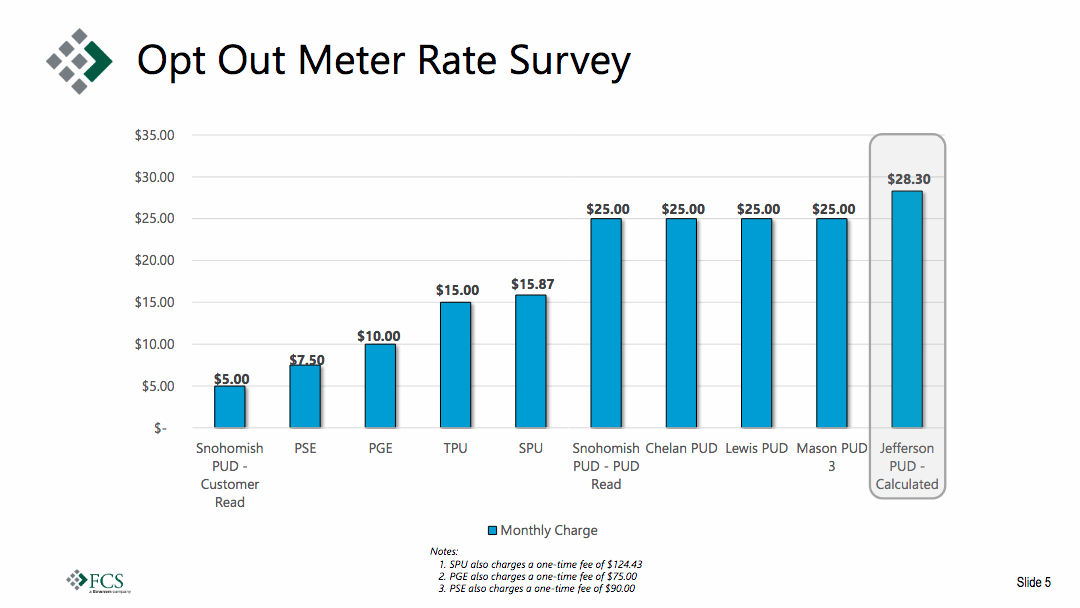
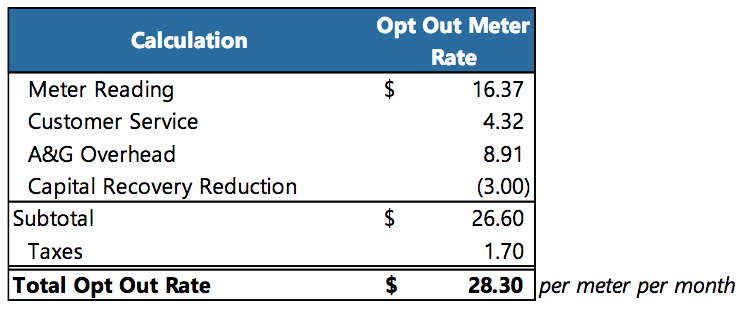
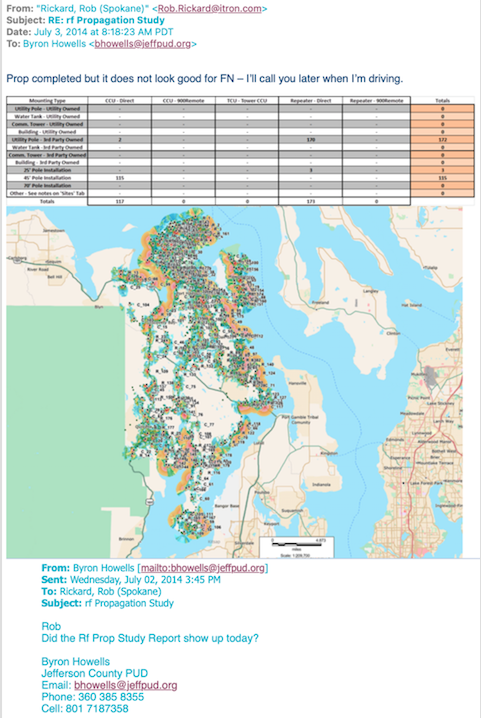
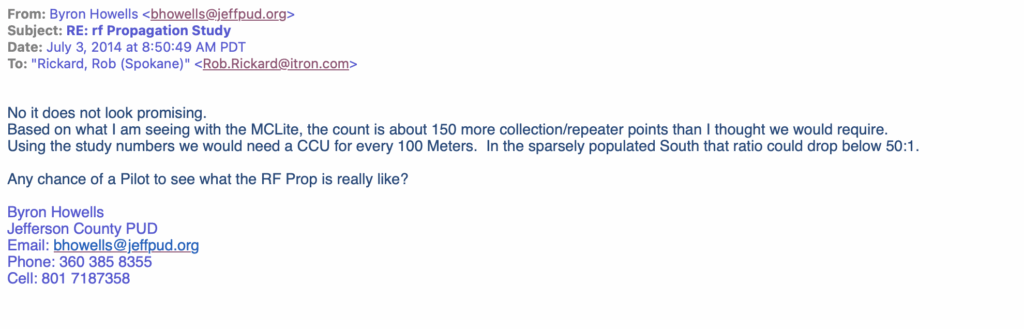
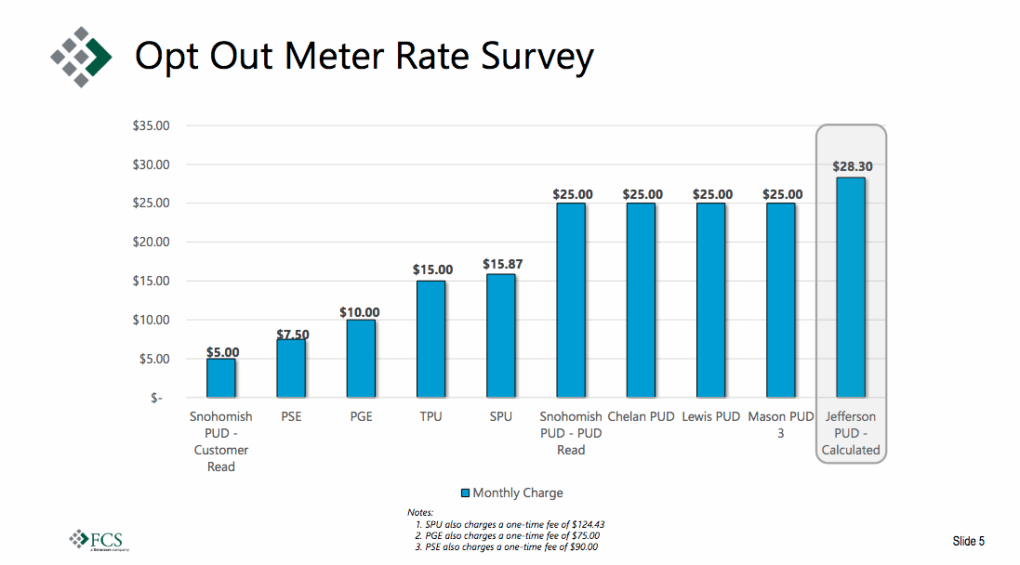

 The authors of this article are two of the founders of SMOG — Smart Meter Objectors Group. We worked from 2017 to 2020 to prevent a smart meter rollout in Jefferson County and develop an opt-out from transmitting meters.
 Simple. Easy. Snap a photo once a month, submit it electronically.
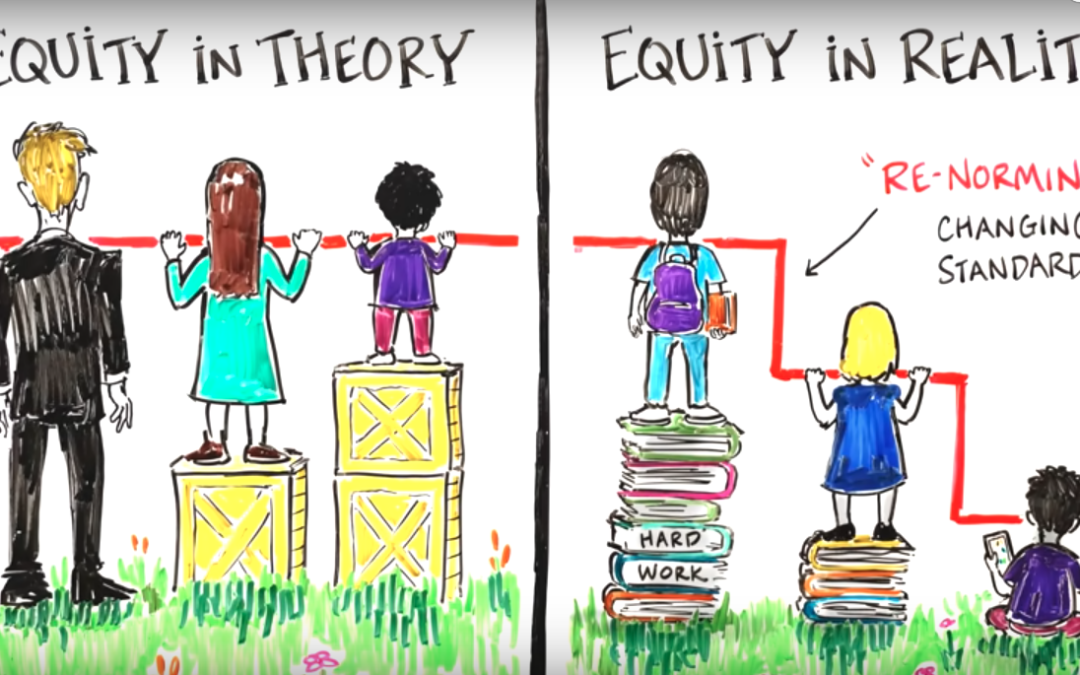
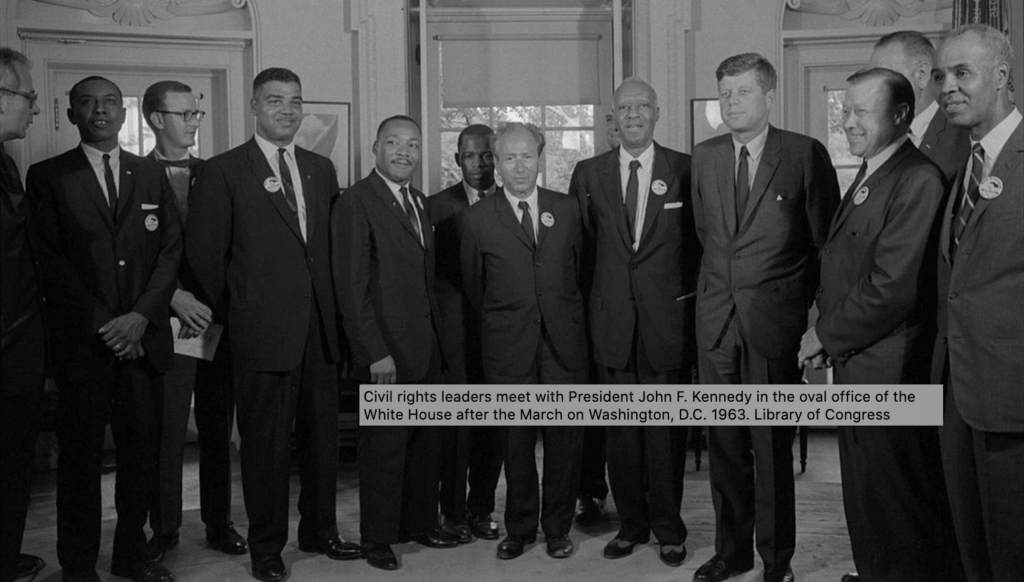


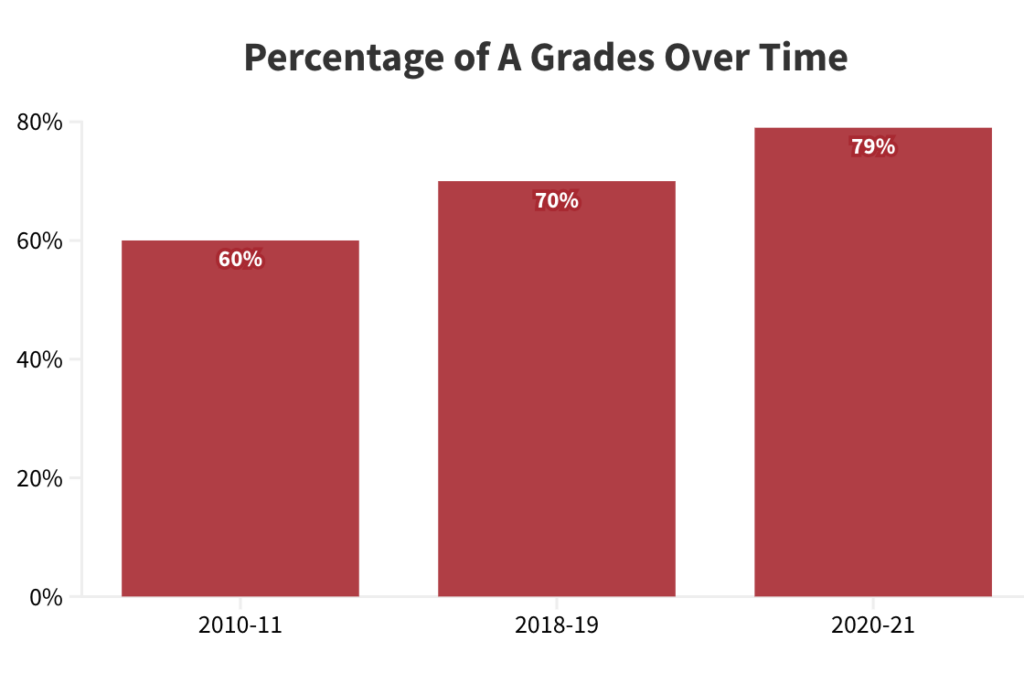
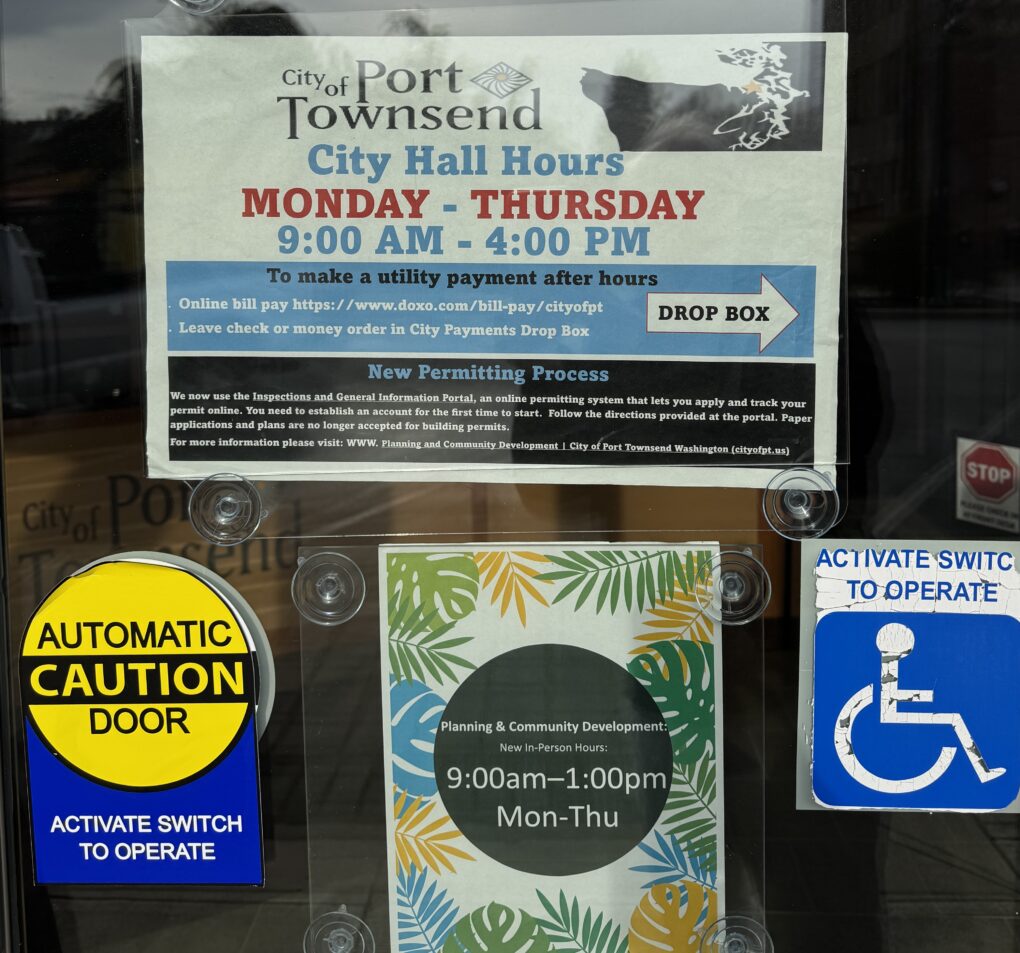


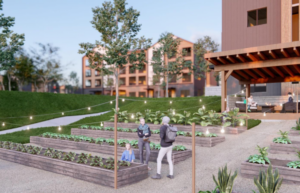
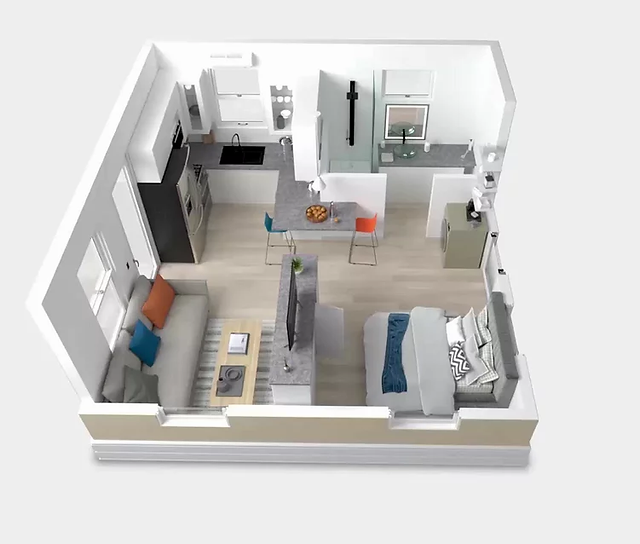
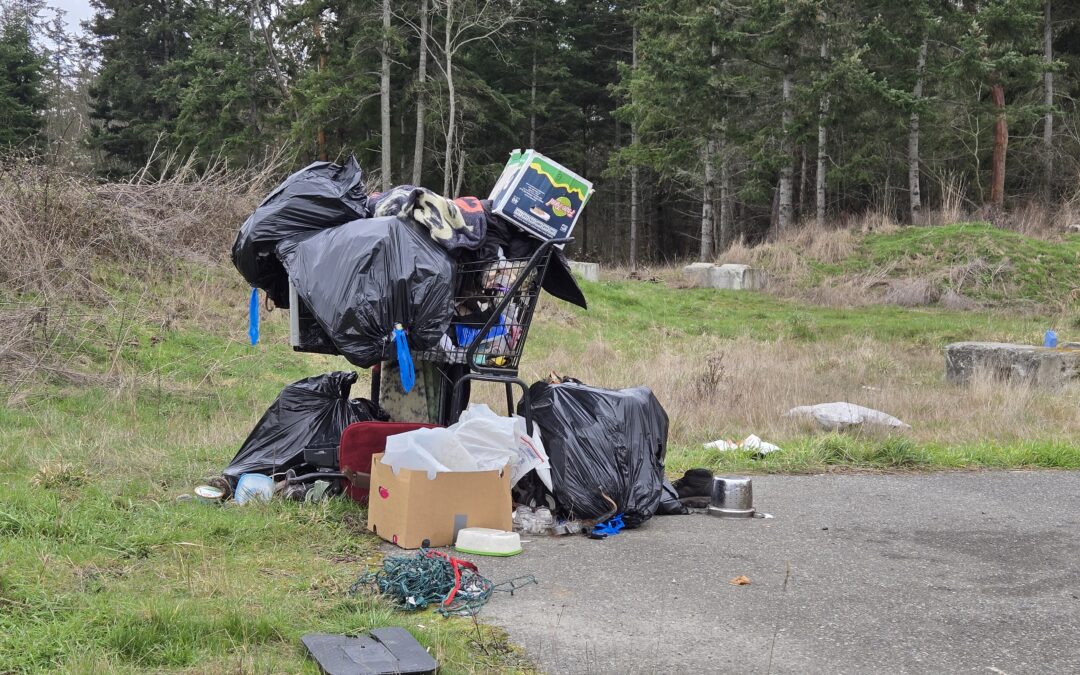


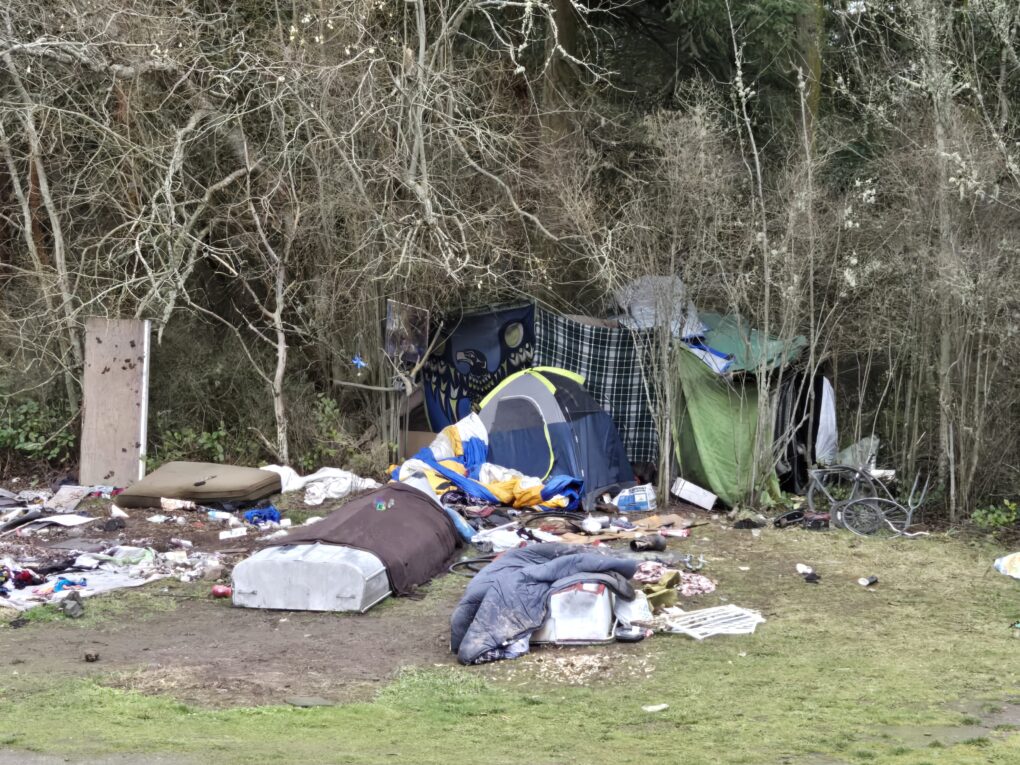
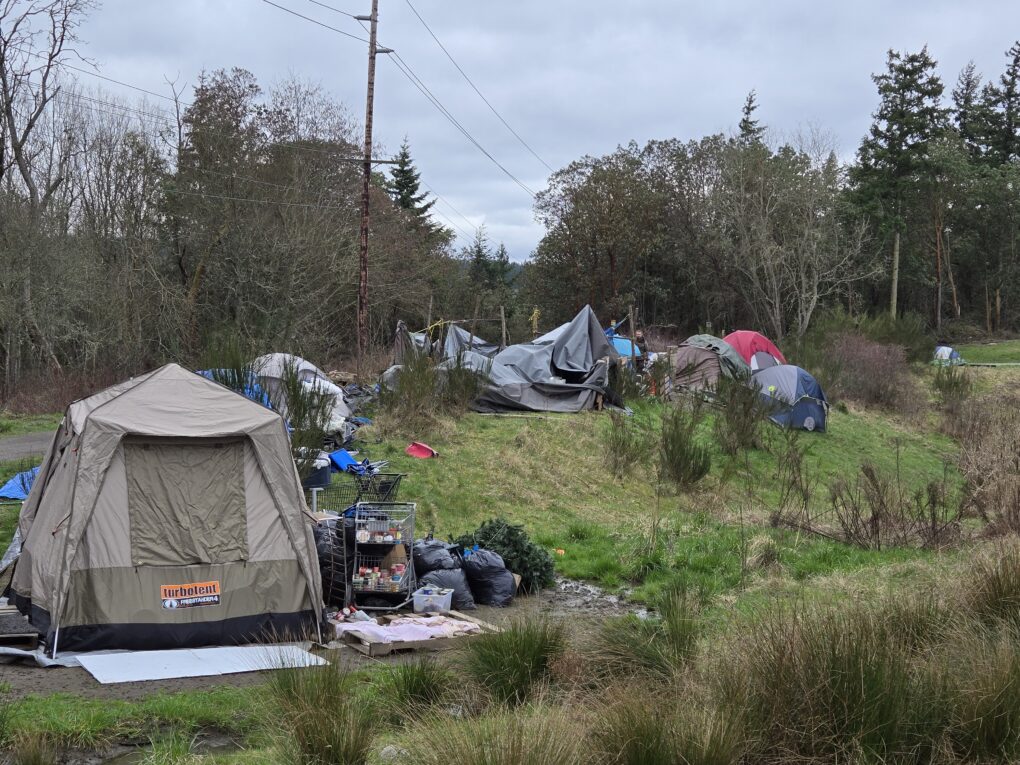
 It was originally published nationally in the 1994