DISTRICT 3 COMMISSIONER RACE: CRAIG DURGAN ON THE ISSUES

We asked all the candidates running to represent Jefferson County Commission District 3 several questions which highlight the challenges of the position.  We will be running their responses this week.

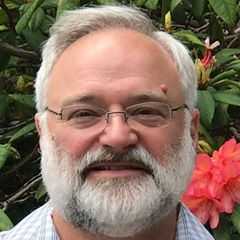
Craig Durgan is an engineer and it shows in his mastery of the issues he sees as key to tackling District 3’s poverty and lack of economic opportunity.  You can read his extensive biography by clicking here, courtesy of the Honesty Forum.  He is one of the three Democrats running for the open seat.

We posed the same questions to all candidates and they are published verbatim, except when we have to correct a typo here and there.

Tomorrow:  Jon Cooke, the Republican in the race.

Ballots have been mailed for the August 7, 2018 election.  
We appreciate Mr. Durgan’s thoughtful answers.  Here they are:

1.  What do you see as the most critical need facing District 3 and what specifically will you do to address that need?

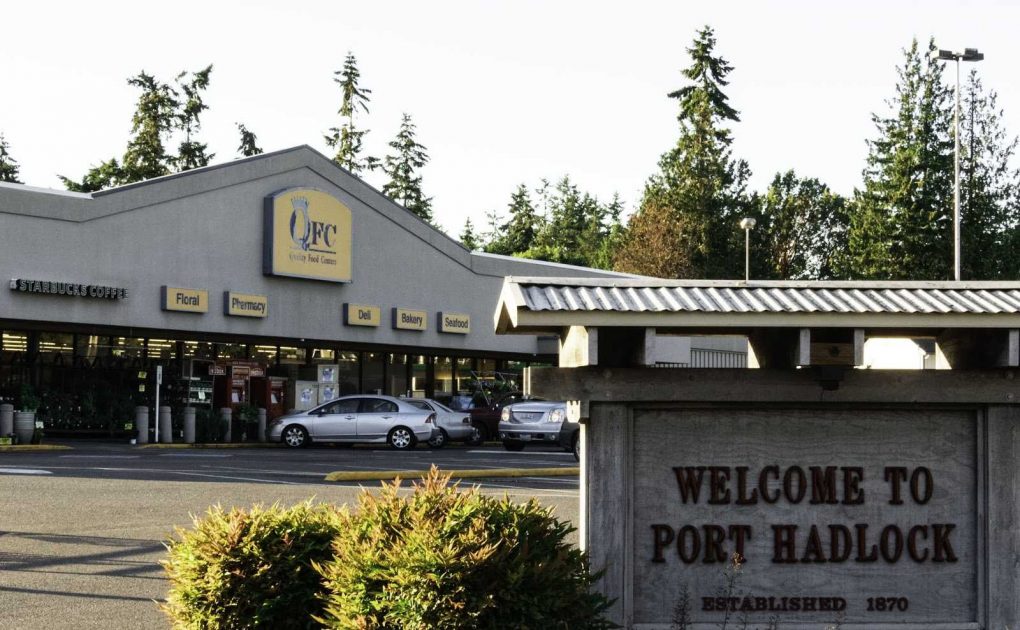
We need to bring back family wage jobs, affordable housing and broaden the tax base so the county has proper funding. I propose to first build the sewer in Port Hadlock then to do the same in Quilcene and Brinnon, plus install a water system with fire flow for both of the former. Longer term I want to plan for a Major Industrial Development (MID) as per the Growth Management Act (GMA) so small manufacturing companies can have a place to conduct business in Jefferson County. Commensurate with implementation of a MID I will then move to establish land banks as per the GMA for forest related industries to locate here.

2.  There has been much talk of the need for regulatory reform by all the candidates in order to promote a more prosperous District 3.  Which regulations would you change and how?

We need to make both Quilcene and Brinnon into Urban Growth Areas. That will allow smaller building lot sizes within the UGA that will meet State requirements because they will have water and sewer systems. Additionally, many people have stated that the minimum 5 acre lot size is far too great. Since the minimum lot size per State Septic rules is 12,500 square feet if served by public water in Type 2 soils, I would change the land use regulations to reflect that fact. Nowhere in the GMA does it state that there is a minimum lot size. I would reduce the lot sizes to reflect the reality of State Septic rules. All of these regulations are in the Jefferson County Code and can be changed by the Board of County Commissioners quite easily. It is not a requirement to get permission from the Growth Management Hearings Board or the State.

3.  What should the rest of the county, and Port Townsend in particular, be doing to alleviate the poverty and lack of economic opportunity in District 3?
Port Townsend needs to be much more cooperative in growing districts 2 and 3. It is to the City of Port Townsend’s benefit to have a vibrant economy in Jefferson County regardless of whether it is in the City or in the County. In addition they should work with the PUD and county to free up some of the water from the system that they share with the pulp mill. This could be done by working with the mill in a cooperative way to re-use the water more then twice. There are existing water treatment systems that can be installed to do this. The excess water could then be sold to the PUD for use in other areas. This is quite vital for our economy. Water is an important resource and should not be wasted. New technology can be brought to bear to solve many of our issues.
4.  What would you like to tell voters about why you should be the next District 3 County Commissioner?
I am the only candidate with experience in five key areas.
1. I have managed assets worth in excess of $200,000,000. Jefferson County has many assets worth quite a lot of money.
2. I have managed budgets in excess of $10,000,000. It is important to have experience with large budgets.
3. I have developed land in Jefferson County for the last 20 years. So, I am quite familiar with what it takes a business to start in operation here and the land use regulations.
4. I have run a successful business in Jefferson County for over 20 years.
5. I am an engineer by training and understand infrastructure and why it is so vital to our economy.
All these skills are applicable to being a member of the Board of County Commissioners. I believe that my experience will serve the residents of Jefferson County well.
Pressure Mounts for Action on Hadlock Sewer

Pressure Mounts for Action on Hadlock Sewer

77% of Landowners Petition Jefferson County Commission

Landowners representing 77% of the areas of Port Hadlock zoned for commercial, industrial and multi-family units on June 18, 2018, delivered to the Jefferson County Board of Commissioners their petition for action on the long-delayed sewer project.
Their petition requests that the BOCC “investigate the cost and feasibility of building a sewer in the Port Hadlock UGA” to serve the areas zoned for those uses.  More significantly, the petition states the landowners’ interest in forming a Local Improvement District to permit financing of the sewer.  An LID would spread the cost of the sewer among the covered landowners over a set number of years.
The signatories represent 200.91 acres of the 260.75 acres in those areas.  Only 1 landowner submitted a dissenting statement.  He owns only about a third of an acre.
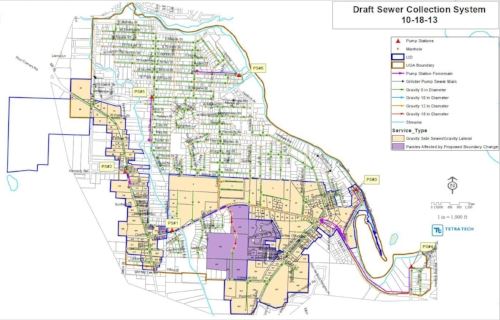
According to one of the signatories, who requested that their name not be printed, representatives of the landowners group have held two meetings with county staff with one commissioner present.  As a result of those meetings, the county has contracted for a cost study of the Hadlock system using the grinder pump collection and membrane bio-reactor treatment contained in a plan for a wastewater system in Quilcene.  This technology could possibly cut the cost of the Hadlock sewer in half.  Using technology that is decades old, the cost of the Hadlock sewer is estimated at about $45 million.
Land for a sewer plant has been acquired and the county says the project is “shovel ready.”  $13.4 million of the necessary funding has been secured.
Since 2008, the Jefferson County Port Hadlock UGA Sewer Facility Plan has recommended establishment of an LID.
Attached to the petitions were letters from the Northwest School of Wooden Boatbuilding and the Old Alcohol Plant.  They did not sign the petition but submitted supporting statements.
David Blessing, President of the Board of Directors, wrote, “The Boat School recognizes there is a problem with septic capacity for commercial and multiple home sites which prevents expansion and economic growth in Port Hadlock…. We strongly believe it is in the county’s best interests to build such a sewer system.”
Blessing pointed to a problem confronting many Hadlock businesses.  They must maintain, upgrade and/or expand existing septic systems to continue operations, while they call for construction of the sewer.  The Valley Tavern, for instance, recently did substantial work on its septic system at considerable cost.  Nonetheless, it’s owner signed onto the petition  The Boat School is moving forward with expansion of its existing system, precluding it from immediately joining an LID, though it may be interested “down the road.”
Gary Kiester, managing partner of the Old Alcohol Plant, wrote that his organization recognizes “the immediate need to investigate the feasibility” of a sewer to serve commercial, industrial and multi-family zoned properties.  “Delays in moving forward on this crucial project will only increase costs…. The project will not only improve…land value[s] but will generate additional and needed revenue to the county through permitting, job creation and moderately priced homes…. We see no downside in moving this forward convincingly.”
Kiester added that his company wants to build an additional five-story hotel that could increase the capability of its major tenant, Bayside Housing, which houses and transitions the homeless into permanent housing.  The new construction would also “provide additional rooms for low income seniors.”  Due to the limitations on their septic drain field, however, the construction cannot proceed.
Kiester closed by stating that once costs are determined “we would happily sign on to a form a Local Improvement District….”
With the addition of the 11 acres owned between the Boat School and the Old Alcohol Plant the percentage of land owners in the affected area calling for the new cost study and endorsing an LID exceeds 81%.
In our next report, we will examine another sewage treatment technology that could greatly reduce the cost and construction time of the Hadlock system.
See our related report:  Glimmers of Hope for the Hadlock Sewer, which examines brightening prospects for federal infrastructure funding.
Here is the full Quilcene Wastewater Facility Study, prepared by Tetra Tech of Seattle for the Port of Port Townsend, which spearheaded the investigation.
A BLOODY AFTERNOON IN KAH TAI PARK

A BLOODY AFTERNOON IN KAH TAI PARK

A 911 call:  assault in progress, Kah Tai Park.  On their way police listen to an open line, a second call originating from inside the park.  A man screams for help.  Then another voice comes on and shouts, “Give me that phone!” The line goes dead.

A jogger who made the 911 call meets the officers at a park entrance.  The attack was underway when he ran past.  It was underway while he called and waited.  He points.  They can see the attack still underway.  A shirtless man  kicks a person on the ground.  Another man, a large man, throws punches.

Officers stop the attack.  The victim is 60 years old.   Blood covers his face and head.  He is choking on it.  An eye is swollen shut.  Blood soaks the ground around him.

This is the heart of Port Townsend, Washington.  Wednesday, June 6, 2018.  Just before 3 in the afternoon.

The assailants turn their fury on police.  Handcuffed, they can hurl only profanity and threats.  Heavily intoxicated and hard to understand, they complain about being arrested.  In between threatening and resisting the officers, they justify their violence.  They were serving “street justice” on a “rapist, pedophile.”

They also helped themselves to the man’s backpack and cell phone.

The “alleged” assailants, William Anthony Ingalsbe, 30, and John Rayford Fleming, 33, were arrested on charges of robbery 1st degree, assault 2nd degree, intimidating a public servant and obstructing a law enforcement officer.

Ingalsbe and Fleming are half the victim’s age.  Ingalsbe is taller and outweighs the victim by seventy pounds.

The attackers wear his blood on their shirts, pants, shoes.

KNOWN TRANSIENTS”

News reports have described Fleming and Ingalsbe as “known transients.”  Their story is not much different from the other “known transients” on Port Townsend’s streets who occupy much of our police department’s time and make life difficult for businesses, their employees and customers.  We started looking into this story before another act of extreme violence on our streets occurred.  That incident, on July 1 in downtown Port Townsend, left one suffering terrible stab wounds and another “known transient” in jail on attempted murder charges.  (A booking error listed the charge as murder and we had initially reflected that error in this story).


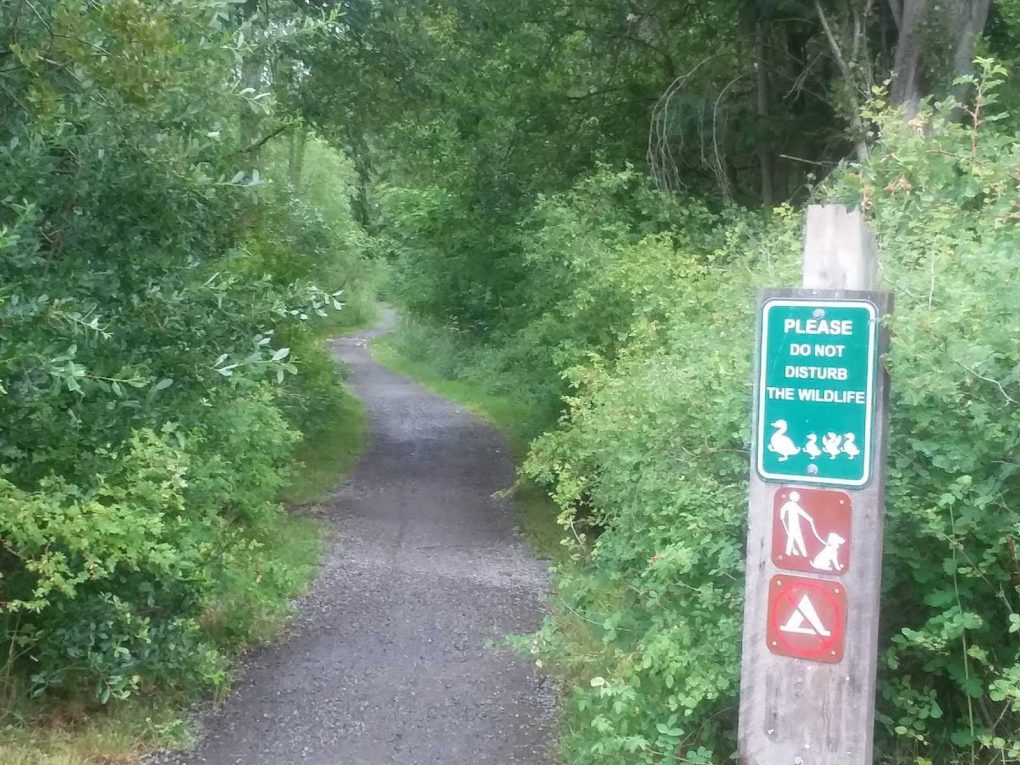
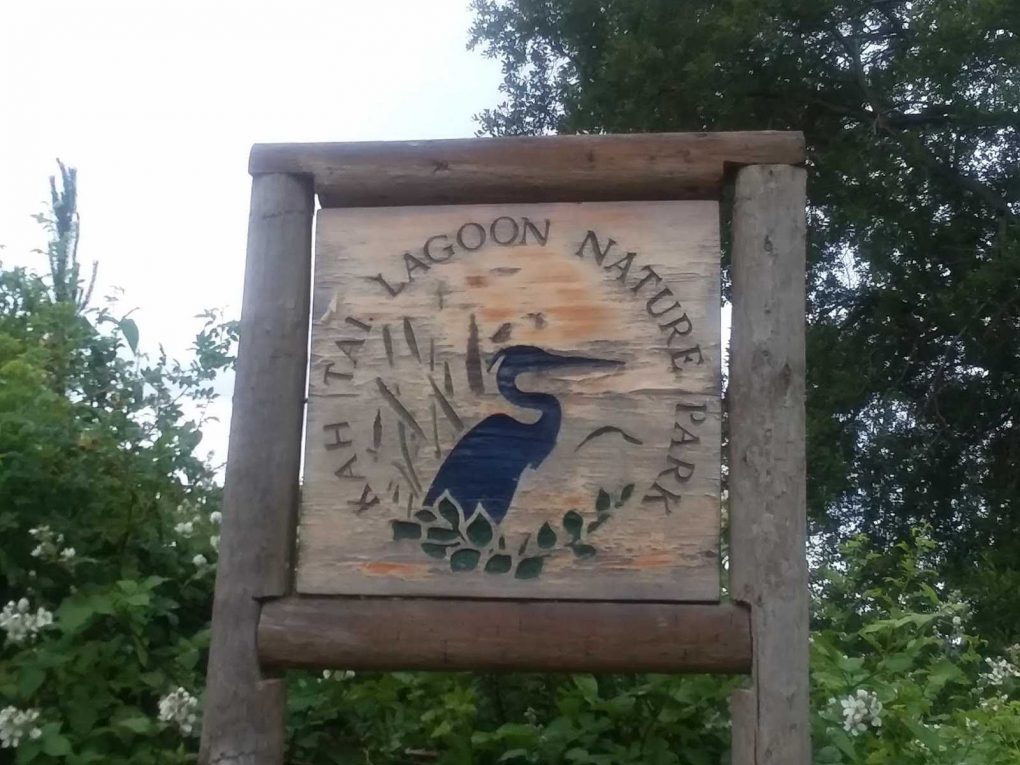
Sign for open air drug market in Kah Tai Park


In a previous report, we wrote about a young man presumed to be dead in Kah Tai Park.  Click “Lights in the Darkness” to read that story.

The following account of the brief time Ingalsbe and Fleming have been in Port Townsend comes from police reports and court records. Every incident and charge of wrongdoing is technically “alleged,” though documented in public records.

Ingalsbe had 34 contacts with police in less than a year before he “died” and returned to life in a burst of violence. Fleming has had 17 contacts with police since he arrived in Port Townsend three months ago.


John Rayford Fleming

Fleming first appears in Port Townsend police records in March of this year. He had been harassing staff and threw a wooden pallet down the stairs at a Water Street business. He apparently arrived here from Montesano, WA, where there were reported to be outstanding warrants. Fleming was issued a “no trespass” warning to stay away from that business for one year. Violation would result in a citation. Fleming expressed his attitude by refusing to sign the “no trespass” notice.

The next night he was found illegally sleeping in Kah Tai Park. Police were now able to confirm that Fleming had multiple warrants from out-of-county and out-of-state. Those jurisdictions, however were content to let Port Townsend have him. He ignored a warning against sleeping in the park. He was back the next night and told if it happened again he would be cited for trespass.

Five days later police found him and another man drinking in the park. Fleming verbally abused police and was banned from the Kah Tai for 90 days. That night he was found sleeping in his own vomit outside a Sims Way business.

A few days after that he went to sleep inside a business on Sims Way and became belligerent when awakened. He was “issued a trespass” and banned from that business.

Police saw him shortly after that, passed out on the sidewalk.

Washington has no public intoxication law, a failing that prevents first responders from helping habitual drinkers unless they are so poisoned with alcohol they are in imminent danger of dying.

On April 13, 2018, Fleming was arrested for burglary. By now he was known well enough that police could identify him from a verbal description. A bouncer of a downtown bar said Fleming had been harassing female customers. After a search of the area he was found to have broken into another business. He lashed out at police, verbally and physically. He grabbed the officers, kicked, and threatened them. He attempted to bite an officer. He was found to have in his possession items taken from local businesses, including, oddly enough, a fire extinguisher. He was given a suspended sentence and assessed a fine he could not pay.

Within days, Fleming was again on Port Townsend’s streets.

On April 21, he was arrested for shoplifting from Henery’s Hardware. He was walking down the street in Carhartt overalls security cameras had caught him stealing. He was again given a suspended sentence.

The City Prosecutor’s records show he was sentenced to forty days in jail. But three weeks later police found him passed out on the beach near the mill as the tide was rising.

Two weeks after that he wore the blood of a man he had attacked in Kah Tai Park.

William Anthony Ingalsbe

William Anthony Ingalsbe first made contact with Port Townsend police on August 7, 2015 after arriving here from Colorado, where he had a troubled history. He and a girlfriend were living in a van without plates. From then on, his contacts with police grew more serious.

Ten days later it was a domestic violence call. A month after that an officer checking public trails had to pull his taser against an aggressive dog Ingalsbe claimed to own. A few months on, Ingalsbe was outside the Pennysaver on Sims, slumped between two boxes, management reporting him for harassing customers. He’s “trespassed” and told to stay off the property.

The same day he’s reported at another property, with a guitar over his shoulder, panhandling. He’s also “trespassed” at that business because his behavior had been “an ongoing issue.” A day later, he’s reported trespassing and drunk at a residence.

It is now February 2016. He has been banned from more businesses because of his behavior. He is found sleeping, bloody and covered in vomit and taken to the hospital. He refuses to leave after being discharged and is disrupting the emergency room. He tells police, “arrest me.” They grant his wish, but he’s not in jail long.

Two days later he refuses multiple requests to leave the Food Co-op. Police issue a trespassing admonishment. Not long after, he trespasses at a store from which he’d been banned and receives a warning about an arrest next time it happens. Later in the day he’s warned about having an open container and drinking in public.

Then follow confrontations with employees and customers of businesses along Sims Way and Water Street, public drinking, and a citation for trespassing at a business from which he had been banned. Ingalsbe crumples up the citation.

March 24, 2016, a report comes in of Ingalsbe punching a man in the face, but the victim could not be found. An hour later he is found drunk and cited for trespassing at a business on Sims Way.

The next night he is found illegally sleeping in the park. The officer let him sleep rather than “wake him and have to deal with him all night long because he would be mad at us.”

Two days later he is cited for an open container and consumption of alcohol in the park. He was with two other transients from out of state. From time to time, he has met and consumed alcohol with other transients.

Having ignored the trespass citation, Ingalsbe was arrested on a warrant a couple weeks later while trespassing at yet another business from which he had been barred. His blood alcohol level is .205. But he is again quickly on the streets and cited for trespassing at the same business. He promised to appear in court and was released from police custody. He was seen later laying on a patch of gravel on Water Street. A couple days after that he was found sleeping on the sidewalk outside a building, drunk. The police provided him with water because he said he had had none in several days. Later, he was found in his vomit on the sidewalk at the door to a Water Street business. He refused to clean up his mess and was instructed to move along.

Ingalsbe did not honor his court summons and a warrant is used May 16, 2016.

A month passes with no contact. Then a call is received from his girlfriend. He had been at her place looking for his belongings but left on foot.

And then Ingalsbe died.

Or so police were told by a relative. He dropped out of sight and was not seen in Port Townsend for a year until the assault in Kah Tai Park was interrupted.

In the intervening year, as his probation officer learned, Ingalsbe traveled the country and racked up arrests in Nashville and Lebanon, Tennessee; Lawrence, Kansas; Pennington, South Dakota; and Arvada, Colorado. The arrests were for disorderly conduct, except the Arvada incident which involved an assault charge.

Ingalsbe has admitted that he initiated the Kah Tai attack on a man who was a stranger to him. He admitted kneeing the man in the head several times. When asked if he realized the extent of the injuries he and Fleming inflicted, Ingalsbe said, “he’s a 60 year old [expletive] man I beat up for no [expletive] reason.”

He told police he had returned to Port Townsend to party and then to turn himself in and go to jail to sober up.

He is probably getting more time to sober up than he expected. Therein lies the other tragedy in this story that is all too similar to that of other “known transients.” It took a crime of violence to get two habitual drinkers off the street and away from easy access to alcohol.

Unfortunately, the high price for their ticket to sobriety–for however long it may last–was paid with someone else’s blood.

The Victim

The man they attacked was airlifted for emergency medical treatment. He is Lawrence Merrell Alan. He gave police an address we traced to a rental mailbox. The cell phone number he gave police is no longer in service.


Alan has been known to police since at least 2012 when he was arrested for assaulting a bus driver. A year later he entered a conditional guilty plea to driving under the influence, while reserving the right to challenge the legality of his arrest. The charge was dismissed after a judge ruled the traffic stop had lacked probable cause.

In 2017 he was arrested for possession of methamphetamine and/or hydrocodone. The charges were dismissed by the prosecution without prejudice.

He was beaten to a pulp in Kah Tai Park while awaiting trial on his latest charges, which include two counts of selling methamphetamine in a school zone. His trial has been postponed because of “medical issues.”

Police have found nothing to indicate that the victim has in any way been connected to any sex crime as alleged by his attackers.

GLIMMERS OF HOPE FOR THE HADLOCK SEWER

GLIMMERS OF HOPE FOR THE HADLOCK SEWER

Large Federal Infrastructure Bills Could Provide Funding

Local and state governments have been unable to pay for the critically needed Port Hadlock-Irondale sewer project.  At least another $30 million must come from somewhere.  It could come from Washington, D.C.
A trillion-dollar infrastructure fund for projects in poor rural and urban areas was introduced this month by a diverse, bi-partisan group of lawmakers.
Introduced by Reps. Mike Kelly, R-Pa., William Lacy Clay Jr., D-Mo., and Ted Budd, R-N.C., the Generating American Income and Infrastructure Act would require the Agriculture Department to sell distressed assets and the Treasury to use the proceeds to fund infrastructure projects in poor communities.
Kelly is a member of the Republican Study Committee.  Clay belongs to the Congressional Black Caucus. Budd belongs to the Republican Freedom Caucus.
The bill comes at a time when the Trump Administration and Senate Democrats are pushing their own infrastructure proposals.
The GAIN Act would generate an estimated $2 trillion.  Half would go towards paying down the national debt.  The other half would go to projects in predominantly poor Black, Hispanic and rural white communities.  By selling troubled assets, the act also keeps the government from losing more money on sinking investments.
Poor Rural Communities
Irondale and Port Hadlock are poor communities.  Their income and wealth levels are far below those of the rest of the county, the state and the nation.  Their poverty rate at times has been significantly higher than the nation’s.  Many people in Port Townsend’s affluent neighborhoods have little idea of the poverty they would encounter if they left S.R. 19 and wandered through the Irondale’s hidden lanes.

The area has lost businesses and jobs because of the lack of a sewer.  Current businesses are constrained by the limitations of septic systems. Growth plans have been shelved. Other businesses have been required by the county government to limit hours of operation and restrict their operations to fit limited septic capacity.

Yet this is supposed to be an urban growth area, according to the county’s comprehensive plan.  This is also the area with the greatest prospect of supporting affordable housing, due to land availability and relatively lower costs.  According to four-term county commissioner David Sullivan, the Hadlock-Irondale sewer project isthe key to the affordable housing situation county-wide.
Commissioner Sullivan is not alone in his assessment of the critical importance of a simple wastewater treatment project.
“The Irondale-Hadlock sewer is essential to the local economy and making housing more affordable,” U.S. Representative Derek Kilmer told the PT Free Press.

Not Enough Money to Build

At the cost of a million dollars, the sewer has been engineered.  The county has obtained the land.  The county has deemed the project “shovel ready.”
If only there were enough money.
The current projected cost—pending a possible re-engineering—is about $45 million. The county reports it has secured $13.4 million and is counting on state and federal sources for the balance.
We asked our Congressional delegation what they have been doing to secure federal funding for the critically needed sewer project and where they stood on the GAIN Act.
Representative Kilmer
“I’ve been working every funding angle to help get the project the funds it needs so businesses can start growing,” Kilmer told PT Free Press. “I’ve connected the county commissioners with state and federal advisors and resources who have helped navigate the over-complicated government funding process. As Vice Ranking Member of the Appropriations Committee, I’ve pushed to increase USDA Rural Wastewater Treatment grants over the last several years so that this project, and a project with a similar challenge in Kitsap County can secure more federal funds.”

As for the GAIN Act, he said, “I’m encouraged by any bipartisan bill that would direct new federal funds to rural infrastructure projects. I’m taking a close look at this bill to determine how much revenue it could generate, and whether communities in our region could use that revenue.”

“On a broader level,” he added, “this challenge exemplifies the need for Congress to pass a comprehensive infrastructure package. The leaders of our country can’t drag their feet anymore on infrastructure investment because it’s hurting the economy in our neck of the woods. I’ve used my seat as Vice Chair for Policy of the New Democrat Coalition to develop a policy agenda that would help projects like this one start moving. I’m working with members of both parties to invest in our communities and help bring the infrastructure we need to grow our economy.”

Senator Maria Cantwell
Bryan Watt, a spokesperson for Senator Cantwell had this to say:
“On the Irondale-Hadlock sewer infrastructure project Senator Cantwell’s outreach team has meet with Jefferson County folks about helping get this project done and identifying a potential funding stream.
“Earlier this year Senator Cantwell and several of her colleagues introduced a major infrastructure plan that invests billions to modernize airports and waterways, sewer systems, invest in affordable housing, rebuild crumbling schools and VA hospitals, overhaul road and bridge repairs, equip rural communities with high-speed internet, revitalize main streets across the country, modernize the electric grid and energy infrastructure, and more.
“Specifically, the bill includes $23 billion dollars for water infrastructure through the U.S. Department of Agriculture (USDA). Rural Development Water and Waste Water Grant Program, which provides funding for such projects in small towns and rural communities under 10,000 in population.”
Senator Cantwell’s legislation relies on repeal of tax cuts passed by Congress and strongly supported by President Trump.
Senator Patty Murray
“There’s no doubt,” Senator Murray told Port Townsend Free Press, “our country needs to do more to address our aging infrastructure, which is why I have pushed for significant infrastructure investments over the years and even created a program that allows communities to apply for competitive grants to get big projects across the finish line. I stand ready to help communities across our state including Port Hadlock because improving and maintaining infrastructure is so important to the health and safety of families, as well as to local economies.”
Jefferson County Cannot Afford Another Miss
The Obama administration poured a trillion dollars into the economy to counteract its inherited recession.  It is not too long ago to remember President Obama touting “shovel ready” projects across the country that would be completed thanks to his stimulus package.  A major focus of that stimulus was infrastructure investment.  Despite having a friendly Democrat administration and a Democrat-controlled Congress, our delegation, and our local leaders, for whatever reason, did not seize the opportunity and secure funding for the Hadlock wastewater system.  Grants of hundreds of millions of dollars were dished out.  Years later many have been forgotten with little or nothing to show.  Huge losses were deemed acceptable because the government’s first goal was stimulus. A $30-40 million grant for a sewer system in a poor community needing jobs and housing—it should have been a gimme.
Mr. Kilmer was not yet in the House.  He now may have a chance to seize an opportunity that slipped by before.  He can be one of those Congressional heroes remembered for generations because of his tangible legacy. The “Derek Kilmer Sewer Plant” could be a terrific monument to public service that really made a difference.
The GAIN Act presents a possible second great stimulus opportunity that cannot be missed.  As Rep. Kilmer noted, we should be encouraged by its bi-partisan backing.
Our delegation could do nothing more important for Jefferson County than to secure the funding that would launch the Tri-Area into an era of prosperity.  Maybe they can give Trump something he wants to get something we need back home.
President Trump has already derided Democrats’ plans for rolling back his tax cuts. The infrastructure bill backed by Senator Cantwell is likely going nowhere.  She needs to change her thinking.
Similarly, President Trump’s infrastructure plan, which relies mostly on increasing gas tax and ramping up state and local investment, faces its own hurdles, including from within his own party.
The GAIN Act has the advantage of paying for itself and at the same time shielding the government from losing more money on bad assets.  It appeals to conservatives in paying down the debt while building infrastructure to support economic growth.  It appeals to Democrats because it targets Black and Hispanic communities and also poor white communities, where Democrats are struggling to hang on.
For the sake of our community, our congressional delegation must build bridges to the Trump administration.  Far more important to our community than the ideological battles waged inside the Beltway is an unsexy, mundane investment in pipes and pumps in Jefferson County’s blue collar communities.
Voters have relied on intermediaries to press our state and congressional representatives to secure funding for the sewer.  This issue is so important we need to communicate with them directly.
Here is contact information for our Congress folks.  Let them hear from you directly. Encourage them.  Write a letter.  Don’t use email—it is too easily ignored.  Give them a call.  Or better yet, fax them.  Old fashioned faxes get attention:
Rep. Derek Kilmer

1520 Longworth House Office Building
Washington, D.C. 20515
(202) 225-5916
F:  (202) 226-3575

Senator Patty Murray

154 Russell Senate Office Building
Washington, D.C. 20510
(202) 224-2621
Toll Free:  (202) 866-481-9186
Fax:  (202) 224-0238

Senator Maria Cantwell
511 Hart Senate Office Building

Washington, D.C. 20510
(202) 224-3441
Fax:  (202) 228-0514

SUGAR HILL FARMS OPENS ITS DOORS

SUGAR HILL FARMS OPENS ITS DOORS

Photos by Kara Kellog

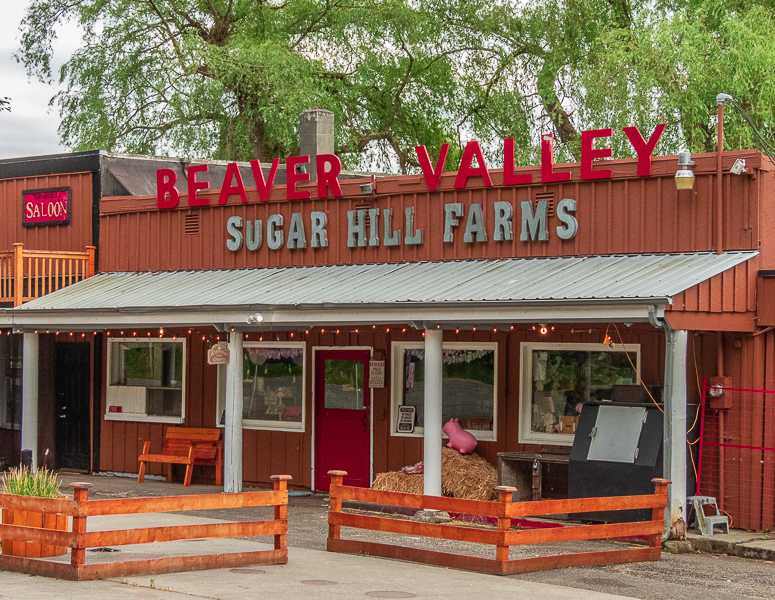
A sweet spot on SR 19 is bringing smiles to Jefferson County. Brenda and Mike Hill on June 12 opened business as Sugar Valley Farms in the old Beaver Valley Store. Inside awaits what one customer described as “simple extravagance.”

“We call it simple pleasures,” said Brenda. “A Mom with kids who maynot have fat pockets that day can still afford a treat, and leave feelingbetter than when they walked in.”

That feeling will likely include a bit of a sugar lift. The Hills, and their extended family/work force have been wholesaling candies to merchants at Pike Place Market, Finnriver Orchards & Cider Garden in Chimacum, Northwest Trek Wildlife Park and Ft. Defiance Zoo, CB’s Nuts in Kingston, Sunny Farms in Sequim and elsewhere for a number a years before taking this leap into retailing.


Brenda Hill was inspired by her grandmother’s recipes used two generations ago at the Chevy Chase golf club on Discovery Bay. Those time-tested recipes are behind the amazing caramel (wow!), fudge, licorice, peanut brittle, and fresh pastries and pies now available at the Beaver Valley location. Espresso, hamburgers, hot dogs, sandwiches and salads—all local organic greens—are also offered.
All products, even those from other producers, are free of high-fructose corn syrup and aspartame and aspartame-derived
ingredients. “That took some doing to fill the soda cooler,” Brenda says, “but we are now stocked with colorful, yummy drinks.”

As for that work force, they are always nearby. The Hills and Brenda’s mother live right next door. Brenda and Mike’s six children and cousins, aunts, uncles, nephews and nieces all pitch in. The store is closed on Sunday for their traditional family dinner at Mom’s—with a 30-40 person extended family coming together.

Some of the family:  Malaki, Isabel, Valasiah, Beautifull, Brenda, Mike and Titus
“My daughter used to joke about wanting to just be able to walk to the Beaver Valley Store to buy something,” says Brenda. It was closed back then. But no longer. The Hills bought the property and adjoining acreage last May and spent a year in renovations.
They kept the faded “Beaver Valley Store” lettering on the façade “as a tie to the history,” says Brenda. The store has been in and out of operation for over a century.
The site has become a photo op for passing motorists. The Hills added an Old West feel to the building’s appearance. The “Jail” mock up on the side of the building has stopped quite a number of shutterbugs. And the live bunny greets anyone walking to the door.  Little bunny babies are expected any day.
The family overcame the usual hurdles between them and realizing a dream, including a scary accident suffered by one of the children just as the store was set to open.
“I realized there would always be something holding us back,” says Brenda “but I decided we were just going ahead anyway.”
In addition to sweets, the store sells coffees and décor and gift items consigned by local artists.
They see themselves as the “gateway to the Farm Tour” held each year in eastern Jefferson County and have plans to support and get involved in that event.
We got to sample a spoonful of the caramel—it was amazing. Rich, complex, hearty, but somehow not too sweet. Images of Sugar Hill’s caramel drizzled over a bowl of French Vanilla ice cream danced before our eyes.
The licorice is old school, each piece wrapped and sold separately. It is softer than mass produced and wheat-free. We left with a bag of their peanut brittle. They make it from the fabulous CB’s Nuts—which they credit with helping and encouraging them on this adventure. We also escaped with a carton of the day’s fudge selections—orange cream, peanut butter, Rocky Road, chocolate (it looked like a brownie!) and a sampling of their chocolate raisin cluster.
Before we left the parking lot, a beaming Brenda hurried outside to give us some of the delicious cherries they are selling. Sweet things from the kitchen, sweet things from trees. Sweetness working the counter and sweetness in a lovely family.
You do go away feeling so much better than when you walked in.
Sugar Hill Farms is located on S.R. 19 south of Chimacum and before the Oak Bay Road turnoff to Port Ludlow. The formal address is 2593 Beaver Valley Road. You can reach them at 360-821-2732 or at their website: sugarhillcandy.com, created by their daughter, Whitney. It really captures the joy and love of the Hill family. Hours are 10-6, except Sundays, because the whole family is around the dinner table.
Kirk Boxleitner of the PT Leader did a nice story on the family last August, when they were deep in renovation of the old country store building. You can read it here (subscription may be required).