Discovery 4-H Project Saves Bees: Look for Kids with Cameras at Jefferson County Fair

Discovery 4-H Project Saves Bees: Look for Kids with Cameras at Jefferson County Fair

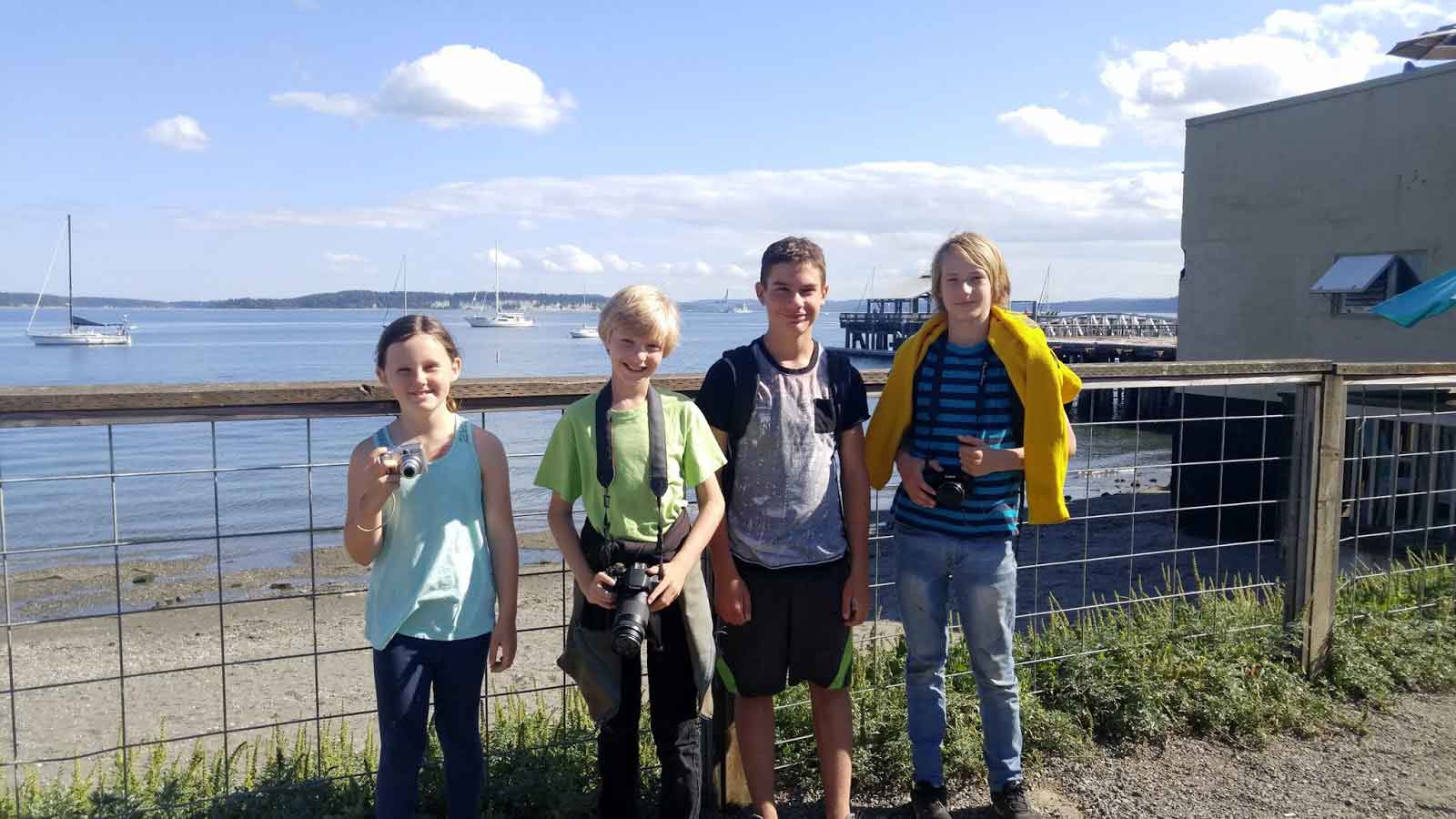
From left: Ruby Groussman (8), Andre Mackey (10), Ike Banks (13), Evan Mackey (12).


The youth photographers in the Discovery 4-H Club photo project will help “Save the Bees” for this year’s fair theme.  The Jefferson County Fair theme is “Bug Up!!” and many of the exhibits throughout the fairgrounds will emphasize an insect theme. The Discovery 4-H students decided to take things a step further.

Last year the club raised money to help cover their photo booth costs.  This year they will take donations for The Honeybee Conservancy, a non-profit 501c3 organization that works to help the bees, while increasing access to organic, sustainable food in underserved communities.
Saving the bees and protecting the environment is a cause all of the club photographers agree is important.Andre Mackey, age 10, says “We wanted to do something to help the honeybees, because they help people by pollinating one-third of the crops we eat in this country. They’re also helpful to animals and the environment. And they have good honey!” His older brother, Evan Mackey, age 12, adds, “Honeybees are good for the environment.  People should not use pesticides and should leave their dandelions in their yard to help the bees to live.  They are important creatures to the world.  Albert Einstein said, “if the bee disappeared off the face of the Earth, man would only have four years left to live.’ So we should really keep them alive.”

The students will operate a photo booth to take photos of babies, kids and adults decked out in bee wings, antennae or in regular clothes.  No donation is necessary, and at least three high print-quality photos will be e-mailed to participants after the fair.

Photographers include: Reice Elsasser, Ike Banks, Evan Mackey, Andre Mackey, Ruby Groussman, and Zeke BanksDanell Swim-Mackey, the 4-H coordinator for the group, says this is only part of this year’s service project.  “Another way that the kids are finding the honeybees relevant is our fundraiser with 4-H Fruit, selling organic peaches, pears, and nectarines from an orchard in Eastern Washington (and all of those crops are entirely dependent on pollinators). 4-H Fruit will hopefully provide the funding for more equipment and cameras for the kids, and a field trip somewhere amazing when we get the kids to agree to a location.”

The Discovery 4-H Photo Project provides twice-monthly meetings to demonstrate photography skills to students 8 to 16 years of age. The project is in its second year and will begin accepting new students in December 2018. The Bug Up photo booth will operate during the Jefferson County Fair August 10-12th. 11am-3pm on Friday, and 1pm-5pm for Saturday and Sunday.

A Dope Dealer on the County Commission?

A Dope Dealer on the County Commission?

Greg Brotherton Undermines Youth Prevention Efforts

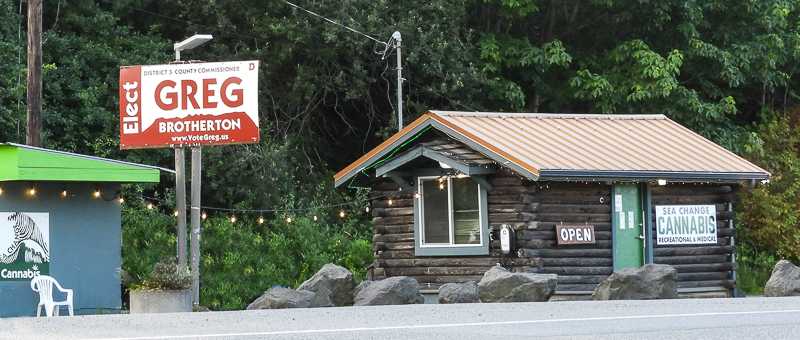
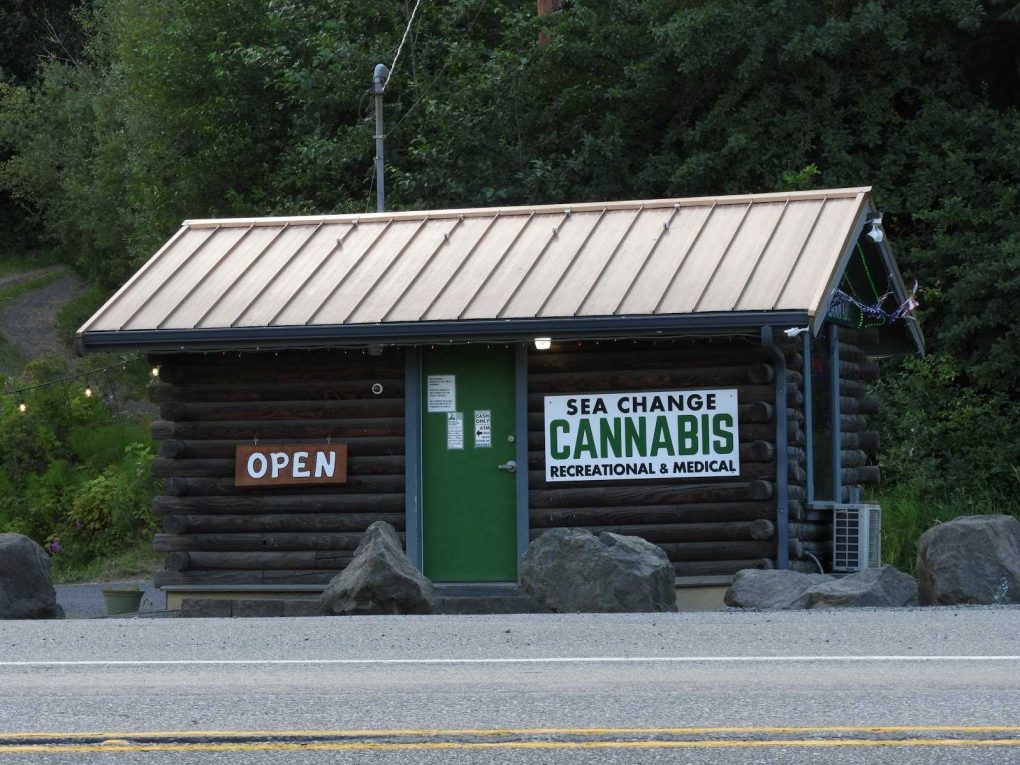
Greg Brotherton owns Sea Change Cannabis, the first pot shop to open in Jefferson County.  He promotes the expanded use of marijuana through his website and movies he has written and produced.   He puts profits before people by hiding science-based information on the dangers of his inventory, or disseminating misleading and false information through his employees.

Researchers know that inhaling marijuana smoke—by smoking a joint, a bong or vaping—is definitely dangerous.  Marijuana smoke—you won’t learn this from Brotherton’s budtenders—contains more carcinogens, and higher levels of tar and toxins than the cigarettes that have sickened and killed hundreds of millions of people around the world.


Marijuana use causes young men to have a 250% higher risk of testicular cancer.  Marijuana use increases the incidence ofschizophrenia and respiratory problems. Mothers who use marijuana pass THC to their babies through the placenta and breast milk. And contrary to everything you will hear from budtenders about this “gentle herb,” marijuana is addictive.


Like the tobacco industry, marijuana dealers don’t put out the bad news about their product.  So where can parents, teens and others go for accurate, scientific information on the dangers of marijuana?  The Jefferson County Public Health Department and associated public-private programs.


Brotherton wants a commissioner’s job and the power that comes with it.  If he is elected, a dope dealer will have control over anti-marijuana programs intended to cost him customers.
County Commissioners are the Jefferson County Board of Health


Every County Commissioner also serves on the Jefferson County Board of Health.  This body, composed of the commissioners, a representative form the hospital board, Port Townsend City Council, and “concerned citizens,” according to RCW 70.05.060 supervises “the maintenance of all health and sanitary measures for the protection of the public health within its jurisdiction” and enacts rules and regulations “as are necessary for the protection of the public health.”


The use of marijuana, alcohol and other drugs is a cause of growing concern for county health boards.  The Jefferson County Substance Abuse Advisory Board, a program under the Board of Health’s supervision, has concluded that the costs of substance abuse for our county are “staggering.”  A comprehensive review conducted in 2010 calculated that public sector costs exceeded $17 million.  Those numbers understated the problem because they did not include Fire/Emergency Medical services, coroner’s expenses and certain medical assistance costs.  That figure also does not include the costs of domestic violence, personal medical costs, costs to insurance providers, lost productivity and wage loss, and “the financial strain of pain and suffering and stress of individuals or families.”


The Board of Health has been concerned with growing norms of acceptance of marijuana because Jefferson County youth use marijuana at higher rates than in neighboring Clallam and Kitsap Counties, as found by the 2016 Healthy Youth Survey Report.  Sadly, our county also suffers higher youth suicide and alcohol use.


The growing acceptance of marijuana is a major concern of  the Chimacum Prevention Coalition, of which the Department of Health is a part.  This advocacy organization brings parents, schools, agencies, community groups, and community members together to work on preventing youth marijuana and alcohol abuse in the Chimacum School District.  It identified the easy availability of marijuana, low perception of harm, and use acceptance as three of the top four risk factors for youth.  The acceptance of marijuana use and a decreasing perception of the harm from its use are rising among youth, in part because marijuana outlets are so plentiful and promote their product so effectively.  Youth perception of adult tolerance for marijuana use is making the problem worse, the coalition concluded.


Greg Brotherton is one of the most visible forces in the community promoting increasing acceptance of marijuana while also minimizing the perception of its harm.


Brotherton Promotes Marijuana Use As Beneficial and Cool, While Misleading and Failing to Inform on its Scientifically-Established Health Risks


Brotherton’s business promotes marijuana through testimonials of users, including the following.


“The more I learn about weed, the more I appreciate it. It is a gentle and kind herb that makes me feel more connected to nature and myself. I am really grateful that it exists…”


“Just always been a comfort to me, helped me through the tough times as well as the good times.”


“It gets you closer to God.”


Brotherton’s business also provides an employees’ testimonial relating his marijuana use going back to his high school days.

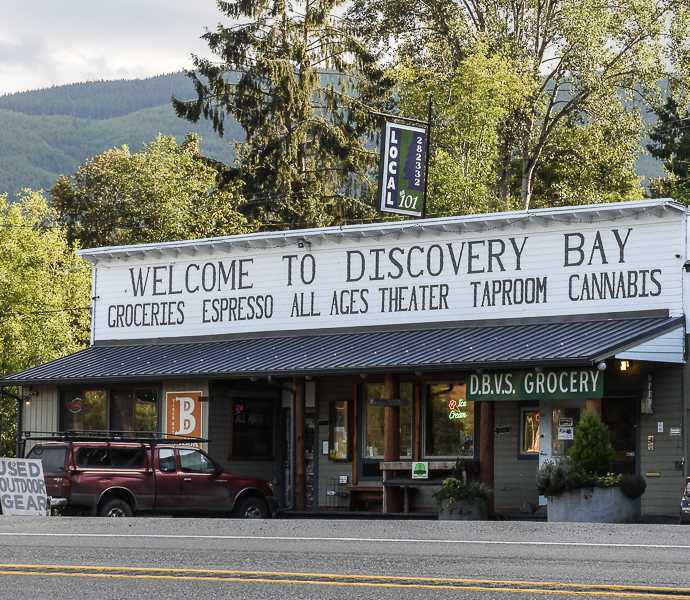
Brotherton’s Discovery Bay Village Store promotes cannabis as just another fun, safe thing.  The store front advertises cannabis on equal terms with groceries and kid friendly stuff.

And then there’s Brotherton’s movie, Verde Noir.
It is a stoner film portraying marijuana use in a comic and positive fashion.  It was produced during the time Brotherton sat on the Quilcene School Board and published on the eve of his decision to run for Jefferson County Commission.  The movie may be viewed off his website, at www.verdenoir.com, or on YouTube.
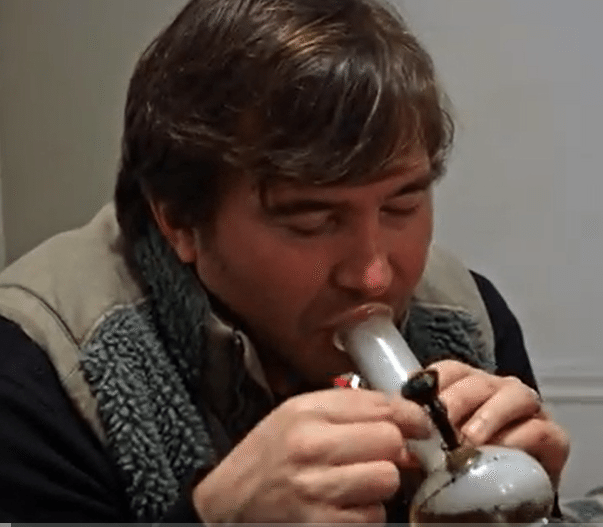
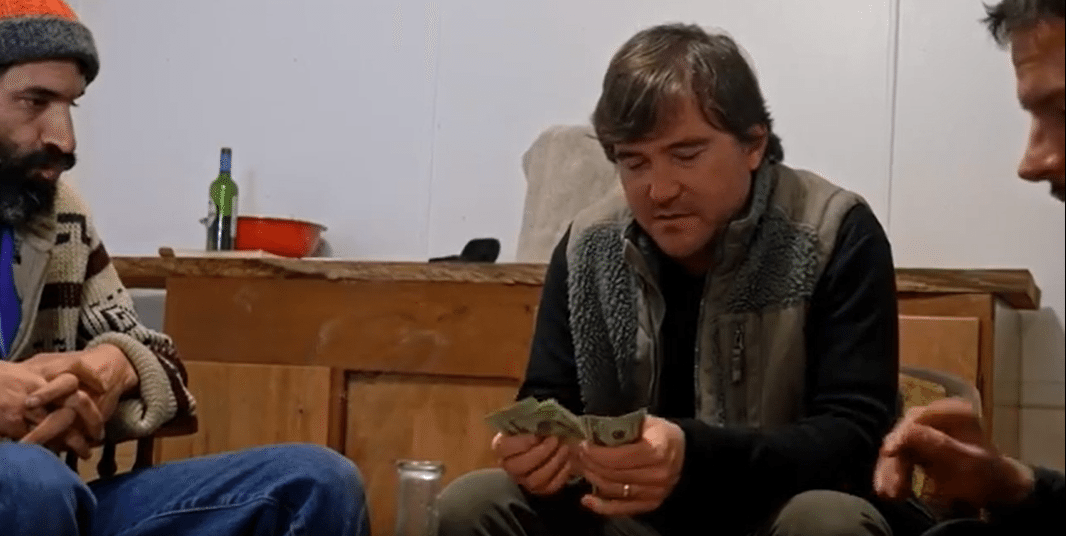
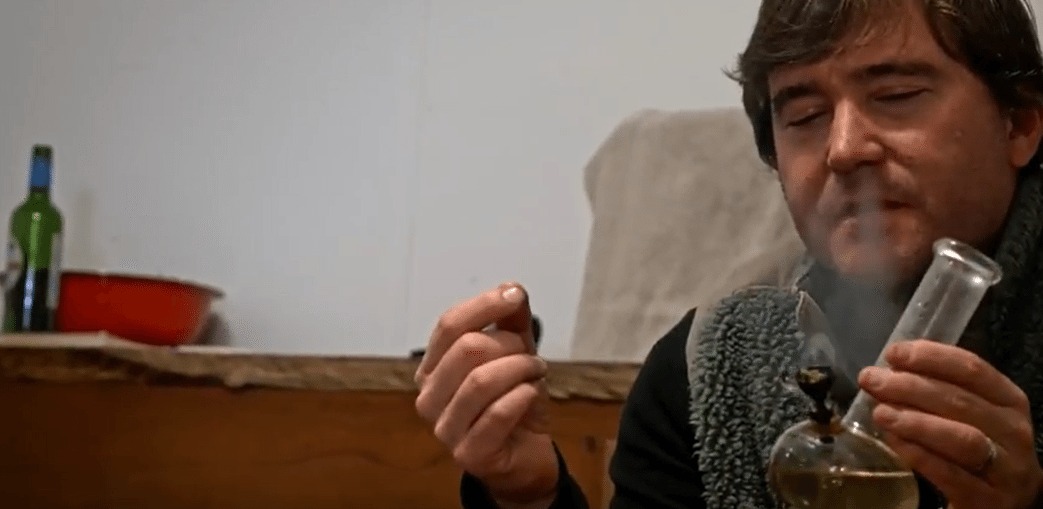
Brotherton himself stars, smoking a bong for “creative inspiration.  He is clearly stoned, with slits for eyes as he counts out cash for what is portrayed as a black market purchase of dope from

unlicensed dealers.  Smoking marijuana is depicted as fun and cool in every segment–something you do in the middle of the day, in the car before you ask Mom for half a million dollars to start a marijuana business, what you do when you hang out with a lobbyist for the dope industry.  It is even something a fourteen-year old teenager can do with Mom, growing marijuana for fun and profit, and as much quality bud as you can smoke.  Seriously, this is in Brotherton’s stoner movie, in the subplot that opens the film.

The quest of the raggedy stoner begging money to launch a marijuana business is titled “The Heroes [sic] Journey.”
In the film Brotherton says that producing or selling marijuana is one of the “few industries left for an entrepreneur to get into that really supports the American dream.”
What’s the point of this film?  Brotherton explains at his Sea Change Cannabis website:
We’re interested in sharing these stories and joining the conversation about what legal cannabis means, looks like, and should look like.  The stigma around cannabis is disappearing quickly, but too often we feel that portrayal of recreational users and patients, and growers lacks the deep and broad cultural shifts we are experiencing.  We hope to add a little nuance and a little laughter to the conversation.
This should be a big help to parents, teachers, drug prevention programs and health professionals trying to persuade kids that using marijuana is a very bad, uncool, stupid idea.
Inside Brotherton’s Store:  Marijuana, the Miracle, Totally Fun Drug
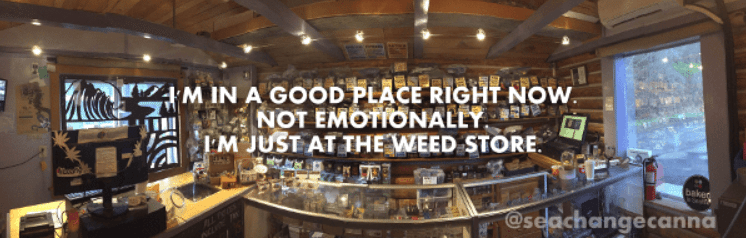
Inside his Sea Change Cannabis store, one is met with colorful displays and glass cases of bright, attractive pipes and bongs making marijuana use look like a lot of fun.  When I dropped in for a look-see a couple of tourists from a state where recreational marijuana is illegal were at the counter telling the clerk they wanted to take pot with them back home to friends and for themselves.  He made some product recommendations then—wink,wink—told them his job was to say “enjoy your pot in Washington State.”  He never told them that what they were planning to do was illegal.
When it was my turn I asked what information the store had on the dangers of marijuana use.  A dumbfounded look crossed the clerk’s face.  He said he had never heard of any health problems.  “It might make you giggle,” he quipped. As far as he knew, all of marijuana’s effects are good.  I asked, did they have any information I could take and read?  We had something here, I think, he said. He came from behind the counter and searched racks on a wall.  He found nothing.  But I had found something while I waited and pointed it out to him.  You have to turn around and face away from the eye-popping displays and look behind the door.  In an unmarked slot, with the text facing the wall, I found slips of paper with a few, bland cautionary words.  There was also a strip of curled paper on the door jamb you would never see unless you looked hard because it was blocked by the door when you came in and when you left.  The print was quite small.  You had to get up close to learn that marijuana “may be habit forming.”


I asked the clerk, Is there any harm in smoking marijuana?  As long as people have been smoking it, he answered, they have never proven that it causes cancer.  Does it contain any carcinogens?  I asked.  Nope, maybe some tar, he answered.  It helps you sleep, relaxes you and is good for lots of things so you don’t need medicine.  A customer chimed in: “I smoked tobacco for thirty years and marijuana helps me get up all that stuff in my lungs.  It is a better expectorant than tobacco.  After I smoke marijuana, I can actually taste tobacco.”  The Sea Change clerk agreed.  Between them, they tried to persuade me that smoking marijuana helps you breathe easier.


To get started using marijuana, the helpful clerk recommended, just try a little puff, or a little snack.  See how you feel. Then do more and more and keep building up each time.  You’ll get to where I am.


Here is the little bit of cautionary information offered by Brotherton about the dangers of marijuana—that even his store clerk could not find—found on those small slips of paper:


“There may be health risks associated with consumption of this product.  Should not be used by women that are pregnant or breastfeeding.  For use only by adults twenty-one and older.  Keep out of reach of children.  Products containing marijuana can impair concentration, coordination, and judgment.  Do not operate a vehicle or machinery under the influence of this drug. CAUTION:  When eaten or swallowed, the intoxicating effects of this drug may be delayed by two or more hours.”


This warning or other warning may be on some of the products sold by Brotherton.  I couldn’t find it on what I could see.  Even so, this feeble warning omits much of the known dangers of marijuana use and understates those it mentions.


Brotherton Can’t Be Part of the Solution.  He is a Big Part of the Problem


In his stoner movie, Brotherton says he brings “a social conscience” to dealing in marijuana.  If he truly meant that, if he did not put profits before people, he would have warnings about the scientifically established dangers of marijuana not hidden behind a door but front and center greeting and educating every customer as they entered and before they made their purchase.


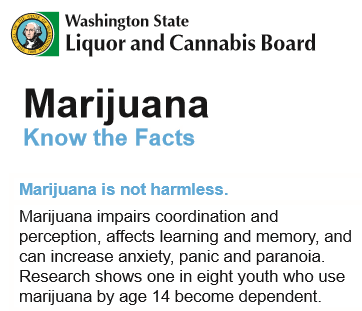
The Jefferson County Health Department provides tons of science-based information about the dangers of marijuana use.  Their website links to concise, exaggeration-free papers from the National Institute of Health and the Alcohol and Drug Abuse Institute of the University of Washington.  The Washington State Liquor and Cannabis Board also provides a summary of the known health consequences of marijuana use.
Al the following statements on the adverse health consequences of marijuana use come from those sources.
They make it clear “There is no ‘safe’ way to use marijuana,” whether smoked or ingested.  That is not something you will ever hear from Brotherton, his employees or any one else who wants more people to buy and use their dope.
Among other scientifically-established dangers of marijuana the Health Department wants people to know about, in addition to those mentioned at the start of this article, are:
–It is more than possibly “habit forming.”  It is addictive.


–Marijuana use can damage brain development, in babies taking in THC through their mother’s placenta or breast milk to teenagers to anyone up to age 25.  (Brotherton, as do all pot dealers, gladly sells to anyone over 21).  It can cause long term damage and a permanent drop in IQ and loss of verbal ability and memory.


–Pregnant women who use marijuana have 2.3 times greater incidence of still birth.  Marijuana-exposed children are more likely to show gaps in problem-solving skills, memory and the ability to remain attentive. Parental marijuana use is associated with a greater likelihood of using marijuana at an early age.


–Contrary to what Brotherton’s employee said, to quote directly from UW’s Alcohol and Drug Abuse Institute, “Marijuana smoke contains carcinogenic combustion products, including about 50 percent more benzoprene and 75 percent more benzanthracene (and more phenols, vinyl chlorides, nitrosamines, reactive oxygen species) than cigarette smoke.68 Because of how it is typically smoked (deeper inhale, held for longer), marijuana smoking leads to four times the deposition of tar compared to cigarette smoking.”


–Marijuana smoking is associated with large airway inflammation, increased airway resistance, and lung hyperinflation, and those who smoke marijuana regularly report more symptoms of chronic bronchitis than those who do not smoke.


–Marijuana has been linked to increased psychiatric disorders, including depression, anxiety and substance abuse disorders.  It is particularly dangerous for individuals with a genetic predisposition to schizophrenia and psychosis.  The high THC content of today’s marijuana products increases the risks of psychiatric problems.


–Research has shown that marijuana’s negative effects on attention, memory, and learning can last for days or weeks after the acute effects of the drug wear off, depending on the person’s history with the drug.  Consequently, someone who smokes marijuana daily may be functioning at a reduced intellectual level most or all of the time.


–Chronic use of marijuana can lead to Cannabinoid Hyperemesis Syndrome—a condition marked by recurrent bouts of severe nausea, vomiting, and dehydration. This syndrome has been found to occur in persons under 50 years of age and with a long history of marijuana use. Cannabinoid Hyperemesis Syndrome can lead sufferers to make frequent trips to the emergency room.


Researchers are finding more links between marijuana use and an array of physical and psychiatric problems.  The symposiums held by UW’s Alcohol and Drug Abuse Institute are taking a close look at marijuana as it is somewhat easier now to study following legalization in Washington, though it remains listed as a Schedule I drug by the DEA.  Because many long-term marijuana users also use other drugs, particularly tobacco (70% of marijuana smokers also smoke tobacco) it is taking time to isolate all the adverse effects of marijuana. Research has established, though, that the adverse health effects of inhaling marijuana persist even with the use of bongs or vaping.


Brotherton Ducks Direct Questions


Brotherton had agreed to an in-person interview to discuss how his marijuana business could conflict with his obligations as a county commissioner.  We set a date and time.  Shortly before the interview was to take place, he cancelled.  He said he was now too busy and sent us a brief statement in lieu of the interview:  “As a commissioner, I would always put the public’s interest before my own. I support the ‘appearance of fairness’ doctrine. If the BoCC we’re considering something that could benefit me personally, I would be transparent and take the advice and err on the side of caution, recusing myself.”

That was not the point of the interview.  So I sent three questions he could answer whenever he found time:
Those questions were:
1.  How can you be on the Board of Health (a duty of being a county commissioner) which works to educate people about the dangers of marijuana use and deter its expanded consumption, when you are in the business of promoting marijuana use and its broader acceptance?
2.  Would you personally participate in campaigns to spread the word on the dangers of marijuana use in order to reduce its acceptance and consumption?
3.  Do you inform your customers of the dangers of smoking and ingesting marijuana and, if so, how and what information do you give them?
We are still waiting for Mr. Brotherton’s answers.

District 3 Commissioner Race: Greg Brotherton on the Issues

With this set of answers from Greg Brotherton we complete our Q&A with the candidates running to replace Kathleen Kler as the Jefferson County District 3 Commissioner.  You can read the discussion with the other candidates, Craig DurganJon Cooke and RyanMcAllister, by clicking on each of their names.
Greg Brotherton is one of three Democrats in the race.  He is the proprietor of Sea Change Cannabis in Discovery Bay, the first pot shop to open in Jefferson County.  He also operates the Disco Bay Detour bar and performance space, the Discovery Bay Village Store and a recording business.   He describes his marijuana business as “an economic driver for the Discovery Bay Area.”  He is a graduate of Evergreen College and taught English in South Korea.  His website contains more biographical information and further statements on his positions and reasons for running, which he discusses in his answers below.
Now, let’s hear from Greg Brotherton:

1.  What do you see as the most critical need facing District 3 and what specifically will you do to address that need?

There are many needs in District 3, and throughout the county. Looking at a uniquely District 3 issue, I believe that rural internet is the key to levelling the playing field between rural and urban areas.
I would pursue legislative options, such as following the pilot program in Kitsap County which allows the PUD to give retail access if there aren’t any private companies that will provide the “Last Mile” service.
I would also work to encourage more Wireless Internet Service Providers.  I was walking around Gardiner today, and many appreciative residents praised North Olympic Wireless for their service.  We have a fiber backbone all the way down Highway 101. We need to open it up to small entrepreneurs to start decentralizing our broadband service.
I would also pursue 5G cellular towers, perhaps pushing the Opportunity Zones created by the state to incentivize investment and bring the cellular companies out to the country first.
2.  There has been much talk of the need for regulatory reform by all the candidates in order to promote a more prosperous District 3.  Which regulations would you change and how?
I have already been advocating the Jefferson County Board of Health to adopt the 2012 Washington State Recommended Standards for Water Conserving On-Site Septic Systems.  This would allow, for example, composting toilets and greywater systems that reduce water use and often recapture the greywater for irrigation use, rather than mixing it with blackwater.  Currently these systems are only permit-able with an on-site septic system in parallel.
I would work to change the On Site Sewage Code, 8.15, to allow these proven and often much cheaper alternatives.
Since all Commissioners are on the Board of Health, it will be much easier to advocate for composting toilets, and relaxing Additional Dwelling Unit limits on rural residential land.  I can see a five acre parcel with five tiny houses on it, all with composting toilets and greywater systems feeding a central orchard. Five families could carve out a life in the space that one or two takes now.
3.  What should the rest of the county, and Port Townsend in particular, be doing to alleviate the poverty and lack of economic opportunity in District 3?
Port Townsend has their own elected officials, and it is not a County Commissioners job to direct them. I hope to work with the city on issues that affect us all, like our recycling, health care, housing and more.
We should work with our farmers and small businesses to make it easier to build houses and businesses.  With the capacity for value added products, the seasonal nature of a lot of farm work can go year-round. We should, again, work for rural broadband.  There is nothing else that will educate us, allow us access to markets, and keep our voices relevant, so much as equal access to broadband.
It is my experience that District 3 residents aren’t looking for anything to be handed to us, we just want to take care of our business and have a voice at the table.  There are obstacles in our permit process and in our infrastructure, but I am confident we can make progress on these important issues.
I am the only candidate with experience in five key areas.


1. I have managed assets worth in excess of $200,000,000. Jefferson County has many assets worth quite a lot of money.
2. I have managed budgets in excess of $10,000,000. It is important to have experience with large budgets.
3. I have developed land in Jefferson County for the last 20 years. So, I am quite familiar with what it takes a business to start in operation here and the land use regulations.
4. I have run a successful business in Jefferson County for over 20 years.
5. I am an engineer by training and understand infrastructure and why it is so vital to our economy.


All these skills are applicable to being a member of the Board of County Commissioners. I believe that my experience will serve the residents of Jefferson County well.
When my family moved to Jefferson County, District 3 was the only choice. I’ve lived in the suburbs, cities, and abroad, and never felt home until we came to Quilcene.
In this quickly changing world, Jefferson County needs a collaborative innovator, so we can be a leader in thoughtful rural development.
I have worked for sustainable development from all sides. As the owner of three thriving businesses in District 3, I know how to be successful within the county and have created over twenty jobs. As a member of the Quilcene School Board, I learned what it takes to be proactive and effective in strategic planning, budgetary review, and developing policy.

District 3 Commisioner Race: Ryan McAllister on the Issues

We put the same questions to all four candidates in the race to replace Kathleen Kler as the Jefferson County District 3 Commissioner.  You can read the answers from Craig Durgan and Jon Cooke by clicking on their names.  Friday we will publish answers from Greg Brotherton.  Now it is Ryan McAllister’s turn.

Ryan is running as a Democrat.  As I have previously disclosed, long before I started the Free Press, when Ryan was the only candidate in race, I gave him my support.  We met during the campaign to stop Prop 1, a regressive property tax increase  in the name of “affordable housing.”  But it would have made housing less affordable with no real prospect of doing anything about the county’s housing crunch.  He stuck his neck out for the working poor and low-income homeowners in the county and incurred the wrath of the PT political establishment behind that very bad idea imported from Seattle. He judged the issue correctly.  District 3 voters saw it for what it was.  Quilcene voted “no” by an 8 to 1 margin, with  Brinnon and Port Ludlow not far behind.  District 2 crushed it.  Even Port Townsend voted it down.  Prop 1 lost in all but 2 precincts throughout the county.

I was impressed by his integrity and determination.  We come from nearly opposite sides of the political spectrum, but found we could talk honestly and with mutual respect about our different ideas–something so sorely lacking in today’s bitterly divided America.
Ryan is passionate about helping people, selflessly, as demonstrated by his early career choice of being a firefighter.  Jumping into a fire to save others–reminds me of how the Prop 1 fight looked when we started out.
Enough from me.  Make your own decision. Other good people have offered themselves in this race. We can be impressed with them, too.  Be informed about the issues and the candidates.  Now, let’s hear from Ryan McAllister.

1.  What do you see as the most critical need facing District 3 and what specifically will you do to address that need?

I will seek to create a Task Force to streamline the permitting process. The Task Force should be comprised of homeowners, contractors, septic designers, other stakeholders. 2. Much needed sewer systems for communities in south county to promote business and affordable housing. 3.High-speed Internet is critical infrastructure for rural communities to support local entrepreneurs and businesses. I will explore a public-private partnership. In 2018 internet is proving to be another vital utility such as water, power and sewer.
2.  There has been much talk of the need for regulatory reform by all the candidates in order to promote a more prosperous District 3.  Which regulations would you change and how?

As stated above I seek to streamline the Department of Community Development permitting process. The task force that I will create will be made up of professionals in the industry such as contractors, septic designers, developers, and other stakeholders. The goal of this task force will be to find SPECIFIC areas where the county can make changes to better and more effectively serve the community.

3.  What should the rest of the county, and Port Townsend in particular, be doing to alleviate the poverty and lack of economic opportunity in District 3?
I have a six-part plan that if elected I will institute to bring economic opportunities to the county. Community Planning, Infrastructure, Economic Development, Housing, Healthcare, and Environment. More info at www.ryanmcallister.net
4.  What would you like to tell voters about why you should be the next District 3 County Commissioner?
I am a young man who works hard for his community. I truly love our county and its rural character; my goal is to preserve and enhance that character. I will represent everyone in the county regardless of party affiliation because we are all neighbors who choose to live here.

DISTRICT 3 COMMISSIONER RACE: JON COOKE ON THE ISSUES

We asked all candidates in the race for the open seat representing District 3 on the Jefferson County Commission the same four questions.  Monday, we published Craig Durgan’s answers.  Today it is Jon Cooke’s turn.

“Growth, Opportunity, Prosperity.”  Jon Cooke frequently uses these words to explain what he believes “GOP” stands for.  Mr. Cooke is chair of the Jefferson County Republican Party and the only Republican in the race.  He has been a teacher and coach, and currently is responsible for maintenance of many Jefferson County public facilities.  You can read his bio by clicking here, courtesy of the Honesty Forum.  Mr. Cooke has been a keen observer of developments affecting life in District 3 and around the county.  We appreciate his thoughtful answers.

1.  What do you see as the most critical need facing District 3 and what specifically will you do to address that need?

The most critical need in District 3 would be a sewer system in District 2.  The sewer system in Port Hadlock would break the way for business development to come to our county.  These businesses would provide jobs and expand the property tax base to increase the revenue of the county – which would provide for better police protection and other services provided by the county.  There are several avenues for implementing the sewer system that are waiting for the re-examination of the overpriced system the county had previously proclaimed.  Once that estimate is in, then we would need to bring all the different ideas to the table and see which one makes the most sense.  This project is a must and as commissioner I would push to see it through and help Commissioner Dean to complete her campaign promise to deliver a sewer system to the voters.

2.  There has been much talk of the need for regulatory reform by all the candidates in order to promote a more prosperous District 3.  Which regulations would you change and how?
The road to real change in Jefferson County starts at the doors of the Department of Community Development.  There are regulations in our building codes that go above state codes.  Those codes could be relaxed to give more opportunities to builders and businesses.  In the Urban Growth Area of Port Hadlock there is a retail building code that limits building size to 20,000 square feet.  Port Hadlock QFC and Hadlock Building Supply are maxed out in square footage.  For any large business to come into the county they will want a larger site than that.  As a commissioner, I would work with Patty Charnes, DCD director, to identify areas that could be relaxed.  The percentage of Jefferson County land for Heavy Industrial now stands at .02%.  We need to provide zoning to increase this where it will have a minimal effect on our rural character.  Also, our rural villages need updates to the water systems supplied to these areas, which would need a commissioner who could work with the PUD commissioners to find solutions.
3.  What should the rest of the county, and Port Townsend in particular, be doing to alleviate the poverty and lack of economic opportunity in District 3?
After attending the Planning Commission meetings for months previous to my decision to run for commissioner, it became clear to me that our leadership has the idea that small businesses should be the economic mainstay of the county.  How has this worked so far?  Unemployment has risen above the state and national levels, young families are leaving our schools, and economic recovery has happened all around us.  Small businesses are vital to any economy, but should not shoulder the whole load.  We need a diversity of business types and sizes to prosper.  Port Townsend was recently voted one of the most beautiful towns on the west coast.  If they want to remain in that mind set, I am fine with that, but they should not hold back the rest of the county from taking advantage of opportunities for economic recovery.  Port Townsend is our only current viable option for large housing areas and they should be helping to alleviate the housing shortage.
4.  What would you like to tell voters about why you should be the next District 3 County Commissioner?
The County’s Unencumbered Fund (funds that are not earmarked for specific areas of spending) of the current budget is above a million dollars.  Budgeted out four years ahead that fund will be down to a little over 100,000 dollars.  Something is not working.  We need some common sense solution to our revenue problems.  Bringing in businesses will broaden our property tax base, so the county will have less of a reason to dig deeper into your tax pocket.  As a leader, I listen to what people say – not to answer them with my solution, but to actually hear their ideas.  We have a lot of intelligent people in our county, but if a commissioner is not truly listening the ideas never take shape.  One man said that he had looked over the Jefferson County Comprehensive Plan Update and noticed there is no matrix to see if the “goals” are really being met.  As a wrestling coach for over 30 years coaching athletes to set goals, I know that if there are not benchmarks to achieving the goals then they are not goals, but, instead, just dreams.  A lady told me if she wanted to buy clothing she has three options: go to Kitsap or Clallam Counties, buy the overpriced clothes on the Port Townsend water front, or go to Goodwill.  Too many people are choosing the first option.  A retired marine biologist asked why we are not putting pressure on The Department of Fish and Wildlife to open salmon fishing here in May and June.  We are missing out on hundreds of thousands of dollars in tourism spending annually.  The salmon not caught by the tribes and to resupply the fisheries are being ground up for fish meal.  Why not open up our waters again?  If you want a commissioner who will listen to you check out my website at: www.electjoncooke.com.
NEXT UP:  Ryan McAllister, Democrat for District 3 County Commissioner