by Ana Wolpin | Dec 22, 2022 | General
December 31st is the deadline for removal of all streateries remaining in Port Townsend.
As year-end approaches for the expiration of the streatery temporary use permits — which despite public outcry, the City Council extended yet again last May — five rarely-used eyesores remain. Our last article focused on Alchemy’s ripped, moldy and potentially hazardous gutter tent next to Haller Fountain. This roundup will provide an update on that situation and take a look at the four other streateries which have continued to eliminate precious downtown parking during the peak holiday shopping season despite disuse and disgruntled neighbors.
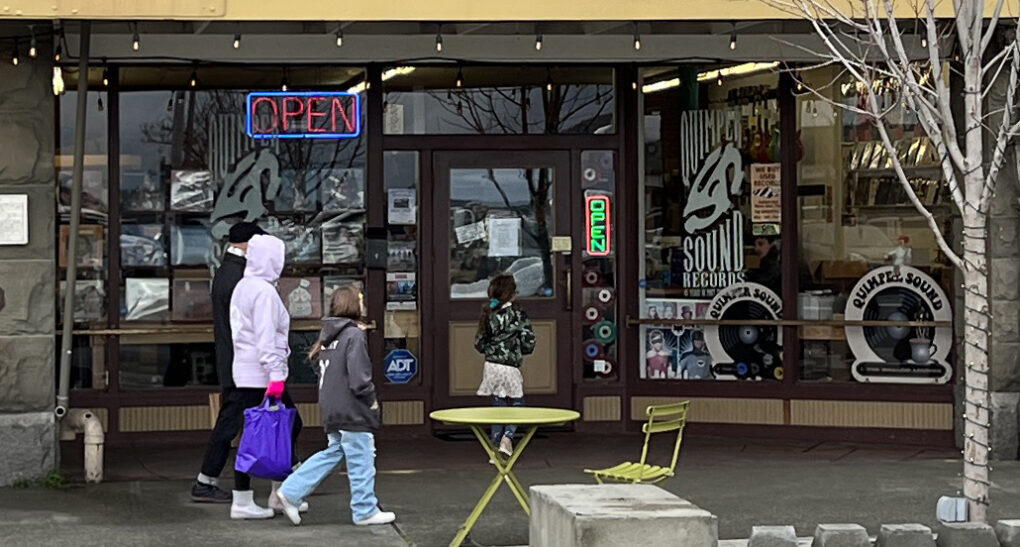
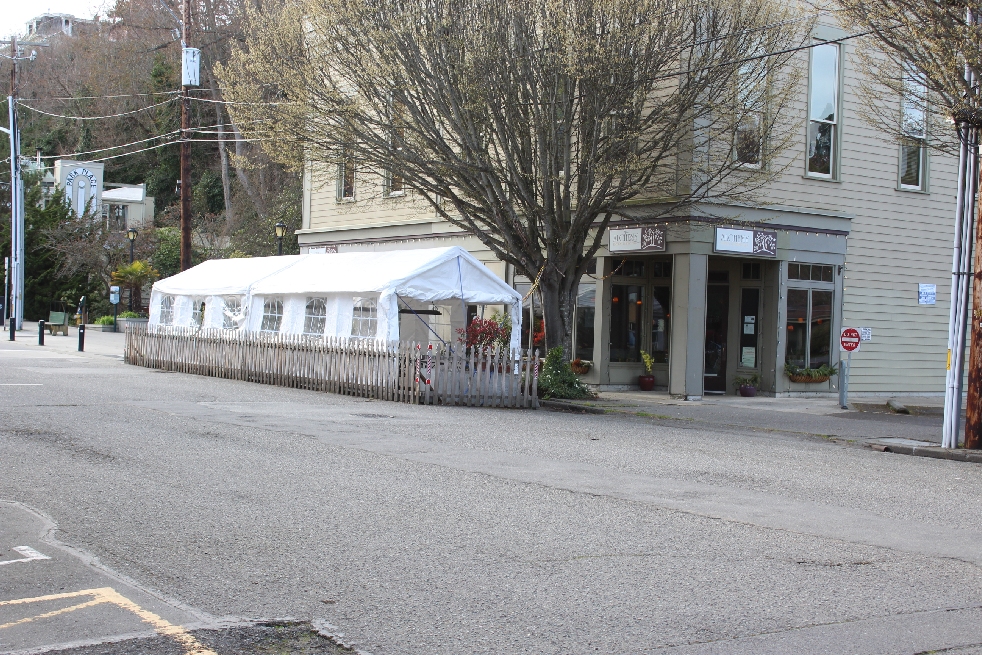
The most visibly obtrusive and un-neighborly of those remaining four is The Old Whiskey Mill tent on Water Street, pictured at top and below. Not only does it front a portion of Kris Nelson’s restaurant (the windows at far right), it obscures Quimper Sound Records’ storefront (center portion of photo) as we have previously reported.
Quimper Sound owner James Schultz wrote the City Council last spring about the damage this unfair taking of his street frontage was causing his business. His letter was apparently ignored, with council extending the injury — blocking visibility to his business and removing the parking in front of his shop for Nelson’s profit for another eight months. His story is perhaps most instructive regarding the harm this experiment has caused, benefiting a few select restaurants to the detriment of other businesses.
In a comment to the Free Press on December 1st, Schultz once again described his frustration:
“As the Covid restrictions were brought down upon us by the state my business was shuttered leaving no foreseeable future. My neighbors as well felt the effects. We began to see the hope of being allowed to reopen by the state and this came with heavy restrictions. I was asked if I would allow the space in front of my shop on Water St to be part of a temporary tent structure to be used during the time these occupancy restrictions were in place. I gave up valuable street frontage to help because I was raised to believe we are all in this together. That time has passed. The occupancy restrictions were lifted. Then the vaccine mandate went into effect. I bit my tongue as the tent covered my storefront because I understood telling 30pct of potential customers and their parties to not come in is fiscally deadly to a service business. I pitched in to help. Our county finally removed that last restriction.
I read the tea leaves after meeting our City Manager at a public meeting. His only objective was to make streateries permanent. Appointed officials are like Gods and he will get his way so I asked that the council and his office make their rules that we build nice, fitting structures that only sit in front of the place served but noted I prefer no streateries. Well they could have done something and I would have spent a summer season in sight but they kicked the can down the road leaving the ugly tent in front of my shop. Frankly I am just disgusted by our City Council and our Manager. My business has suffered. The last few years has been horrid anyhow but getting calls from professional delivery drivers and customers saying they cannot find my storefront even with an address….”
Schultz’s comment is more than a tale of personal difficulty; it provides a glimpse into the bait and switch by the City, and the fast-track process engineered to achieve a predetermined outcome. Other business owners like Gail Boulter, a downtown merchant with multiple shops over a 40-year span, also described initially being assured by City Manager John Mauro that the streatery scheme would only be temporary — just to help restaurant owners out during the pandemic — only to learn after that emergency passed that a process to codify a permanent program was underway.
Mauro had called her, Boulter told council in an April public comment, when Covid restrictions first began affecting restaurants:
“[He] wanted our impression about how we felt about the streateries… I said we would be happy to do anything we can to help our restaurants. However, under no circumstances would any of us merchants downtown want to see this to be a permanent situation. He assured me at that time Oh, no no no, this is a temporary fix.”
The month before Boulter’s comment, one week after a survey designed to support the City’s intended outcome was released (a survey that was never publicized and most of the public never saw), Manager Mauro held an Open House about making streateries permanent — the public meeting Schultz references. We heard from numerous people who went to that Open House, ostensibly held to gather feedback from the business community and other members of the public about making the program long-term. The story from those in attendance was consistent. A couple of dozen business owners attended, gave overwhelmingly negative feedback, and were not listened to. “His only objective was to make streateries permanent,” as Schultz said of Mauro. This was not a good-faith gathering of input, it was a box to be checked fulfilling “public process” so that the City could say in its justifications for a permanent program, We held a Public Open House.
Over multiple City Council meetings that followed, Whiskey Mill owner and streateries beneficiary Kris Nelson was the only businessperson to speak or write in favor of the permanent program. In the face of widespread opposition to allowing streateries to remain any longer, the council nonetheless continued the temporary program — through the extension of Streatery Special Event Temporary Use permits — with the rationale that we needed extra outdoor dining over the summer for those still fearing Covid. Summer somehow stretched out to January.
A couple of new streateries sprang up following approval of that May extension — seating in the street outside the Silverwater Cafe on Taylor which took out their handicapped parking spot, and a new installation at PT Anchor on Water Street near City Hall. The Silverwater removed their outdoor tables after the summer season, while Anchor’s streatery is still in place.
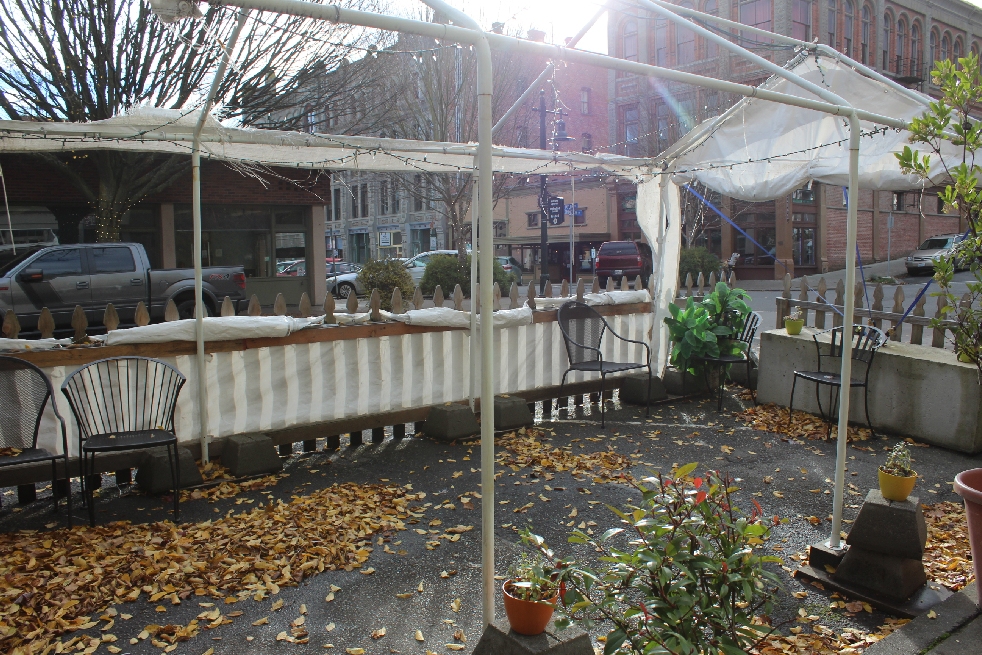
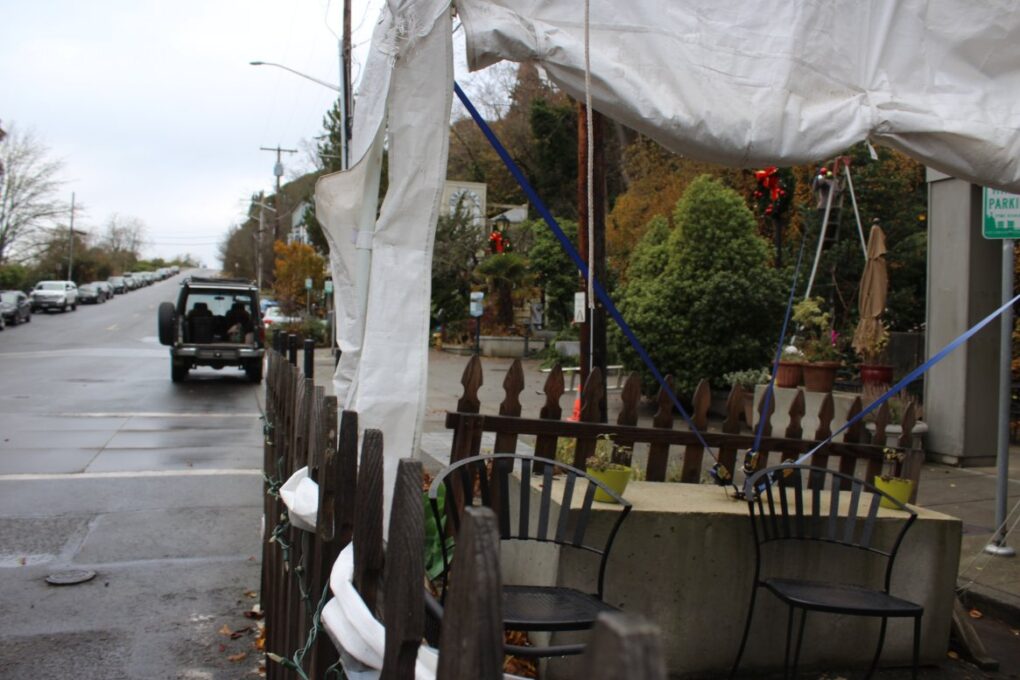
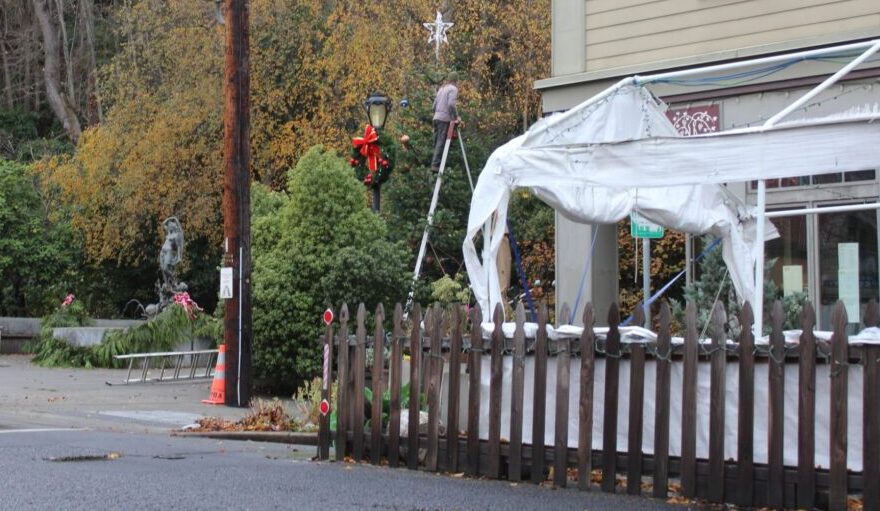
All the photos in this article were taken over the months of November and December, most of them during the lunch hour. No diners were ever seen using any of the streateries over that span, yet restaurant owners like Nelson have continued to take up valuable parking to the detriment of the business community as a whole. It would appear that all are waiting until the last possible moment to give up their free street space, the year-end deadline.
The Old Whiskey Mill
Nelson claims she asked the City if she could shift her 48-foot tent so that it did not block Quimper Sound’s storefront, so that more of the tent was in front of her own restaurant, and she says that the City said no. Yet she chose to keep the nearly-always-empty visual blight in the street through this prime shopping season, knowing it was taking up valuable parking and hurting her neighbor. All except the snow shot are lunch hour photos taken during November/December:
Three More Unused Streateries
Tommyknockers:
Also on Water Street, Tommyknockers has maintained its long-standing installation of picnic tables and a picket fence, even though it has outdoor seating in the back of the restaurant. It replaced three of its four umbrellas with infrared heaters that put propane bottles at diners’ feet — and in the street.
Cellar Door:
Nearly two years ago, in February 2021, City Manager Mauro signed off on a no-fee agreement for the Cellar Door (off Tyler Street behind the Mount Baker Block building) of three city-owned public parking spaces to be used “during COVID-19 Restricted Dining.” While Mauro was assuring downtown merchants that this “temporary fix” would never be made permanent, the Cellar Door owner was led to believe their street use would be a permanent gift, and as a result invested in infrastructure work unlike the temporary tents and tables that other restaurants put in the streets. They graded the area and built high-walled structures. The end result created problems for delivery vehicles that frequent the alleyway, some near-accidents, and on at least one occasion led to an altercation that resulted in police intervention.
PT Anchor:
As described earlier, Anchor was the last restaurant to join in the streatery free-for-all, after the council extended the temporary use permit last May. As the newest and simplest streatery on the block, It is the freshest looking today. No tent, umbrellas, propane tanks or lighting, just a picket fence with wooden picnic tables in the gutter. Has this empty streatery across from City Hall also remained in place during the winter just because it can?
The Icing on the Bad-Neighbor Cake: Alchemy
Our November 30 article focused on the ugly mess in front of Alchemy just days before Main Street’s annual Christmas tree lighting at Haller Fountain. It described the upset among neighboring businesses and wondered why the City was allowing it to remain. The tent was not removed before the event, continued to deteriorate (shown below on Dec. 3), and is still in place.
I suggested that any coverage of Santa arriving at the fountain on December 4th would pretend the tent wasn’t there. As it turns out, the Peninsula Daily News did just that, cropping their photo to avoid the embarrassing tattered elephant in the room entirely. The Leader didn’t even cover the annual event. Here is what “JOY IN PT” actually looked like in our famously picturesque seaport on December 4th, as families awaited Santa’s arrival, and after the traditional community tree lighting:
Following the festivities, Alchemy added insult to injury by stringing the dilapidated picket fence surrounding the disgusting tent with multi-colored lights, drawing even more attention to it. It now consists of a moldy mess at one end, with the other half a rickety, stained skeletal frame.
Lipstick on a pig? Or a grotesque joke from Alchemy owner Adam Levin, further thumbing his nose at the outpouring of complaints?
In an email exchange with Public Works Director Steve King, I asked him why he had only sent inquiries to Levin about the state of the tent (inquiries which he previously told me had been ignored). Why was the City not taking action to remove this dangerous eyesore? Was it because the temporary use permit which had been extended — and then extended again — had no teeth for preventing this kind of abuse?
“Yes,” King replied. “All of the tents downtown were part of the special events temporary permit and not subject to the ordinance.”
The ordinance he refers to is one allowing for permanent streateries in the future, which prohibits the degradation we were all witnessing with the tents and tables in the streets. But even though council had already seen problems last winter with this program — using phrases like “ugly tents” and “unsightly weathering” — rather than adding safeguards, they simply extended the already problematic special events temporary permit for another eight months, preventing the City from removing messes like Alchemy’s tent.
Community Feedback
How has all this sat with the people of P.T.?
Following the publication of our November 30 article, a Free Press reader alerted us to a question posed to a large local Facebook group called Port Townsend Community. A member of the group asked “What do you think of this?” and gave a link to our article about the Alchemy tent.
Sixty-six comments followed, nearly all of them opposing the streateries.
“Ugh, I’d never eat in one of those filthy virus incubators.”
——————————
“Street dining needs removed imo. It’s unsanitary as shown, unsafe having people in the street. Additionally simply giving restaurants those boosts while taking away from other downtown businesses is ridiculous.”
——————————
“Take ’em all down, I say. They were necessary last year during COVID restrictions on indoor dining, but they are not now. They represent a free giveaway of public space to private businesses, and a reduction of precious downtown parking spaces.
I got a little chuckle about the opposition to taking them down from the owner of the Old Whiskey Mill. Last year in the winter, my wife and I dined in the tent outside that establishment a couple of times. Both times, it was a miserable experience, with cold winds and rain, and ineffective heaters connected to the indoors by extension cords strung across the sidewalk.”
Some pointed out the irony of the City’s recent demand that uptown’s popular, artistically-crafted tree sculpture called Raccoon Lodge be removed:
“And yet the raccoon lodge has to go, lmao… I just don’t get it.”
“So these are ok but the Raccoon lodge needs to go???”
The same week, a NextDoor poll asked “Who supports onstreet restaurant tents sacrificing parking spaces?”
The poll generated 35 comments, offering a broad range of views through its small sample. Some people wanted to see Port Townsend be “car free” — the primary rationale behind the streateries push by City Manager Mauro, Mayor David Faber and some of the council members. A few folks paranoid about respiratory viruses, still afraid of indoor dining, also supported the streateries.
But one comment stood out for the person who first alerted me to this poll. He sent me a screen shot of the response from Brent Shirley, former mayor of Port Townsend, who was at the City’s helm when Port Townsend Main Street first came into existence:
“Port Townsend Main Street Program was founded in 1985 by the Mayor & City Council and was the first in Washington State,” Shirley wrote.
“Our mission is to preserve, promote and enhance our historic business district. As Mayor at the time, I don’t believe what’s going on today meets these goals at all. We’ve spent millions of dollars over the last 40 years, rebuilding the docks on the waterfront & replaced a contaminated bulk oil plant with the Northwest Maritime Center. This was all accomplished by locals and I don’t believe City Hall is even aware of this or they wouldn’t trash it up by keeping shelters, on the streets in use for Covid19 that are passed their useful life, no longer in use and are, in my opinion, a blight.”
The fact that today’s city government is pushing this agenda and that Main Street simply looks the other way when a business in downtown’s historic district trashes its traditional community tree-lighting at Haller Fountain is testament to the truth of Shirley’s criticism.
What about future streateries?
Council’s deadline to remove the existing streateries by year’s end does not mean we’ve seen the last of them. The limit on further temporary extensions was simply a pause on developing a permanent program downtown until parking issues are addressed that have plagued downtown for decades.
Nearly all council members have expressed their enthusiasm for creating permanent streateries downtown once a new parking plan is in place. The quiet deal first offered to the Cellar Door exemplifies the widespread parking giveaway that they envision, replacing it with street dining. Faber is especially emphatic about his agenda to eliminate vehicular traffic and prioritize private use of public streets for business owners. He has called it “the storage of personal property on the street.”
In conjunction with extending the temporary use permit, council unanimously approved an ordinance (the one referenced by Public Works Director King) allowing a limited number of permanent streateries Uptown and in all other commercial districts except for downtown. The streateries displayed here that had temporary status have to come down by December 31st, but restaurants outside of downtown can apply for permanent ones at any time in the future.
The permanent streateries program operates on a lottery system. I asked Steve King to clarify how it works:
“The lottery system is based on preliminary screening to make sure the applicant knows what is required and then application. If there are more applications then allowed spaces in Uptown, then there is a drawing.”
Whether it’s because of resounding public sentiment opposed to this agenda or lessons learned over the last few years, to date no businesses have applied. There had been one streatery Uptown, outside the Seal Dog Coffee Bar on Lawrence Street (see “Uptown Streateries: A Reality Check“), and they removed their tables and fence after the summer season. They have not applied for a permanent streatery.
Applications are due by July 1st of each year. Since no one applied before last summer’s deadline, no new streateries will be possible until the next round. Time will tell if we will be subjected to this scheme again.
The good news is that the current blight on our historic Victorian streetscape must be cleared out before the new year. I asked King if there was any grace period for removal and if a streatery owner does not comply, what penalties and/or action(s) the City would take.
“We have notified all the streatery owners that their streateries will need to be removed by the end of day on 12/31. If the streateries aren’t removed, then the City will have the right to remove them.”
King’s answer only raises more questions.
Will the City’s “right to remove” translate to actual action and oversight, something we’ve not seen demonstrated to date? Alchemy’s owner has ignored concerns from its neighbors, the community at large and even the City. Will businesses who have shown blatant disregard for others now do the right thing? ARE there any penalties for restaurant owners who do not comply?
Removing a flimsy picket fence and a few picnic tables is one thing, but what will it take for the Cellar Door to restore three parking spaces by Dec. 31? If the City is forced to invoke its “right to remove” any streateries, who pays for that? Does the City — meaning the taxpayers — pick up the tab?
————————————
Streatery photos by Stephen Schumacher, Harvey Windle and Ana Wolpin.
————————————
UPDATE 1
A note from Harvey Windle just prior to publishing informs that the Old Whiskey Mill tent is in the process of being removed:
“The Whiskey Mill mess tent is in parts and taken down. The massive multi-ton concrete blocks bookend the parts. A crane truck would be needed to move those.”
There’s no arguing with Mother Nature. Snow prevails.
————————————
UPDATE 2: The Old Whiskey Mill Tent Comes Down
As noted above, there is still debris to be cleared off the street. The large concrete blocks (one of them visible inside the corner of the fence above) were a safety measure at either end of the tent to protect the structure and diners in the street from parking cars. Here they are, following the tent’s removal:
Why is the removal of these streateries such a big deal?
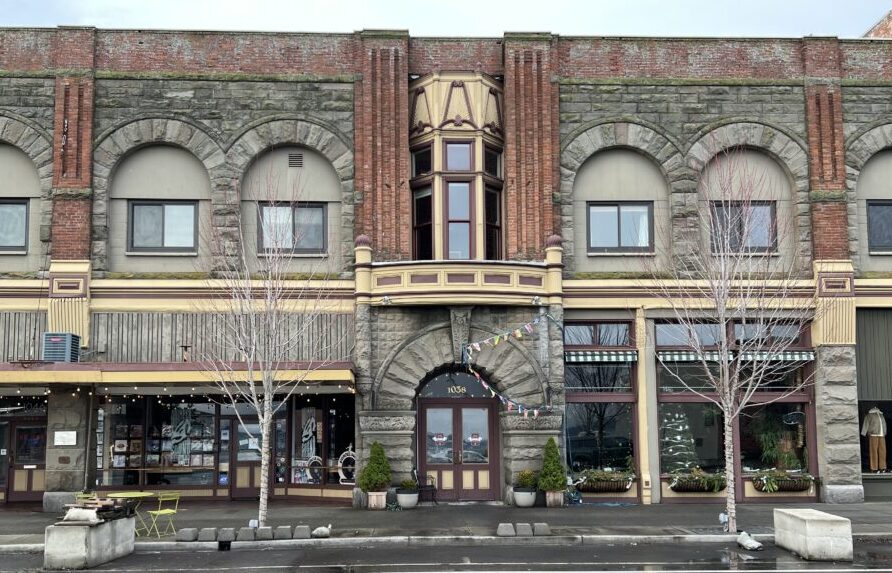
The real revelation comes in seeing the difference in the streetscape without that tent blocking the storefronts. Even with the slushy snow, with concrete blocks and other debris remaining in the street, the contrast between the visual blight we have been enduring and what we see now is startling. Compare the aesthetics of these two images:
The loss over the last two-plus years to our town’s special character has been significant — an aesthetic so important to PT’s identity that even paint on these buildings is restricted to colors approved by the Historic Preservation Commission (HPC). Details like the arched entryway between Quimper Sound Records and The Old Whiskey Mill are what gives our downtown a rich ambience and celebrated appeal.
The grandeur of Port Townsend’s classic historic buildings is a legacy that secured our downtown and uptown commercial districts a place on the National Historic Register. The stunning Victorian architecture is what inspired the city to establish the first Main Street program in the country, as former mayor Brent Shirley describes above.
This special frontage is why commercial space downtown is so expensive. Stores like Quimper Sound pay a premium for the visual draw it offers. Well-designed window displays are critical for attracting shoppers into these establishments. Allowing restaurants to obscure other businesses’ prime frontage to boost their own profits is not only visually degrading to PT’s entire commercial district, the negative impact to the bottom line for the shops being blocked is incalculable.
Parking has not been restored yet and a bit of a mess remains. But Quimper Sound’s creative and inviting storefront is able see daylight again.
“After” photos taken by Stephen Schumacher on Dec. 22 (with snow and slush) and Dec. 25 (snow melted). By Christmas Day, Anchor’s streatery had also been removed.
by Ana Wolpin | Nov 30, 2022 | General
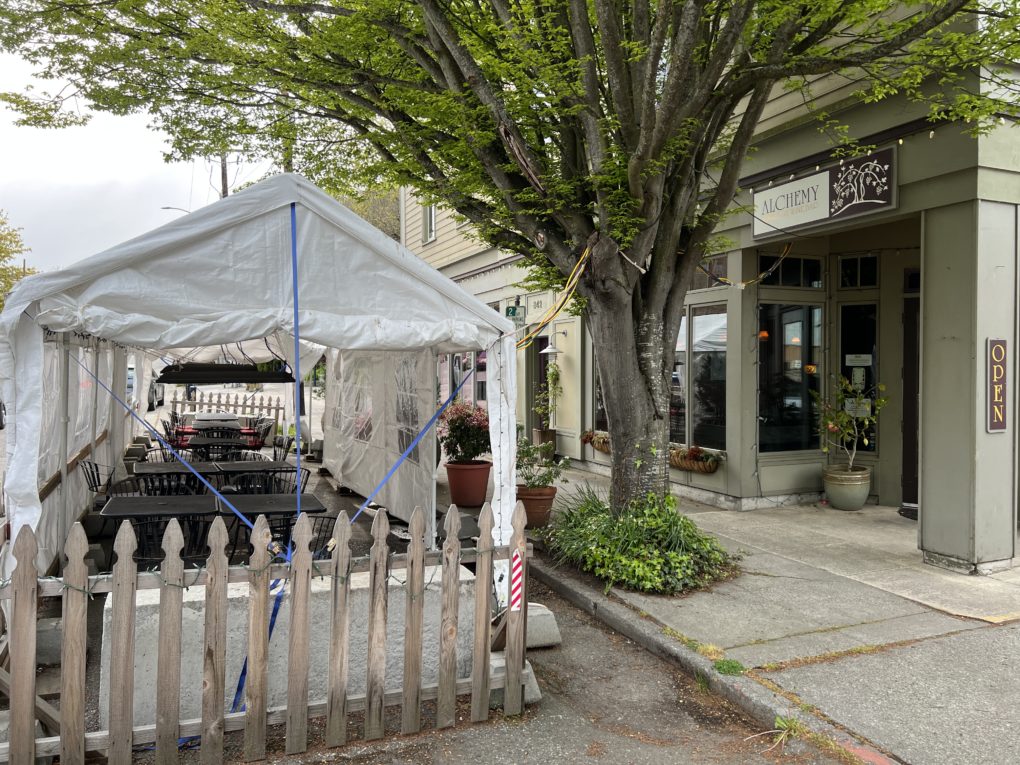
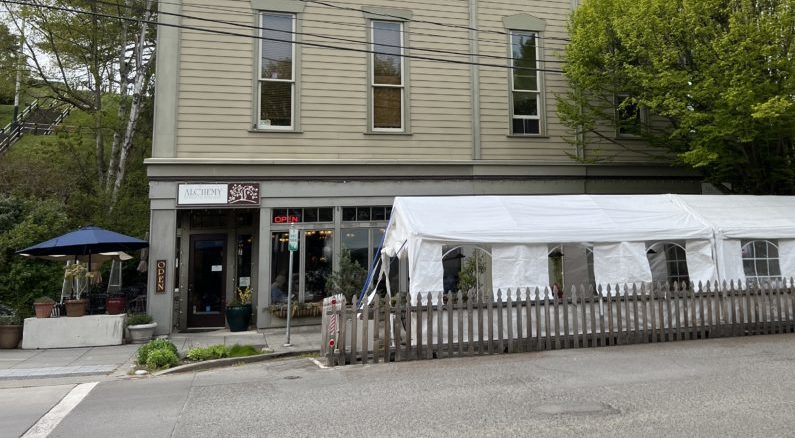
The photo above shows the skeletal remains of a streatery tent in front of Alchemy Steak & Seafood (aka Alchemy Bistro and Wine Bar), where according to their website “A New Culinary Adventure Begins.” The photograph accompanied an email to the Port Townsend City Council from Harvey Windle on November 25th.
Windle is not the only one raising concerns about the shredded — and on closer inspection, mold-ridden — structure, he is just the most vocal among neighboring businesses. Numerous people had commented to us about the trashed and unused eyesore fronting prime real estate, a blight in our historic downtown.
This filthy and tattered mess is the legacy of a policy that, despite near-unanimous opposition from business owners and residents alike, continues to scar Port Townsend’s commercial landscape.
The Road Getting Here
To help out restaurant owners during the pandemic — while assuring the rest of the business community that it would only be a temporary measure — the city created an emergency program allowing outdoor dining to be set up in parking spaces edging downtown and uptown commercial streets. As the emergency wound down, prior to any public process, it was announced that an ordinance to make the program permanent was in the works.
The public backlash over this bait-and-switch was immediate and intense. Over the months we covered this controversy (see our extensive coverage below), it became clear that both staff who had developed the policy and a majority of the council were loathe to give up their pet project: tables and tents sitting in high-traffic streets, with vehicles driving next to them and diners breathing in exhaust fumes, for the stated purpose of adding “vitality” to shopping areas. Statements from our mayor and other city councilors revealed that the intended permanent streateries program was driven by an agenda inching towards eliminating vehicles from our commercial districts.
Unable to ignore the overwhelming resistance from downtown businesses to a scheme that offered a giveaway of precious public parking spaces for the benefit of a few select restaurateurs, the City Council grudgingly rejected establishing permanent streateries downtown in May of this year. But despite an unambiguous public directive to remove what residents had begun calling gutter dining — and get rid of it now — our electeds nonetheless unanimously approved extending the downtown streateries for nearly eight months, until the end of 2022.
As we reported, public sentiment couldn’t have been clearer. Over the course of several meetings, hours of public testimony amassed. All of it was in opposition except one notable proponent: restaurateur Kris Nelson.
Nelson, whose streatery at The Old Whiskey Mill was benefitting from usurping not only all the parking in front of her restaurant on Water Street, but obstructing the frontage of Quimper Sound and another adjacent business, explained that she had a vision to create a “special and magical” space. And despite fellow business owners’ objections, including a letter to the city from Quimper Sound’s owner upset over harm the tent blocking his storefront was causing his business, Nelson maintained that she knew what was best to improve downtown. Every other public commenter at the city council meetings and all but a single two-sentence note (“Hooray for the streeteries”) among many dozens of sometimes deeply-researched and often passionate letters submitted to council opposed the scheme.
But public be damned. Initially Libby Wennstrom tried to persuade fellow councilors that, like Nelson, she possessed insight — that the community at large lacked — into what was best for this town. Her former hometown of Ithaca, New York had eliminated street parking in three blocks of a shopping district despite a similar outcry fifty years ago, she said, and it turned out to be a rousing success. There had been “huge screaming from all the surrounding businesses” with similar objections to those “we’ve heard here tonight… but in that case it didn’t pan out,” she asserted. A Free Press contributor then discovered that three parking garages had been developed to offset those losses, one garage for each lost block of street parking.
When that misdirect was revealed, Wennstrom asked with exasperation, “Can’t we just try something different?” And countering criticism from many business owners that a giveaway of public parking space for the benefit of select restaurants was unfair, she then proposed a free-for-all lottery: allow ALL businesses who wanted to put their wares in the streets to participate. As it turned out, it wasn’t so much about creating streateries, it was about eliminating vehicles in our commercial cores.
At another meeting Wennstrom resorted to an emotional plea for her elderly mother. If immediate removal of the five existing streateries were to be enacted per public request, she complained, “We are essentially telling residents and visitors that you are not welcome to eat in Port Townsend. As someone with an 82-year-old mother, I’m disappointed because I was hoping this summer she’d be allowed to eat outside.”
The absurdity of these five sites being the salvation for people still afraid of dining indoors was belied by a list from one citizen who had catalogued all the outdoor dining options in Port Townsend — al fresco settings that were not in the city streets, did not encroach on other businesses, and did not eliminate parking spaces. There were already more than forty such places, including sidewalk tables at Kris Nelson’s The Old Whiskey Mill. The few streateries that did eliminate parking to the detriment of surrounding businesses that Wennstrom and her colleagues appeared so anxious to preserve were irrelevant in providing outdoor dining given the dozens of options already existing.
When a motion from Ben Thomas to table the policy nearly found purchase at one meeting, the distress from Aislinn Diamenti was palpable. Thomas walked back the motion, causing Wennstrom to lean over to Diamenti with comforting words: “The bad thing didn’t happen,” she said.
At the final meeting on May 16 council was tasked to approve an ordinance bundling an extension of downtown streatery use until 2023 with a program to allow permanent streateries in uptown and other business districts. Again public feedback was entirely negative.
Mayor David Faber had earlier pressured his fellow councillors to move forward with the program because “it’s frustrating when… we task staff with something and then we pull back.” Before the final vote, the mix of statements from councilors revealed the pressure they felt to affirm all of staff’s hard work, as well as their misgivings about faulty public process and concerns over future problems that an extension would cause.
Deputy Mayor Amy Howard stressed she supported a long-term streatery plan, but registered opposition to the extension of the temporary use permits. She didn’t want to “leave the ugly tents up longer.” She was surprised to learn that the decision to extend had already been made at the previous meeting. Generally when staff is directed to prepare legislation for approval at the next meeting, revisions can still be made before a vote. The date for the extension was in the ordinance. Couldn’t that be changed?, Howard asked. No, it was too late, she was told: “the temporary use permit was already extended.”
Howard’s frustration was echoed by Ben Thomas:
“We end up with a pretty imperfect position right now. We wouldn’t have created this particular thing from scratch, I don’t think. It feels kinda weird to be charging forward with this… [but] we’ve already done all this work…”
In his final statement before the vote, Faber explained why — contrary to public sentiment — he thought public parking should be given away for street dining, but sidewalk cafes should not be encouraged. He summarized his underlying ideology with this word salad:
“Preferring to use sidewalk space for other use than a right-of-way instead of a parking space is prioritizing disrupting the flow of pedestrian traffic in favor of allowing the storage of personal property on the street. It’s a car-centric model that I don’t think makes much sense.”
“December is gonna be here before we know it,” councilor Monica MickHager said cheerfully just before making the motion which passed unanimously.
After joining in the vote to approve the ordinance, Thomas later said he didn’t realize the vote had included the permanent policy. The confusion among council members about what had transpired and where they’d ended up was striking.
Chickens Come Home to Roost
Why was the extension for the downtown streateries such a big deal?
Among the many objections citizens brought to council last spring was degrading aesthetics. Even then, the existing installations were raising significant concerns about being a visual blight. Uptown and downtown commercial areas are, after all, on the National Historic Register, our picturesque Victorian seaport the bread and butter of Port Townsend’s appeal.
Which brings us back to Alchemy.
Along with Amy Howard repeatedly voicing her worry that the “ugly tents” would sour the public on future support of streateries, Monica MickHager noted the even-then-tatty Alchemy tent was not being used. She asked for confirmation that if a streatery had been abandoned for 60 days, the city could ask for removal. At that point, according to neighboring businesses, Alchemy’s street tent had been mostly abandoned for five months.
Public Works Director Steve King answered her: “I’ve already contacted the new owner of the Alchemy and he’s gonna re-apply.” Whatever that meant. Nobody asked further questions.
In Faber’s comments prior to the vote, he agreed that “the other major concern I heard repeatedly is that they [current streateries] were dilapidated.” He, too, noted the “unsightly weathering” of the Alchemy tent, saying the ordinance they were passing with “this code does not allow that level of dilapidation to even exist in the streateries.”
The discussion about dilapidation, “unsightly weathering” and abandonment took place seven months ago regarding the Alchemy tent. At that time it looked like this:
That is what council members called dilapidated last spring. A tacky assembly detracting from a handsome downtown building. But at least it was intact. Here is what it looks like now:
Black mold grows on what remaining material hasn’t been wrecked by the elements. Does the Health Department consider it safe to eat in this environment?
This frankly disgusting ruin has removed 3-5 parking spaces from service for more than a year now in a downtown plagued by parking shortages. It has created bad blood between one business and many others.
In his November 25 letter to the city, Harvey Windle, just down the block from Alchemy, wrote:
“A neighboring business my manager spoke with is very irate over the Alchemy tent as most all who see it are. The pissed off neighboring business folk park all day in public space damaging all business access as so many do. Seems they only see what they want to as does the Council of Shame.
They spoke to Mari Mullen of City controlled Main Street Association that assisted in tweaking negative public input. She said something to the effect that it was allowed until January, and that would be here before you know it. Sounds like what Monica MickHager said when community input pushed back against the special interest parking losses…
I did have black spray paint in hand at one point and was going to call the police and notify them I was going to tag the structure with warnings about the toxic mold. I chose this course instead.”
This structure sits right at the entry to one of our most photographed city landmarks, Haller Fountain Plaza, a stone’s throw from the iconic fountain, the historic stairs to Uptown, and the site of the annual Christmas Treelighting Celebration. This photo is from Port Townsend Main Street Program’s “Holidays in Port Townsend” page on their website, announcing this year’s tree lighting on December 3rd.
The scene below, in the process of being festooned in Christmas finery on November 30, shows the proximity of the Alchemy tent to the fountain (just left of the pole):
Alchemy’s building flanks the fountain plaza. City Hall is just down Washington Street, three blocks east.
Again, from Main Street’s website for this year’s tree lighting, here is their photo featuring the entrance to Alchemy during the holiday season:
Here, this year, is the reality:
Larger Questions Loom
What happened to the 60-day rule that MickHager asked about that the city was supposed to enforce? Why no enforcement action for seven months? The unacceptable state of Alchemy’s tent had already been roundly noted before the May vote to extend the downtown streateries. How could the city then turn a blind eye?
On November 28, I emailed city Public Works Director Steve King that we were publishing an update on the streateries story and asked him what was going on:
“Why hasn’t the city required removal of this downtown eyesore which has been unused for the better part of a year, continues to degrade, and eliminates valuable parking spaces?”
King responded:
“I’ve reached out several times to Alchemy asking their intent for removal. I haven’t heard back. All streateries are to be removed by the end of the year. We plan on issuing a reminder notice.”
That any business would show this level of disregard for its neighbors is alarming. But most disturbing is why the city is not able to take decisive action given the concerns City Council expressed back in May about disallowing this kind of degradation. How can a business owner repeatedly ignoring inquiries be allowed continuance of this level of violation?
Where is our Historic Preservation Committee?
How is Main Street — the organization’s purpose being “Enhancing the Historic Districts,” “committed to protecting our small town charm” — able to ignore this? Their enthusiastic tree-lighting promotion tells us that on December 3rd:
“Santa is coming to town!… At 4:30pm, Santa will leave the Flagship Landing area on the Kiwanis Choo Choo and head over to the Haller Fountain to light the Community Tree.”
Perhaps it will be dark enough that no one will notice the alchemy brewing in plain sight. Or just crop the scene tightly and maybe it will disappear…
———————————
All photos of the Alchemy tent in its current condition taken during the lunch hour by Harvey Windle on Nov. 27 and Nov. 30, 2022.
A future article will cover the other streateries remaining since the extension was granted (including additional questions posed to Steve King and his responses).
———————————
Previous Streatery articles:
Strangulation by Streateries?
Public Streets and Public Process Subverted
Who is City Council Serving in Their Push for Streateries?
Council Backs Off From Downtown Streateries, Contrary to Leader Misreporting
Uptown Streateries: A Reality Check
by Ana Wolpin | Oct 29, 2022 | General
“Jefferson doesn’t have the level of population
immunity that others do, because it did such a good job
controlling the virus before.”
— Dr. Allison Berry
_______________________________
Public Health Officer Dr. Allison Berry has presided over a pandemic response that boasts the most draconian mandates in the state. Primary series vaccination uptake is reported to be 80% in Jefferson County, the third highest statewide. And at 32.1%, uptake of the bivalent booster is double the state average.
The result is that JeffCo is currently identified as one of the highest-risk counties in Washington, often with some of the worst case numbers and surely the greatest ongoing fear quotient.
Wrap your head around the bizarre non-sequitur (above) of why we have the worst level of immunity statewide. It is precisely because her destructive mandates and high vax uptake were so successful, she explains, that we are now the most vulnerable.
It is absurd pronouncements like this, delivered with impunity, that make it so difficult to narrow down Berry’s disinformation statements to a short list.
Despite her mantra that the shot will protect you, we need only look at all the double-vaxxed and boosted public figures championing these leaky injections who have succumbed to the virus. Often more than once. Dr. Anthony Fauci and President Biden top that list nationally, and locally are County Commissioners, Port Townsend’s City Manager, most of the City Council, and members of the Board of Health.
Nonetheless, embracing Einstein’s definition of insanity, Berry’s response is that more of the toxic mRNA spike protein brew will fix that. Even as the two-year fear narrative dissolves in admission after admission after admission of false information perpetrated on a traumatized public, Berry still continues to push for more dangerous shots in arms and for useless masking that destroys our human connections.
As with our year-end TOP TEN 2021 Spin Doctor Disinformation Statements, four of us have contributed to this series — the editorial team (Annette Huenke, Stephen Schumacher and Ana Wolpin), plus Free Press contributor Kincaid Gould.
Part One begins with a fact-check of Berry’s inconsistent claims about v-safe.
_______________________________
BERRY on the CDC’s cover-up of v-safe data:
“V-safe [is] actually publicly available datasets.
Nobody had to be sued to release them because
they’re already publicly available.”
(10-20-22 BOH meeting)
FACT CHECK:
The above two assertions about v-safe are outright lies. Curiously, on October 10 Berry told the county commissioners a different story: “There is an anti-vaccine group that has been suing the CDC to get access to this raw data.”
Spinning the story one way for the commissioners, then doing a complete about-face for the Board of Health (BOH) ten days later, she lied that “nobody had to be sued.”
“I think it’s important to kind of review that for folks,” Berry riffed. At that Oct. 20 meeting she insisted that v-safe data had always been publicly available. “They are public access datasets,” she assured the BOH. “You can go in right now and track your side effects related to getting vaccines.”
What is v-safe and why has the CDC avoided transparency?
V-safe is a phone app developed to “tell CDC about any side effects after getting the COVID-19 vaccine.” It was designed to monitor adverse reactions, to capture problems following the experimental shots initially identified in pharma’s trials. The American public was told that v-safe would detect safety signals more rapidly and reliably than VAERS and that all v-safe data collected would be transparent.
Contrary to Berry’s assertion to the Board of Health that these are “are public access datasets,” the opposite has been true. Not only has the CDC hidden v-safe data for most of the past two years, the agency spent a year playing legal games — dodging FOIA requests and multiple lawsuits — to keep the data under wraps.
As reported in my March 2021 Free Press article, information from the v-safe Active Surveillance system was publicly disclosed for only the first five days of America’s Covid vaccine rollout, December 14-18, 2020:
“Over those five days, more than 5,000 “Health Impact Events” immediately following injections were identified. On December 18 alone, 2.79% of people who received first dose shots—3,150 out of 112,807—used this smartphone app to report reactions so severe that they were ‘unable to perform normal daily activities, unable to work, [and/or] required care from a doctor or other health professional.’”
When initial v-safe reporting undermined pharma’s Safe and Effective narrative that the federal government had committed over a billion dollars to promote, the data went dark. Only one other snapshot from v-safe — titled “First Month of Covid-19 Vaccine Safety Monitoring” — can be found in CDC materials. In a 2021 “Safety Update” justifying the shots, the CDC included this table below. It showed high percentages of “local and systemic reactions” like headaches, fatigue, fever, myalgia and joint pain, the reactions health officials spin as “proof the vaccines are working.”
Those signals alone were significant enough to raise red flags. More important is what the CDC avoided disclosing. What this first-month report didn’t show were severe adverse events, emergency room visits, hospitalizations, and other serious outcomes which, as revealed below, were formidable. Following that incomplete cherry-picked snapshot, for nearly two years all v-safe information was then covered up.
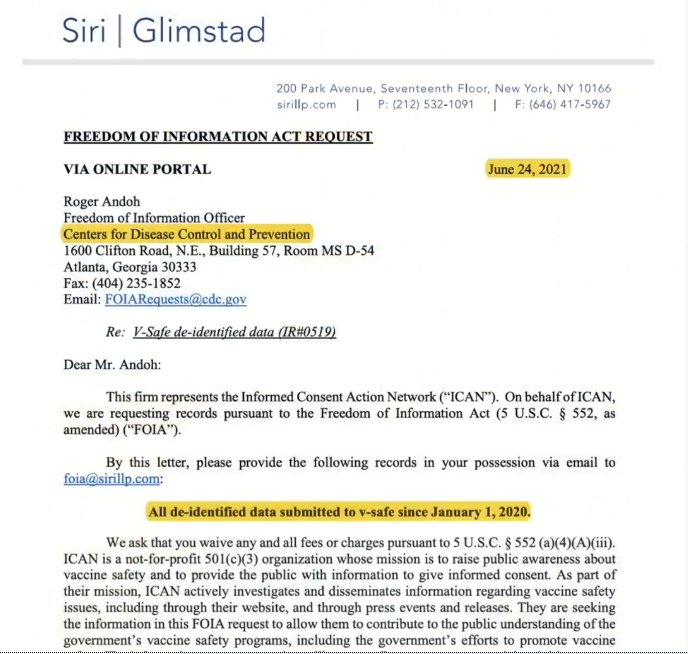
In June 2021 Aaron Siri, lead counsel for the nonprofit Informed Consent Action Network (ICAN), filed a Freedom of Information Act (FOIA) request for release of the CDC’s V-safe data.
6/24/21 FOIA request for “All de-identified data submitted to v-safe since January 1, 2020.”
“Mandating that millions of Americans inject a product for which they cannot hold the manufacturer liable if the product injures them demands complete transparency, especially when it comes to releasing the data underlying the product’s safety. FOIA exists precisely so that Americans can obtain transparency, and, in this case, obtain the data which supports the CDC’s claims to intensive safety monitoring.”
After a response from the CDC that the data requested “could not be located,” an appeal was filed in August 2021. A second, reworded FOIA request was submitted on behalf of ICAN in September.
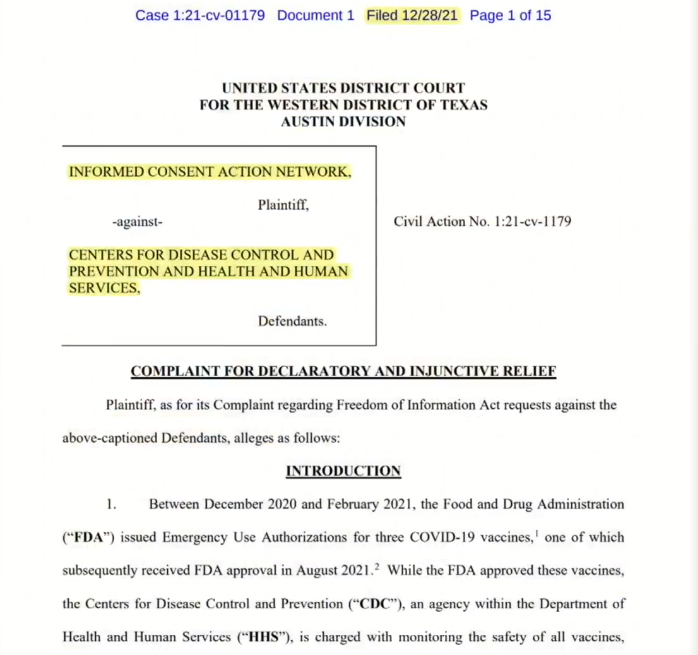
When that request was also sidestepped, a lawsuit was filed in December.
Page 1 of first lawsuit from ICAN petitioning for release of the CDC’s v-safe data.
The CDC continued their attempts to hide the data. A third FOIA request was submitted in April 2022, and in May another lawsuit was filed. It had been almost one year since the first FOIA request was submitted.
The second lawsuit declared that ICAN “intends to make all v-safe data immediately available to the public so that independent scientists can immediately analyze that data.” It referenced the need “to address serious and ongoing issues with the vaccine program, including waning immunity [and] adverse reactions.” Preventing independent scientists from reviewing this data, the suit argued, was “at best, irresponsible and unethical.”
CDC Ordered to Release Data
While Berry lied to county commissioners that “nobody had to be sued” for v-safe data to be made public, the record shows that it took multiple FOIA requests and two lawsuits to force the CDC’s hand. Fifteen months from the initial FOIA request and twenty-one months after the vaccine rollout, a court order required the CDC to provide the v-safe data on or before September 30, 2022.
When forced to comply with the court order, the CDC said the v-safe files would be released to ICAN, but claimed they lacked the ability to post the information on their own website. After a year of maneuvering to hide this data, the agency disingenuously wrote that they had planned to post the data on their website, but had “not yet completed the technical and administrative processes required to post data.”
V-safe files were sent to ICAN just one month ago, at 6 pm on September 30. What the CDC claimed they lacked in “technical and administrative” proficiency to do for 21 months, ICAN’s modest staff accomplished over a weekend. On October 3, three days after the grassroots nonprofit obtained five digital files comprised of initial data from more than ten million users, ICAN launched a user-friendly web dashboard allowing the international science community and other members of the public to view the data themselves and perform interactive searches on that data.
ICAN, not the CDC, is responsible for making this information accessible, nearly all of it (86% as shown above) reported to v-safe in the first six months of the rollout. The multi-billion dollar public agency charged with safeguarding our health instead used its formidable resources to block release of v-safe reports.
What did the CDC not want us to see?
Unsurprisingly, signals of damage from these shots — which public health officials like local mouthpiece Dr. Allison Berry continue to deny — are alarming. The percentage of adverse health impacts following Covid vaccination reported to v-safe over 21 months is more than ten times the 2.79% seen in the December 18, 2020 snapshot, on day five of the rollout.
Of the 10 million+ individual users who participated in v-safe after their shots:
- 71.3 million symptoms were entered, an average of 7 symptoms per user
- 6.4 million adverse health impacts were reported
- 33% (3.35 million) were unable to perform normal daily activities, unable to work, and/or required care from a doctor or other health professional
- 7.7% (782,913) had a health event so severe it required medical attention, emergency room intervention, and/or hospitalization, most of those events requiring multiple visits
Contrary to Berry’s lies, the CDC not only had to be sued for access to this critical data, they spent more than a year fighting to prevent its release. Had this data seen daylight, as fanfare leading up to the rollout had promised (“this information helps CDC monitor the safety of Covid-19 vaccines in near real time“), Emergency Use Authorization of the shots could never have remained justified.
The entire story can be seen, with all supporting documents, at Aaron Siri Breaks Down CDC’s V-safe Data.
V-safe data is still not available on the CDC’s website. It can only be accessed through ICAN’s interactive dashboard.
This is not the end of the story.
While incriminating enough on their own, the five files a court order forced the CDC to release one month ago were incomplete. ICAN discovered through further litigation that an important category of the reports was not included in the files they received. The agency continues to stonewall on disclosing all v-safe records. More lawsuits are pending.
The v-safe app provides simple checkboxes for symptoms experienced following vaccination, like the local and systemic reactions shown in the CDC’s first month Safety Update (12/14/20 – 1/13/21) — headaches, chills, joint pains and other symptoms that are said to be proof the shot is “working”.
The app also includes check-the-box fields for users to report if they required medical attention, emergency room intervention, and/or hospitalizations following the shots, as revealed on ICAN’s dashboard.
V-safe does not provide checkboxes for “Adverse Events of Special Interest,” issues the CDC knew from early trials were much more serious concerns. These “Prespecified Medical Conditions” are shown in the v-safe protocol attachment below, but omitted from the app.
The sometimes deadly medical issues we have been seeing in unprecedented numbers — like acute myocardial infarctions (heart attacks), anaphylaxis, seizures, Guillain-Barre syndrome (paralysis), strokes, pregnancy problems and myocarditis/pericarditis — were known to be caused by the mRNA injections when v-safe was developed. But the CDC avoided delineating them on the app.
Instead, the only way to capture reports of those issues was in “open fields” — empty boxes where users could type in additional details. Anything other than check-the-box local and systemic reactions which generally did not result in medical intervention had to be reported by the user as supplementary information.
Despite the extra effort it took, of the ten million registered users in the v-safe database, over six million open field entries were submitted. These open field reports were not included in the data the CDC turned over to ICAN and are yet to be revealed. The further lawsuits in progress expect to obtain that information.
Berry’s tangled web of disinformation
The CDC designed the v-safe app to make it easy to report symptoms people were told to expect from the shots, but obscure the devastating outcomes that would undermine the public’s confidence in their Safe and Effective narrative. This obfuscation has supported their lie about the incidence of severe adverse events, and provided cover for health officers like Berry to parrot that disinformation:
“Severe side effects from these vaccines are incredibly incredibly rare,” she told the Board of Health during her v-safe review, “on the order of less than 10 per million doses delivered.”
After falsely assuring the BOH that v-safe data has always been publicly available, and lying that no one had to sue to get it, Berry lamented that “unfortunately, anti-vaccine groups have now gotten access to those datasets and are now using them and twisting the numbers in them to spread misinformation about the vaccines to suggest or argue that they are less safe than they actually are.”
In her erratic, loquacious web of disinformation — yes, there was a lawsuit / no, no one had to sue — she insists that there wasn’t a lack of transparency, just that the data had fallen into the wrong hands. She provides no proof that numbers were “twisted”, just blithely makes unsubstantiated pronouncements that anti-vaxxers are spreading misinformation.
Anyone can now review and analyze the CDC data for themselves through ICAN’s online portal.
And Berry’s claim that severe side effects are less than ten per million — incredibly incredibly rare — is belied by 7.7% of v-safe users reporting they required medical attention, emergency room intervention, and/or hospitalization after their shots. That translates to 77,000 — not 10 — per million serious adverse reactions following the experimental injections.
It is the CDC and spin doctor Berry doing the number twisting. And with six million open field v-safe data entries still to come — information that shot recipients had to be motivated to report in their own words — our glib, dismissive health officer has a whole lotta twisting ahead to maintain her crumbling disinformation narrative.
_______________________________
by Ana Wolpin | Sep 28, 2022 | General
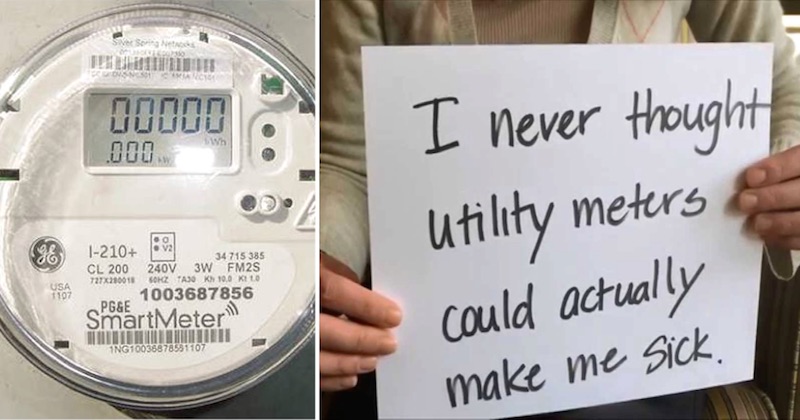
“I cannot sleep… and I am feeling so fatigued and muddle-brained that I can barely think straight and even have trouble standing up straight. I have literally done nothing since [the Smart meters] have been put in and feel achy all over and disoriented, slightly dizzy.”
———————————–
“I have been feeling sick since they installed 16 smart meters on a panel 6 feet away from my building. I have developed respiratory problems and insomnia and anxiety and pressure in my head… My husband has also developed asthma, coughing, bloody nose, headaches.”
———————————–
“We had a Smart Meter installed on our home. I got sick and two weeks ago had a mini-stroke.”
———————————–
“My family recently moved into a new home which has 4 smart meters, we had wifi also initially. I began feeling ill: symptoms included a sensation of electricity coursing through my body, headaches, my blood pressure soared, the sensation of my brain feeling like it was being squeezed, and a sensation of burning on my skin and eyes. I could not find relief anywhere in my home. The symptoms of my three sons are less than my own and more vague: headache, ‘feeling sick upon waking,’ feeling a jolt type feeling sometimes.”
———————————–
“[After a Smart meter was installed] our children started to exhibit health symptoms and health signs that alarmed myself and my husband [a doctor]. The children began to have fevers out of nowhere, essentially their bodies were boiling and their fevers would go from 101 to 104 and sometimes to 105… Our children also began to have problems with the inability to control their bodily fluids, our five year old began peeing and pooping herself, our four year began to display the same problems, soon many of the smaller children were all displaying these symptoms and concerns.”
———————————–
“We are just miserable here. We can’t sleep at night, are dizzy, have headaches, ear pain, and more.”
———————————–
“I managed to have smart meter installation delayed at my house, but suddenly became sick overnight with palpitations, chest pain, insomnia, dizziness, inability to concentrate and memory loss and fainting spells. AFTER becoming sick I found out that the day I became suddenly sick was the day the smart meter roll-out was completed in my area and the smart meters were remotely turned on from base… I can no longer drive, I can’t work (I’m a doctor).”
———————————–
“Shortly after the smart meter was installed my health took a terrible downturn. I began having heart palpitations, trouble sleeping, unexplained anxiety attacks, dizzy spells, nausea and fatigue. I have been battling anxiety for months and I had no idea why. I’ve never had these types of symptoms plague me like this before. Then I found out that so many others have had the same reactions to smart meters in their homes and neighborhoods.”
———————————–
“I am an engineer. I have used technology my entire adult life – cell phones, smart phones, wi-fi, laptops, you name it. I really enjoyed all of this and had no issues or fears related to technology.
Then, when a bank of smart meters were put next to our apartment, both my wife and I starting experiencing headaches, insomnia, heart palpitations and tinnitus. Within a couple weeks, I could no longer use a cell phone without the same symptoms. Within a month I could feel the microwave radiation from cell towers. I have had to completely change my life because of this.”
———————————–
The statements above are among hundreds posted by the EMF Safety Network. Thousands of reports like this can be found online from people whose health was damaged following the installation of a wireless Smart meter. The last quote is from engineer-turned-EMF-educator Jeromy Johnson, who we featured in our article, Smart Meters Coming to a Neighborhood Near You!
As reported in that article, having one of these meters installed at your home or workplace raises multiple concerns. While we provided an overview of many of those concerns, this article focuses specifically on the health issues that can be caused by the high-intensity pulsed microwave radiation from what the utility industry calls Advanced Metering Infrastructure (AMI), or Smart meters.
Common symptoms attributed to Smart meter exposure include:
- Sleep problems (insomnia, difficulty falling asleep, night waking, nightmares)
- Stress, agitation, anxiety, irritability
- Headaches, sharp pain or pressure in the head
- Ringing in the ears, ear pain, high pitched ringing
- Concentration, memory or learning problems
- Fatigue, muscle or physical weakness
- Disorientation, dizziness, or balance problems
- Eye problems, including eye pain, pressure in the eyes,
- Cardiac symptoms, heart palpitations, heart arrhythmias, chest pain
- Leg cramps, or neuropathy
- Arthritis, body pain, sharp, stabbing pains
- Nausea, flu-like symptoms
- Sinus problems, nose bleeds
- Respiratory problems, cough, asthma
- Skin rashes, facial flushing
- Urinary problems
- Endocrine disorders, thyroid problems, diabetes
- High blood pressure
- Changes in menstrual cycle
- Hyperactivity or changes in children’s behavior
- Seizures
- Recurrence of cancer
It is because of health impacts like these that when Smart meters began rolling out in the U.S., utility companies were forced to provide customers with a safer meter option. Requesting a non-transmitting meter is commonly known as an Opt-Out (more on that below).
It is well-established that we are bioelectrical beings and that exposure to electromagnetic fields (EMFs) and radio frequencies (RFs) can have profound impacts on our biology. It is estimated that 3% to 10% of the population are so vulnerable to these fields — electrosensitive — that they struggle to live in the electromagnetic soup of our modern world.
Following publication of our last article, a reader challenged the assertion that electrosensitivity (aka electromagnetic hypersensitivity) is a valid medical disability. She asserted that EMFs and RFs — like the microwave radiation from Smart meters — do not impact a person’s health, that reports like those cited above stem from mental illness or are psychosomatic. The problem, she said, could be summed up in four words: “These people are crackpots.”
An obvious argument disproving that these health impacts are “all in their heads” is that when their symptoms first manifest people are often unaware that a Smart meter had been installed. Silicon Valley engineer and tech enthusiast Jeromy Johnson describes his unexpected “Wireless Wake-Up Call” in this TED Talk:
“If anyone had told me that wireless technology could have health effects, I would have thought they were crazy. But this all changed for me over the period of about one week. I started experiencing headaches, ringing in my ears, insomnia, fatigue, and a brain fog that I’d never experienced before. And I shared this with a colleague at work, and she said, you know the exact same thing happened to her husband when a wireless Smart meter was installed in their home. So I went home that evening and I checked downstairs, and sure enough we’d had a bank of wireless Smart meters installed right below our bedroom in San Francisco.”
Bank of Smart meters shown in Jeromy Johnson’s TED Talk.
Stories like these are common, following this typical pattern: “I — or my husband/wife, child, friend, co-worker — started having terrible headaches, feeling dizzy, couldn’t sleep, lost cognitive function… and then days or weeks later discovered that a Smart meter had been installed the day the problems began.”
But beyond the anecdotal evidence, there are now literally thousands of studies and scientific papers demonstrating the negative impacts of EMFs/RFs on people’s health.
The Science
A decade ago, an international consortium of 29 doctors and scientists produced the 650+-page BioInitiative Report 2012. They explain:
“Human beings are bioelectrical systems. Our hearts and brains are regulated by internal bioelectrical signals. Environmental exposures to artificial EMFs can interact with fundamental biological processes in the human body. In some cases, this may cause discomfort, or sleep disruption, or loss of wellbeing (impaired mental functioning and impaired metabolism) or sometimes, maybe it is a dread disease like cancer or Alzheimer’s disease.
It may be interfering with ones’ ability to become pregnant, or carry a child to full term, or result in brain development changes that are bad for the child. It may be these exposures play a role in causing long-term impairments to normal growth and development of children, tipping the scales away from becoming productive adults.
We have good evidence these exposures can damage our health, or that of children of the future who will be born to parents now immersed in wireless exposures.”
Their report presents evidence of genetic damage, immune impairment, neurological injury, effects on the blood-brain barrier, childhood leukemia, breast and other cancers, fetal effects, brain tumors, fertility damage and much more. Updates to the report just this year include coverage of RF and EMF studies from the genetic and neurological literature, studies of free radicals (oxidative damage), and electrohypersensitivity.
In 2015, 220 EMF scientists from 41 nations who had published in peer-reviewed journals signed the International EMF Scientists Appeal. Their warnings included cell phones, Wi-Fi, and ‘smart’ meter/grid technology.
“It is our opinion that adverse health consequences of chronic and involuntary exposure of people to non-ionizing electromagnetic field sources are being ignored by national and international health organizations despite our repeated inquiries as well as inquiries made by many other concerned scientists, medical doctors and advocates.”
According to these experts, public safety limits for electromagnetic and radiofrequency fields are thousands of times higher than exposure levels shown to be associated with serious health impacts.
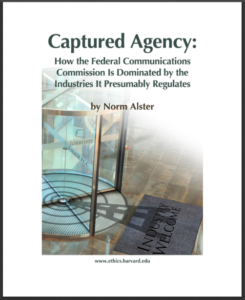
Why haven’t our regulatory agencies and government protected us? Industry capture of the FCC and other agencies puts industry profit over public safety. “Just Don’t Bring Up Health” is one of the opening chapters of Harvard University Center for Ethics’ exposé, “Captured Agency: How the Federal Communications Commission Is Dominated by the Industries It Presumably Regulates.“
As with so many of our public agencies, we cannot trust the FCC or any other “official” guidelines. The authors of the BioInitiative Report counter these corrupt regulators:
“The great strength of the BioInitiative Report is that it has been done independent of governments, existing bodies and industry professional societies that have clung to old standards. Precisely because of this, the BioInitiative Report presents a solid scientific and public health policy assessment that is evidence-based.”
Will a Smart Meter Harm YOU?
As noted earlier, we are swimming in invisible frequencies in today’s world, commonly called electrosmog. Chances are you already have Wi-Fi in your home, carry a cell phone, use a computer wirelessly, maybe even have a cell tower in proximity. All of this wireless technology creates oxidative stress, opens your blood-brain barrier allowing toxins to enter your brain, causes DNA damage, and alters your cellular function.
How much of these pervasive EMFs and RFs our bodies can withstand varies. Some people may be so electrosensitive that their ability to function is compromised by the slightest exposure to these frequencies.
Sebastian (Seb) Eggert, nearing completion of his ElectroMagnetic Radiation Specialist (EMRS) certification with the Building Biology Institute, says, “I have personally interacted with over fifty people who are greatly or severely affected by the various forms of electromagnetic radiation, and at least a dozen of them live here in Jefferson County.” That was before the rollout of Smart meters.
Eggert expands on some of the people he has seen challenged by wireless technologies:
“One client was unable to have deep and restful sleep in her home until she turned off her computer, wifi, printer, portable phone and cellular phone. Another client is so sensitive she can sense when someone enters the room with a cell phone in their pocket or when a ship with a strong radar signal passes by. The only place she can escape from her splitting headaches is deep in the Olympics where the radiation is extremely low, or in rural Alaska.
Another who is a medical professional has removed all the EMFs from his office for the comfort of his patients. A naturopathic physician thought she had eliminated all RF devices from her office and treatment areas until a survey revealed that her computer was still sending a contact signal to the hard-wired modem.”
Then there are individuals like Jeromy Johnson, immersed for years in wireless tech, who don’t notice a problem until a Smart meter is installed.
Broadcasting RF frequencies every few seconds or even faster all day and night, these devices emit up to 190,000 bursts of pulsed microwave radiation in a 24-hour period. Reports show that adding that stress to an already-toxic wireless environment often causes a tipping point, pushing people over the edge to electrosensitivity. And once that threshold is breached, as Johnson learned, tech that once seemed harmless is suddenly no longer bearable.
Additional factors come into play. Eggert explains:
“Often the signs of EMF sensitivity are masked by other influences, such as multiple chemical sensitivities, mold and fungus exposure, medical interventions and deep trauma. All these things together contribute to poor health.”
Proximity to the meter(s) and levels of exposure are also significant factors in whether you will be harmed by a Smart meter.
How close is the meter to your living environment? Smart meters near bedrooms are especially dangerous. Since they operate 24/7, one of the most ubiquitous symptoms following their installation is loss of sleep. The critical downtime for the body’s rest and repair is interfered with by the constant pulsing of the RF.
Multiple Smart meters transmitting RFs multiply the danger. That’s especially true where there are banks of meters. Meter utility rooms for apartments, condos and commercial complexes massively increase the radiation levels, as Jeromy Johnson learned. Even though the room of meters for his apartment building was on a lower story, that ground-level bank of Smart meters proved to be too much for him and his wife. In that type of scenario, even those who opt out can still suffer health issues because the vast majority of other meters in their building are all broadcasting high-intensity microwave radiation.
Opting Out in Jefferson County is Easy
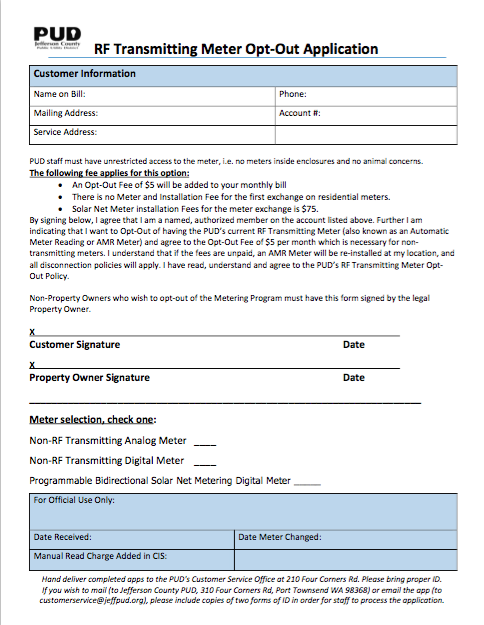
Jefferson PUD’s Opt-Out Program offers non-transmitting analog and digital meters that are read on-site monthly by a meter reader. We recommend the analog meter as the safest option since digital meters generate some high frequency voltage transients, also known as ‘dirty electricity’, which can also have negative health impacts.
While those of us against our PUD’s adoption of Smart meter technology argued for no-cost opt-outs as established in both New Hampshire and Vermont, there is a $5 monthly fee added to your bill here. That is lower than many utilities charge. Some utilities set punitive fees to intentionally discourage opt-outs, with a significant one-time charge for initial installation and exorbitant recurring monthly charges.
According to a 2019 article from the National Conference of State Legislatures:
“The fees can vary considerably. A utility in Rhode Island charges a one-time fee of $27, while a Texas utility’s one-time fee is $171. The monthly fees range from around $9 to $32.”
California’s state policy established a one-time fee of $75 and a monthly fee of $10, however for income-qualified customers the one-time fee drops to $10, with a $5 monthly fee.
Jefferson PUD has clearly avoided punitive charges. With all meters needing replacement in the county, our utility has waived the one-time installation fee, adding only a $5 monthly surcharge to offset the cost of a meter reader coming to your property every month to manually read your power usage. In addition to providing you with a safe meter, your $5 is supporting local jobs that are being eliminated by wireless tech.
This RF Transmitting Meter Opt-Out Application is on the last page of the PUD packet here. For more information on the Smart meter rollout in progress in Jefferson County and for additional details on our PUD’s Opt-Out Program, see Smart Meters Coming to a Neighborhood Near You!
by Ana Wolpin | Sep 4, 2022 | General
“The modern trans movement does not appear to be a natural outgrowth of the feminist or even gay, lesbian, and bisexual acceptance movement. It is my strong belief that something else altogether is going on here.”
— Toby Rogers
————————————
“Pride” messaging began as a movement centered on creating equal rights for adult lesbians, gays and bisexuals — the L, G and B in the evolving acronym LGBTQ+.
As a long-time advocate for social justice, being supportive of Gay Pride, as it was initially called, was a given. Of course caring, rational people wish to see equal rights, non-discrimination, and inclusivity for all.
With the addition of the letter T — transgender — that movement has changed radically. “The trans wars,” says Toby Rogers, “are everywhere right now.”
Rogers spent a decade fighting for LGB equality as the communications director for the Presbyterian Church USA. He helped bring about a shift in the church’s position on gays nationwide, then got a masters degree in public policy. He taught gender studies. In Trans messaging is too sophisticated to be the work of a small sexual minority dealing with severe health issues, he says:
“By 2012-2013 we had won across the board. Equal rights to marriage, employment, housing, and hospital visitation rights were becoming the law of the land in the U.S. and throughout the world. We had achieved bipartisan consensus even on the fiercely divided U.S. Supreme Court. We had science, logic, and reason on our side. It was settled law and settled science.”
And then, says Rogers, “somewhere around 2015, the movement went completely off the rails.”
A very different ideology took over the Pride messaging — denying the validity of biology entirely and centering on the social construct of perceived gender. Suddenly gender dysphoria was rampant and growing. Port Townsend today is ground zero for that shift.
John Daniel Davidson writes about our town in The Federalist. In his August 19th article, The Transgender Movement Is Not Just Intolerant. It’s Barbaric And Violent, And It’s Coming For Your Children, Davidson says:
“Hardly a day goes by now that we don’t see another appalling example of transgender ideology’s aggressive intolerance in the public square. Recently, the target of that intolerance was an 80-year-old woman in the small town of Port Townsend, Washington, who was permanently banned from her local YMCA pool after she objected to a “trans woman” — a man — in the women’s locker room.”
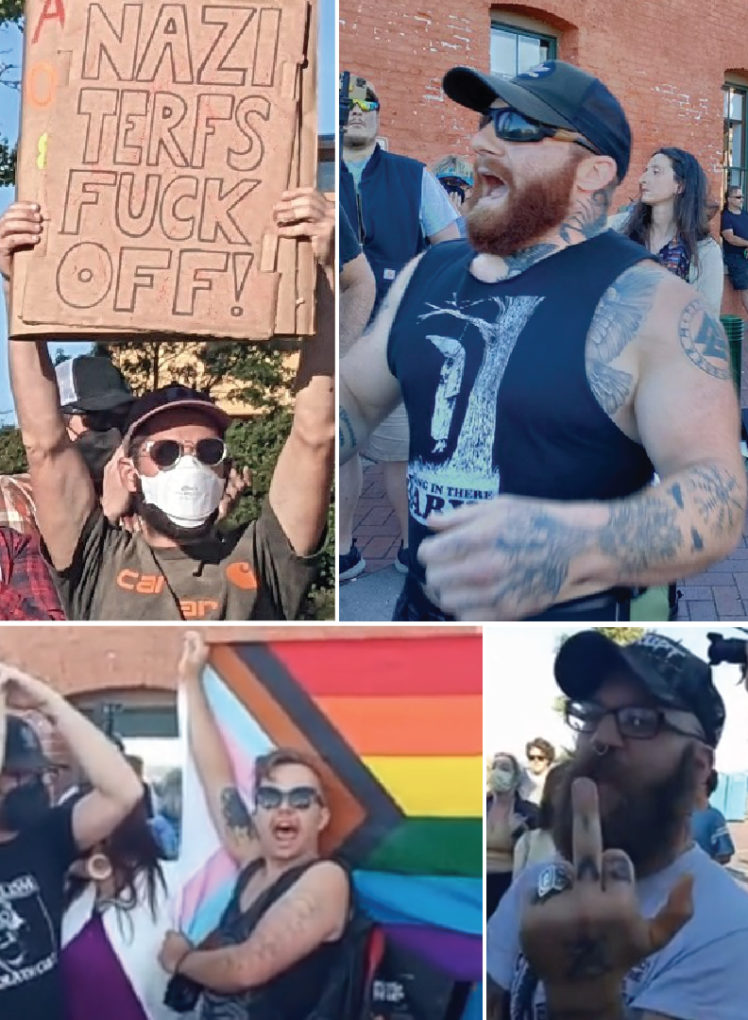
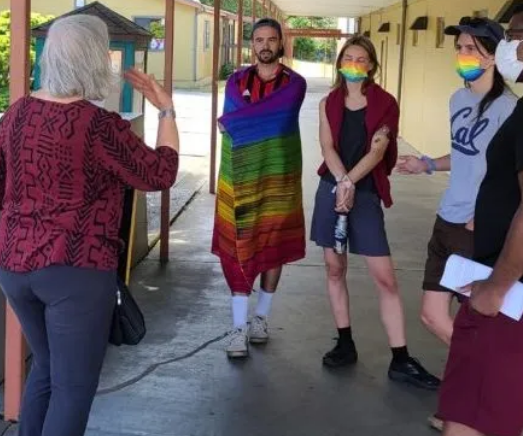
That “aggressive intolerance” has been documented in multiple Free Press articles. (1, 2, 3, 4) This was the face of trans activism in Port Townsend on the evening of August 15th:
Most, if not all of the violence, say readers, came from within the community, not from outsiders. We now understand that it was local trans activists who showed up to spew hate and assault peaceful supporters of a women’s rights rally on August 15th at Pope Marine Park.
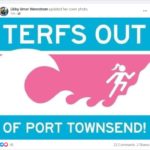
As previously reported, the assaults aligned with the hate campaign initiated by Port Townsend Mayor David Faber and City Councilor Libby Wennstrom. Campaigning on her Facebook page Wennstrom put out a call to drive “TERFS OUT OF PORT TOWNSEND.”
The violent mob that screamed and knocked down elderly women was a far cry from the message delivered an hour later by Mayor Faber just across the street. As Davidson summarized, “Faber praised the mob that went after Jaman and her supporters, calling it an ‘incredible night’ that was ‘beautiful’ and falsely claiming that ‘Trans and cis-allies alike spoke love & support’.”
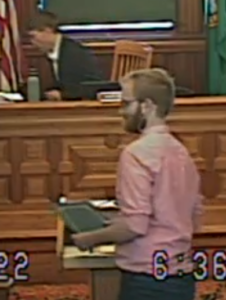
David Faber returns to his mayor’s seat after presenting the Trans Rights Proclamation to Beau Ohlgren.
Faber’s high praise was delivered in conjunction with an orchestrated reading at City Hall of a Trans Rights Proclamation. The mayor read and ceremoniously presented the proclamation to Beau Ohlgren, representing the Transgender Support network in Jefferson County. That network is fronted by Olympic Pride, a 501(c)(3) nonprofit established in 2018. The image at the top of this article is the banner for the Youth page on Olympic Pride’s website.
Jim Scarantino of the Free Press wrote to Ohlgren and Olympic Pride asking for a statement regarding the attacks on women from the trans community that night. They did not respond. Scarantino writes:
“Olympic Pride and Beau Ohlgren of the local Transgender Support won’t denounce hate speech against women. We asked them if they denounced the hate speech directed at women from Mayor David Faber and City Councilor Libby Wennstrom, the latter calling for “All TERFS out of Port Townsend.” They have chosen “no comment”… To what extent these groups share responsibility for the conduct of the mob remains an open question, especially if they continue to refuse to condemn hatred and hate speech against women.”
It’s All Cartoons and Rainbows
On their website Olympic Pride says they are “Working towards making a permanent place for LGBTQ+ youth and allies.” They present a much different image online than the trans activists the community witnessed on August 15th across from City Hall.
The collage that originally appeared below contained images that were taken from Olympic Pride’s public website and Facebook pages. They showcased the kind of marketing the organization is directing at kids — a rainbow promotion for the Rainshadow Youth Collective: “Come say hi at the PT Farmers Market”; rainbow flags and other attractions for children at their Market booth; a cartoon unicorn on a rainbow. There was a photo of people swathed in large rainbow banners with flags, another of children playing with rainbow bubbles at a table at Pope Marine Park, and a smiling cartoon sun behind a rainbow with the caption “Pride Line 2021 is going to be HOT! HOT! HOT!”
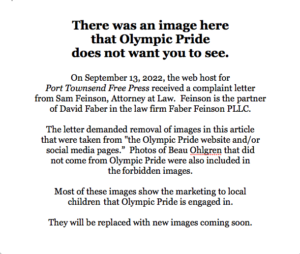
On September 13, that collage and other images were removed, as explained in this placeholder:
Not only did we remove their publicly displayed marketing materials, nearly all of the photos and illustrations we shared have been scrubbed from their own website and Facebook page. If this complaint was really about alleged ownership, why did Olympic Pride remove them from their own sites?
The collage below gives the reader an idea of the imagery in the original version of this article. The images have similar content and flavor, but none of them come from Olympic Pride media.
This is the focus of Olympic Pride. It’s nearly all geared towards attracting kids into their Rainshadow Youth Collective. Brightly-colored unicorns dancing on rainbows. Rainbow banners and flags. Rainbow games. Rainbow cartoon characters. What could be more appealing to a child?
It’s all about the kids. Especially trans kids. When — and why — did Pride suddenly transform from a movement to secure equal rights for adults with differing sexual preferences to a marketing program enticing kids to question their gender, glorifying gender dysphoria?
Make no mistake about it, this IS a marketing campaign.
It’s colorful. It’s welcoming. It’s fun!
The next collage we removed included photographs of an Olympic Pride booth set up with games for children at Pope Marine Park, a young girl getting her face painted at the booth while other children look on, and an Olympic Pride table wrapped with local businesses’ and organization’s logos, giving away rainbow flags.
From drag queen Katrina Duall’s Instagram page.
We’ve been forbidden to show you those photos, too, so for the Olympic Pride promotional table we’re substituting another of their marketing draws — the use of drag queens to entertain kids at family events. For their “Sound of Pride 2022” at Pope Marine Park, Olympic Pride imported drag queen Katrina Duall to emcee the festivities. Most images of Duall’s performance have been removed from their website, but you can see dozens of photos on a public Instagram page.
The images below get the point across:
Wave a rainbow flag to show your Pride. Get your face painted at the Olympic Pride table at Pope Marine Park and then watch a drag queen perform. Join the Rainshadow Youth Collective and be celebrated as one of the special kids rejecting your biology and changing your gender.
How did we get here?
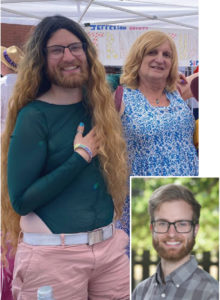
Beau Ohlgren, the recipient of the mayor’s Proclamation the night the trans activists attacked Jaman and her supporters, is Director of Family Ministry at the popular Quimper Universalist Unitarian Fellowship (QUUF) in Port Townsend. From the church’s website:
Beau Ohlgren at a Jefferson County Transgender Support event and pictured on the QUUF website (inset). These images were among those Faber Feinson PLLC demanded be removed as the “intellectual property” of his Olympic Pride clients. They are not. The photo from the transgender event was posted on an unrelated Facebook page by the person he is pictured with and the inset photo can still be seen at the churches’ link here.
Why is Olympic Pride claiming ownership of and trying to hide these images?
“Beau has been working with QUUF families at since [sic] 2015 and is passionate about working with each family’s particular interests, challenges, and talents to build resilient, loving, and spirited community. He lives in Port Townsend, is a licensed foster parent, and spends his free time with his family (including his godson), walking, reading, baking, and cooking. He is a member of the UUA-affiliated associations TRUUsT (Transgender Religious professional Unitarian Universalists Together) and LREDA (Liberal Religious Educators Association).”
Ohlgren’s enthusiasm for promoting the transgender community has led not only to support from the Unitarian church and a proclamation from the city, but a large coalition of “Partners” among local businesses and organizations. As was seen on the Olympic Pride table wrap [now removed], familiar logos abound. Even our hospital and Jefferson County Public Health have jumped on the rainbow bandwagon.
Who could say no to flying the colorful flag of inclusion, tolerance and diversity? How can anyone criticize rainbows and hearts?
A sampling of the local businesses and organizations that have “partnered” with Olympic Pride was below. The full list can still be seen on their website at the Pride Partners tab. If that also gets removed, they can be found at the end of Free Press writer Jim Scarantino’s follow-up article, “Olympic Pride Doesn’t Want You To See What They’re Promoting to Children.”
What is this partnership actually supporting?
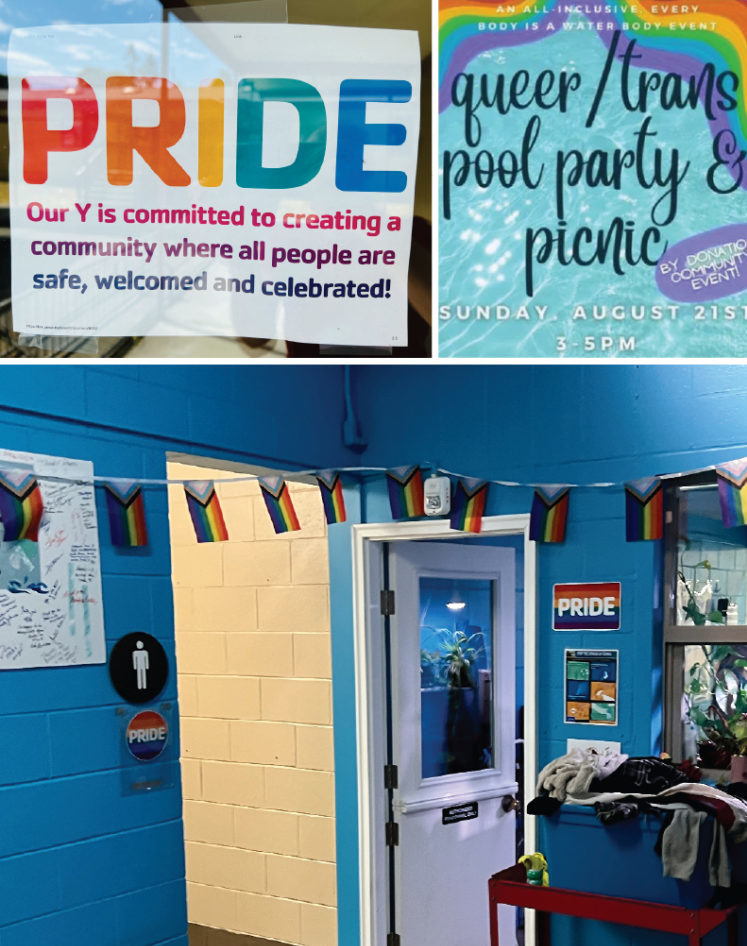
Behind the hearts and rainbows, it’s not a pretty picture. The city pool run by the YMCA is a good example.
Before the Y took over managing the Mountain View public pool in 2021, there was a large contingency of seniors who were regular swimmers, with popular group activities. Many of those regulars, especially the older women, no longer use the pool.
A local physical therapist reports that a lot of her senior clients have stopped going to the pool because they no longer feel comfortable in that environment. They claim that the pool has gone significantly downhill since the Y took over. For many older folks with mobility and weight issues, exercising in the water is their only safe option. They’re being denied access to a healthier lifestyle. Through that lens, loss of this critical modality of exercise is a form of elder abuse.
As 80-year-old Julie Jaman’s recent expulsion demonstrated, the culture at the pool has changed radically under the Y’s auspices.
A Free Press reader from Portland, visiting the city’s pool for the first time with his family, wrote:
“What struck both of us was the amount of pride flags at the Y facility… They seemed to be on every door and most walls and we commented on it… it seemed there were more identifiable pride flags than Y logos.”
From the moment you approach the outside door, the rainbow Pride signage and messaging is in your face.
The messaging is so ubiquitous that Olympic Peninsula YMCA CEO Wendy Bart pointed to all the Pride branding as the rationale for why Julie Jaman should have known there were no longer gender boundaries in the changing rooms, toilets and showers. Despite the lack of explicit signage warning that men identifying as women had access to these intimate spaces, the celebratory rainbow “welcome” was fair warning, she said.
The Pride branding throughout the facility is mirrored by the kids hanging out at the pool. A friend who went to the pool after the incident with Jaman was shocked by the facility’s transformation. “The inside of the Pool/Y complex had been redecorated into a Pride temple, with Pride stickers and banners everywhere, and all three employees wearing rainbow masks and Pride T-Shirts.”
Some are calling this a cult. At the least, it’s the branding of a Pride club, reminiscent of the hippie-flower-child allure my generation experienced in the 60’s. We had our beads and feathers and neon tie-dyes. All we are saying is give peace a chance, we sang.
But the colorful Pride signage and costuming reflects a much different ethos. Under the guise of non-discrimination, gender dysphoria is being glamorized and marketed to our children.
When a small group of elderly woman went to the pool to challenge the Y’s treatment of Julie Jaman, they encountered some of the Pride-branded youth, above. There was polite conversation until a long-time Unitarian church member arrived with some other adults. We now know that the Y had consulted with Ohlgren for advice in the aftermath of the incident with Jaman and that the QUUF had put out a call for its members to counter her supporters — now dubbed transphobes and trans-haters — at the pool.
It wasn’t until that new group arrived that the scene grew ugly. They started name calling and drowning out any possibility for civil discussion. The irony of claiming to stand for respect, kindness and inclusion was not lost as QUUF members yelled absurd accusations like “Nazi” and “pedophile” at the peaceful elderly women, eventually inciting the teens to join in the attack.
Parents Weigh In
As more parents speak out about the trans movement’s hijacking — and even mutilation — of their kids, an extensive network of players comes into view.
“Transgender ideology has infiltrated public schools, hospitals, and higher ed,” says Davidson. “Its adherents are not going to leave you alone.”
In “Why did my daughter become trans?” Jo Brown describes the social and institutional influences that convinced her troubled daughter who had never shown signs of gender dysphoria to announce that she was a boy:
“It seems that a trans identity is offered to kids these days as a way out of their confusion and misery. All of us, or at least everyone that I have been close to, can remember our adolescence as difficult years. Feeling unacceptable, substandard, not cool enough. We struggled, were unhappy, but eventually found our way through. In my case it was through academic success, for my sister, sport. A close friend turned to music. What we did not have were people whispering to us in our bedrooms that our gender identity was the problem and changing it the solution.”
“What is particularly baffling,” writes Brown, “is why a mental difficulty that suddenly arises in adolescence is treated as a newly revealed truth, rather than a problem to be worked through and overcome. Many of these girls are struggling mentally, and indeed some are diagnosed with autism.”
In “Parents of Kids Who Think They Are Trans Speak Out,” five more moms write anonymously of their children’s heartbreaking stories. So powerful is the institutionalized “gender-affirming” network that they request anonymity “out of fear of being reported to Child Protective Services and losing custody of their children.”
“When a child says he is transgender, we are expected nowadays to accept and celebrate this announcement… But there are many parents who are not celebrating. They are suffering in silence. They know their children were not born in the wrong bodies and that hormones and surgeries are not the answers to their discomfort and confusion.”
A few excerpts from distraught mothers:
“My once beautiful daughter is now nineteen years old, homeless, bearded, in extreme poverty, sterilized, not receiving mental health services, extremely mentally ill, and planning a radial forearm phalloplasty (a surgical procedure that removes part of her arm to construct a fake penis)… The level of heartbreak and rage I am experiencing, as a mother, is indescribable. Why does Oregon law allow children to make life-altering medical decisions? As a society, we are rightly outraged about ‘female circumcision’. Why are doctors, who took an oath to first do no harm, allowed to sterilize and surgically mutilate mentally ill, delusional children?”
—————————-
“In August of 2017, our seventh grade daughter came home from sleepaway camp believing she was a boy. She had a new vocabulary and a strong desire to change her name and pronouns… We suspect that our daughter assumed that since my wife and I are lesbians, and liberal in our politics, we would support this new identity. We may be lesbians, but we are not confused about biology. She tried to convince us with a very scripted explanation that she had always ‘felt’ like a boy. But we had never once seen or heard from her any evidence of this ‘feeling’… we are facing this ever-growing storm of a social contagion without any help from the mainstream media or the negligent FDA, not to mention the pathetic capitulation of our physicians and mental health professionals.”
—————————-
“At the age of seventeen, after immersion on Tumblr and after two of her oldest and closest friends in high school declared themselves transgender, our daughter told us that she is ‘really a guy.’ Her therapist diagnosed her as high-functioning on the autism spectrum… My daughter is now twenty, has been on testosterone for a year, and has made an appointment for a consult about a double mastectomy—all this, even though she can’t legally buy an alcoholic drink. I can’t get any answers from doctors in response to my questions and concerns about the risks of these ‘treatments’. I get no answers from mental health professionals about what makes this treatment appropriate . . . or what makes my daughter different from those young women who are ‘no longer trans’ and have de-transitioned, sometimes after being on hormones for years.”
—————————-
“The media glamorize and celebrate trans-identified children while ignoring stories like mine. I have written to well over 100 journalists, begging them to write about what is happening to kids. I wrote to my representative and senators, but have been ignored by their staff. My online posts about my daughter’s story have been deleted and I have been permanently banned in an online forum. As a lifelong Democrat, I am outraged by my former party and find it ironic that only conservative news outlets have reported my story without bias or censorship.”
As the transgender industry lures kids into “transitioning” to the opposite sex with irreversible surgeries and often damaging life-long hormonal regimens, stories of those struggling to de-transition are also coming out. As with the upset parents, many choose to hide their identities because of vicious attacks by the trans community once they begin to voice their regrets openly and describe how they were manipulated and seduced onto the gender-transition conveyor belt.
Chloe Cole, an 18-year-old now de-transitioning from a “nightmare” journey that led to removing her healthy breasts at 15, is one young woman who is publicly speaking out. She recently testified against California Senate Bill 107, that would shelter parents who consent to the use of puberty blockers, cross-sex hormones, and gender transition surgery on their children from prosecution in other states that view such actions as child abuse.
In Ex-transgender Teen Recounts ‘Horrifying’ Experience of Transition, Surgery, Brad Jones of The Epoch Times says “her ‘brutal’ transition from female to male was anything but the romanticized ‘gender journey’ that transgender activists and medical professionals had portrayed.”
“There is really a high comorbidity rate between gender dysphoria and autism,” says Chloe Cole. “Pretty much every transgender person I’ve ever met, especially around my age either has really bad family issues, or they’ve been sexually abused or assaulted at a very young age, and it’s really concerning that nobody really talks about that association.”
Cole blames the medical community for encouraging her transition. “They effectively guilted my parents into allowing them to do this. They gave them the whole, ‘Either you’ll have a dead daughter or a live son,’ thing. They cited suicide rates.”
She now has deformed ribs from the breast binder she wore before her surgery and “worries the puberty blockers might have affected her brain development.” After the double mastectomy—called “top surgery”— “sold” to her by what Cole now views as propaganda, she was “actually disabled for awhile.” Because it requires severing the duct that supplies breastmilk to the nipple, even if she undergoes reconstructive surgery, she will never be able to nurse a baby.
“I was 15. You can’t exactly expect an adolescent to be making adult decisions,” she said. “So, because of a decision I made when I was a kid, I can’t breastfeed my children in the future. It’s just a little concerning that this is being recommended to kids at the age I was, and now even younger. They’re starting to operate on preteens now.”
Is Jefferson Healthcare’s and our Public Health Department’s partnership with Olympic Pride telling us they support the surgical removal of adolescent girls’ healthy breasts? The castration and feminization of confused teenage boys?
What is behind the Pride marketing?
Transgender surgeries and the multi-billion-dollar industry that has grown around gender “reassignment” is big business. Under the euphemism “gender affirmation”, full surgery packages can cost upwards of $300,000. Ongoing hormonal treatments run up to $2400 a year.
In Who Are the Rich, White Men Institutionalizing Transgender Ideology?, journalist Jennifer Bilek exposes a handful of billionaires who fund transgender lobbies and organizations. She notes the “explosion in transgender medical infrastructure across the United States and world to ‘treat’ transgender people.” She identifies the pharma and tech giants pushing for transgender bathrooms and funding the larger transgender project:
“The massive medical and technological infrastructure expansion for a tiny (but growing) fraction of the population with gender dysphoria, along with the money being funneled to this project by those heavily invested in the medical and technology industries, seems to make sense only in the context of expanding markets for changing the human body.”
Davidson points to the industry’s targeting of children at younger and younger ages:
“That effort isn’t being led by black-shirted Antifa thugs, it’s being led by medical professionals at some of the most prestigious hospitals in the country. In recent weeks, [people] have been posting publicly available promotional videos and other information from Boston Children’s Hospital touting so-called ‘gender-affirming care’, which includes chemical castration, mastectomies, hysterectomies, and genital mutilation performed on minors.
Kaiser Permanente in Oakland, California, has amputated the breasts of a 12-year-old girl and castrated a 16-year-old boy in the name of ‘gender-affirming care’. Children’s Hospital of Pittsburgh promotes puberty blockers for children. The pediatric gender program director at Yale has admitted on camera she believes children as young as 2 or 3 can be eligible for medical intervention and treatment on their ‘gender journey’.”
Closer to home, KOMO News reports that the gender clinic at Seattle Children’s Hospital provides “gender-affirming medical care” to children as young as 9 years old. Gender surgeries for teenagers include double mastectomies (with or without free nipple grafting), breast augmentation, thyroid cartilage surgery and facial gender-affirming surgery.
In “partnering” with Olympic Pride, is our county hospital signaling its participation in these medical interventions on kids? Here, too, Faber Feinson PLLC demanded their client’s graphic be removed.
On a rainbow field with their “Pride Partner” logo is a stethoscope and “Thank you Jefferson Healthcare for supporting Olympic Pride.” Why would it be necessary to hide our hospital’s partnership with Olympic Pride?
Not original graphic
Deconstructing the Rainbow Pride Flag
The architects behind this movement add new colored stripes to the Pride banners and flags every time they are able to label and co-opt a new “gender identity.” The trans industry beefs up its supposed coalition with an ever-expanding alphabet soup of ways you can be other than heterosexual (now called “cis” for some inexplicable reason). LGB is now LGBTQIA+.
But this coalition is far from cohesive, with many of the acronym’s groups — especially those who built the Gay Pride movement — pushing back against the trans activists. They say the trans agenda is destroying, not strengthening, hard-won gains.
In late August police removed a group of lesbians from a parade billed as Gay Pride when they clashed with trans groups. The British Daily Mail reports that lesbian group Get The L Out UK which carried banners reading “Transactivism Erases Lesbians“ was told to leave for their own safety. One woman replied, “I want to make sure that I understand that you’re removing lesbians from an LGBT march.”
Many lesbians are rejecting the trans takeover of the Pride movement. So are gay men. In his Newsweek opinion piece The New Homophobia, Ben Appel writes:
“There is a frightening new version of homophobia pervading the U.S., disguised as, of all things, ‘LGBTQ’ activism. For adult gay people like me, it’s clear that this activism does not advance our equality, but in fact compromises our ability to live peacefully in society. In fact, it is threatening our very existence.”
Appel asserts that given time, most of the kids who get convinced they are transgender realize they are not. He notes that in 10 major studies on youth gender dysphoria, “the vast majority (as much as 85 percent) end up desisting during or after puberty — that is, they become comfortable with their biological sex and no longer wish to identify as the opposite sex.”
He worries that trans ideology is not only an attack on heterosexuals, but an attack on gays as well. “If radical activists can convince enough people that biological sex is a farce, that ‘trans women are women’ and ‘trans men are men,’ then the path to the full erasure of gender-role-nonconforming gay people will be fully paved.”
The fast-growing group Gays Against Groomers has recently launched a campaign against the trans movement’s agenda for kids. “We are a coalition of gays against the sexualization and indoctrination of children”:
Our community that once preached love and acceptance of others has been hijacked by radical activists who are now pushing extreme concepts onto society, specifically targeting children in recent years.
The overwhelming majority of gay people are against what the community has transformed into, and we do not accept the political movement pushing their agenda in our name.
Gays Against Groomers directly opposes the sexualization and indoctrination of children. This includes drag queen story hours, drag shows involving children, the transitioning and medicalization of minors, and gender theory being taught in the classroom.
The activists, backed by school boards, government, woke media, and corporations, have been speaking on our behalf for too long. When fighting for equality, our goal was to successfully integrate ourselves into society, but now these radicals aim to restructure it entirely in order to accommodate a fringe minority, as well as seek to indoctrinate children into their ideology.
“Mobs like the one in Port Townsend on Monday,” says John Davidson, “are merely the blunt instrument, the Brown Shirts of a much larger effort on the part of the left to sever the relationship between parent and child and reshape society in a way that allows adults, especially adult men, to fulfill their every desire — often at the expense of children.”
“The people and institutions behind this [trans] movement are not fringe, they are not the pink-haired youths and black-clad Antifa thugs screaming at old ladies in the streets. They occupy the elite heights of American society. They have real power and influence.
And they are not just angling to get between parents and their children, they are angling to get healthy girls and boys onto the operating table. They are angling to get grown men into women’s locker rooms, bathrooms, shelters, and dormitories. They are angling to get Child Protective Services to remove children from parents who refuse to go along with transgenderism.”
The fringe minority of people identifying as transgender in Washington state is 0.42%, less than one half of one percent, according to World Population Review. Washington Secretary of State city voter registration demographics shows Port Townsend’s registered voters are 54% female, 45% male, 1% identifying as other. (2022 stats) If those 1% “other” are trans, then perhaps PT’s trans population is double the state average.
If Beau Ohlgren, Mayor Faber and the rest of our electeds at City Hall, Wendy Bart and the YMCA, the Quimper Unitarian Fellowship and Olympic Pride simply want to make Port Townsend a kind, welcoming place for the possibly 1% of transgender dysphorics, why all the marketing to kids?
Why turn the community pool into a Pride headquarters?
Why all the branding with area businesses and institutions?
Why the aggressive, seductive outreach?
—————————————————
Page 1 of a 9/13/22 two-page “Complaint” letter from Faber Feinson PLLC
9/15/22 Update: In response to a two-page letter from Faber Feinson PLLC, images were removed from this article on September 13, 2022. The article was updated with further information and graphics on September 15.
See “Olympic Pride Doesn’t Want You To See What They’re Promoting to Children” for additional perspective on Olympic Pride’s efforts through Mayor David Faber’s law firm to hide images and messaging they’ve been using to lure kids.

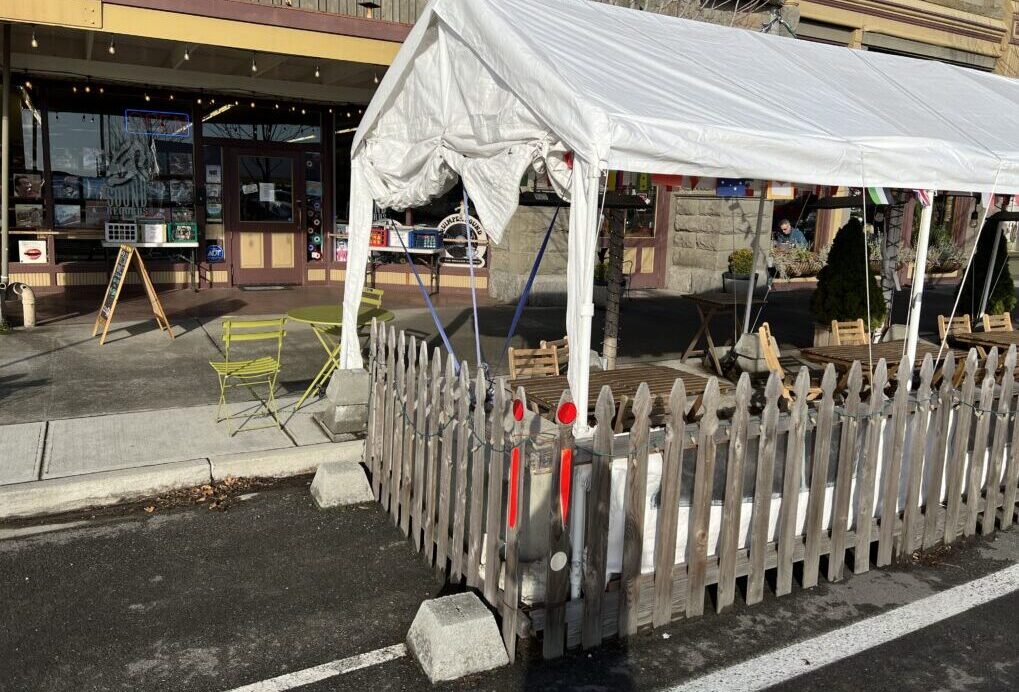
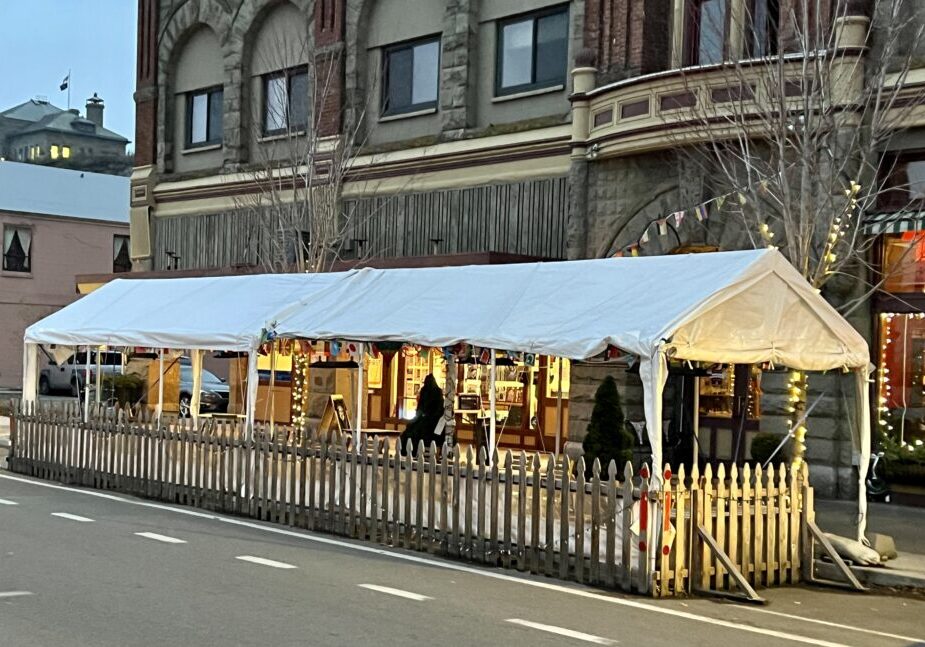
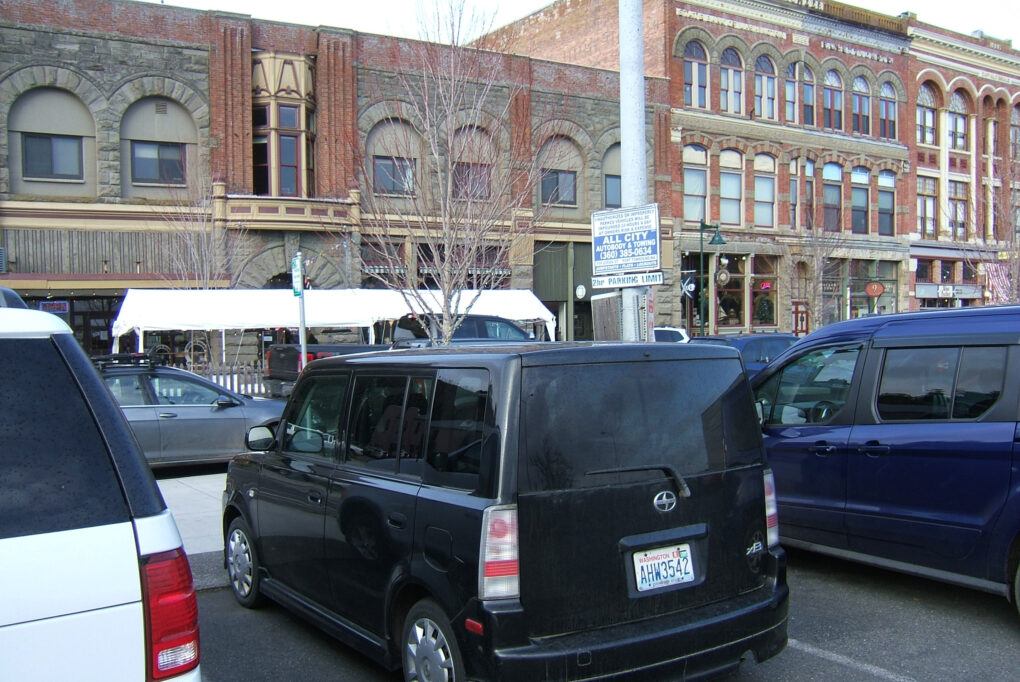
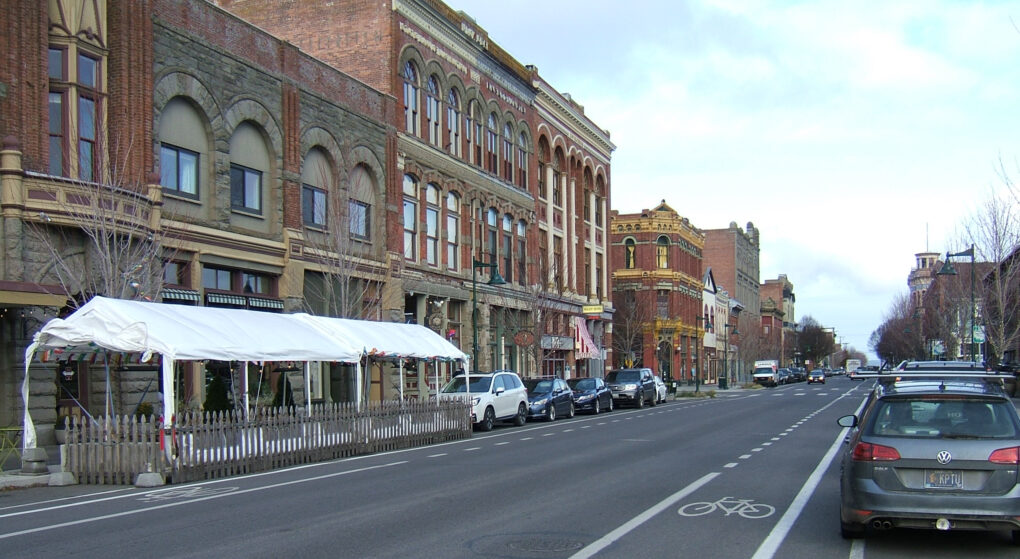

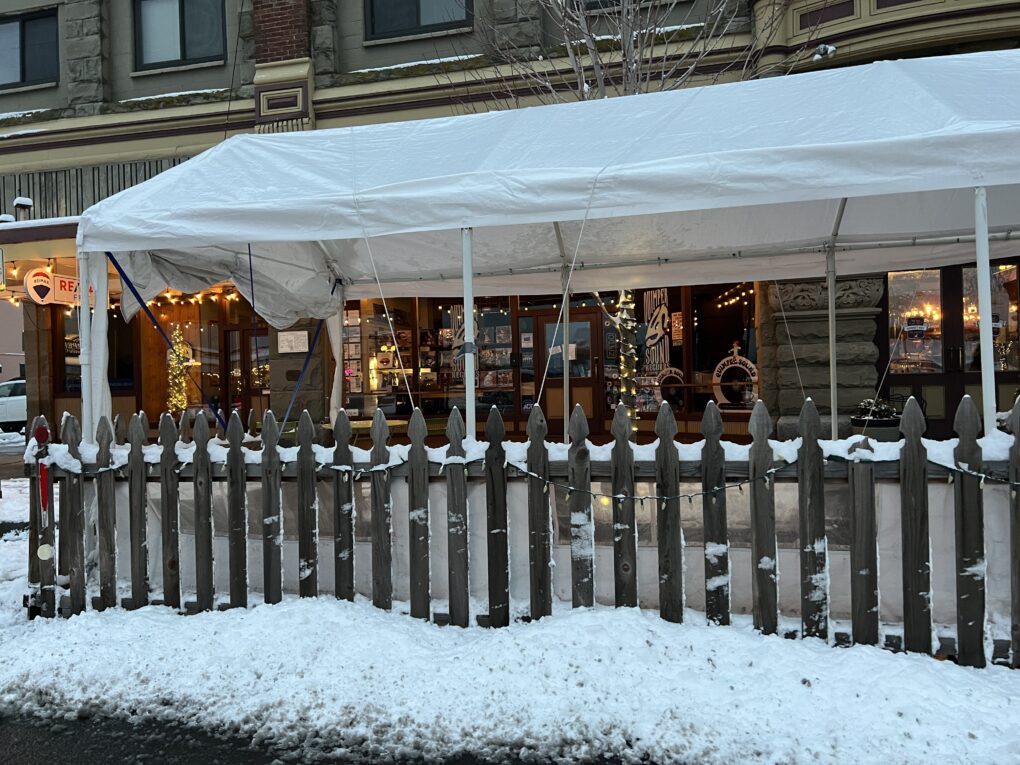
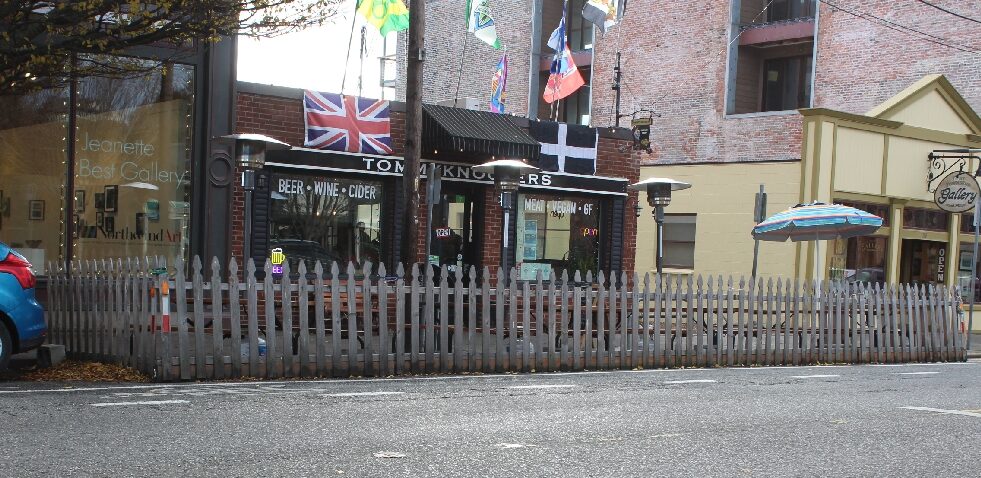
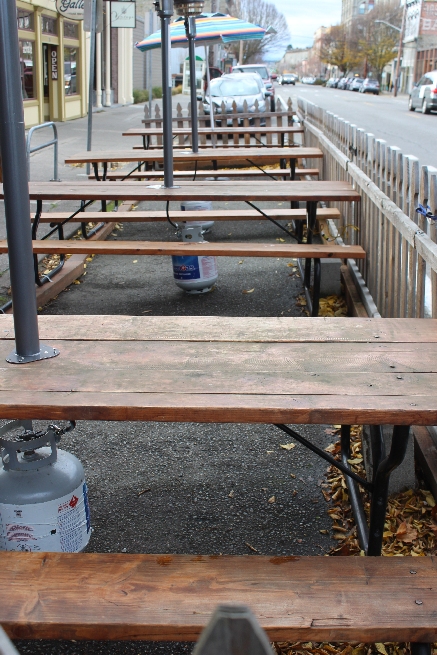

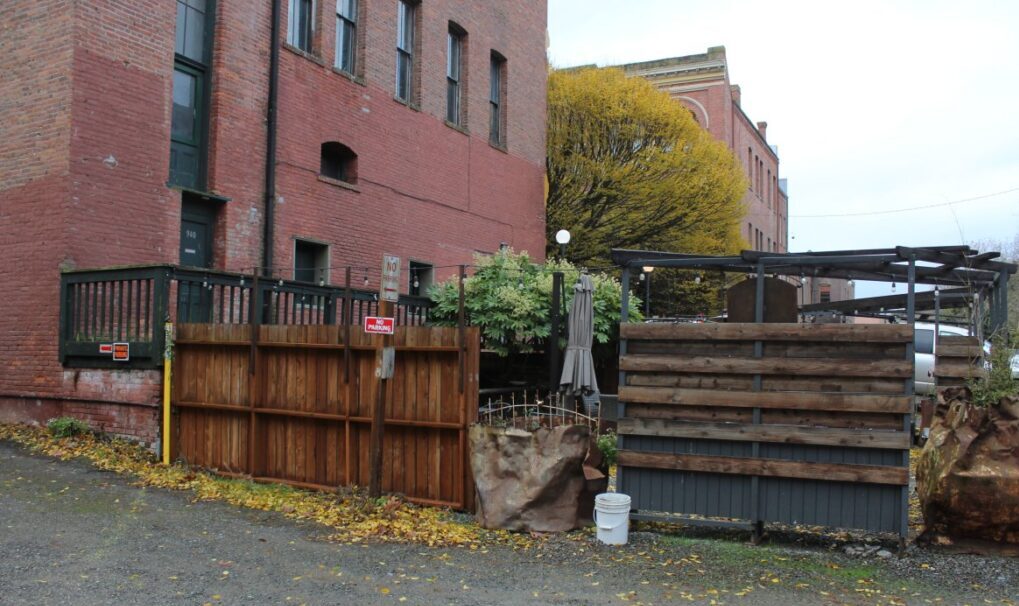


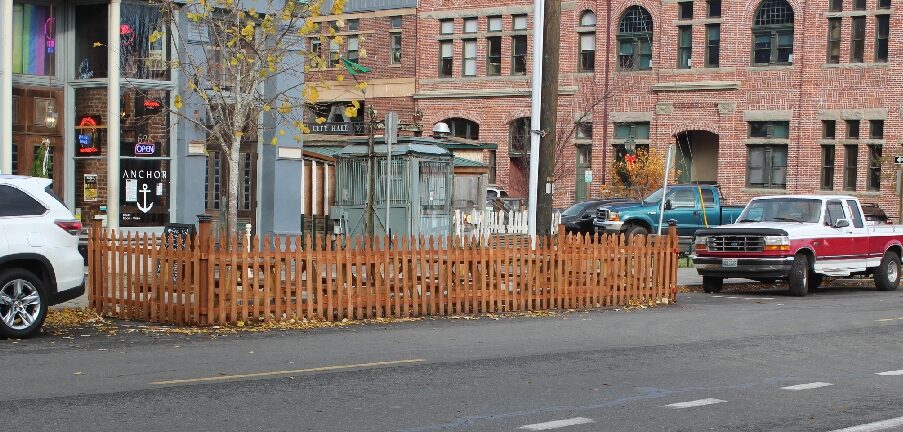


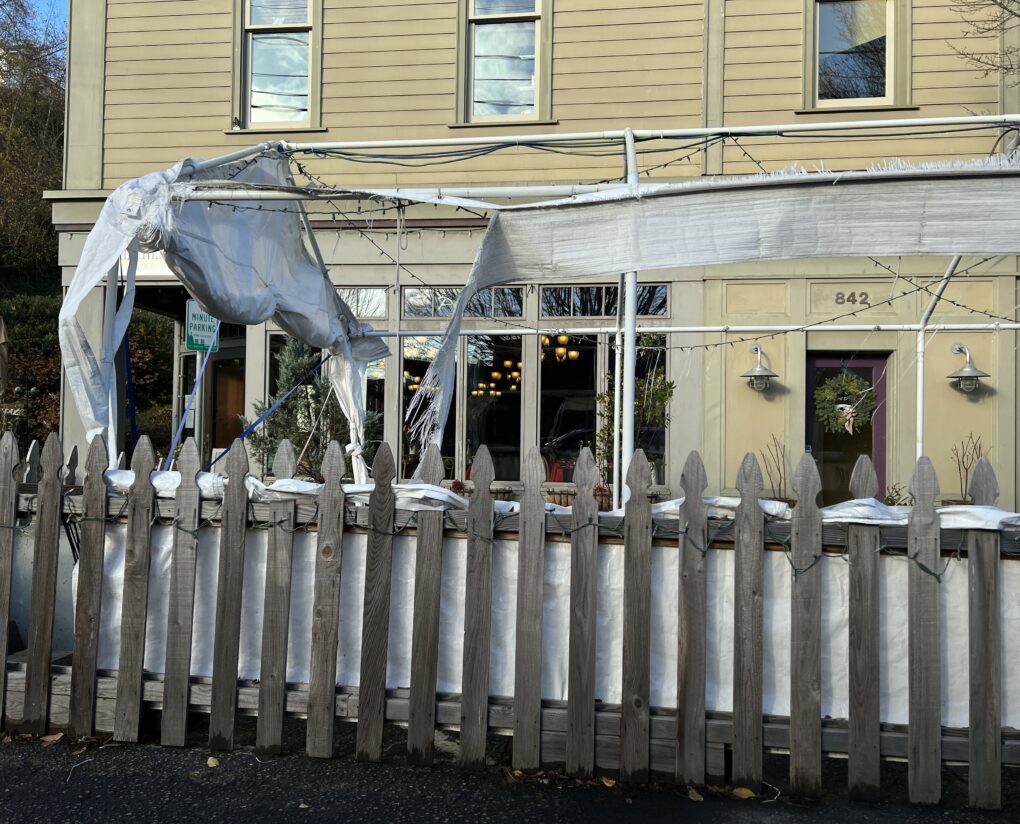
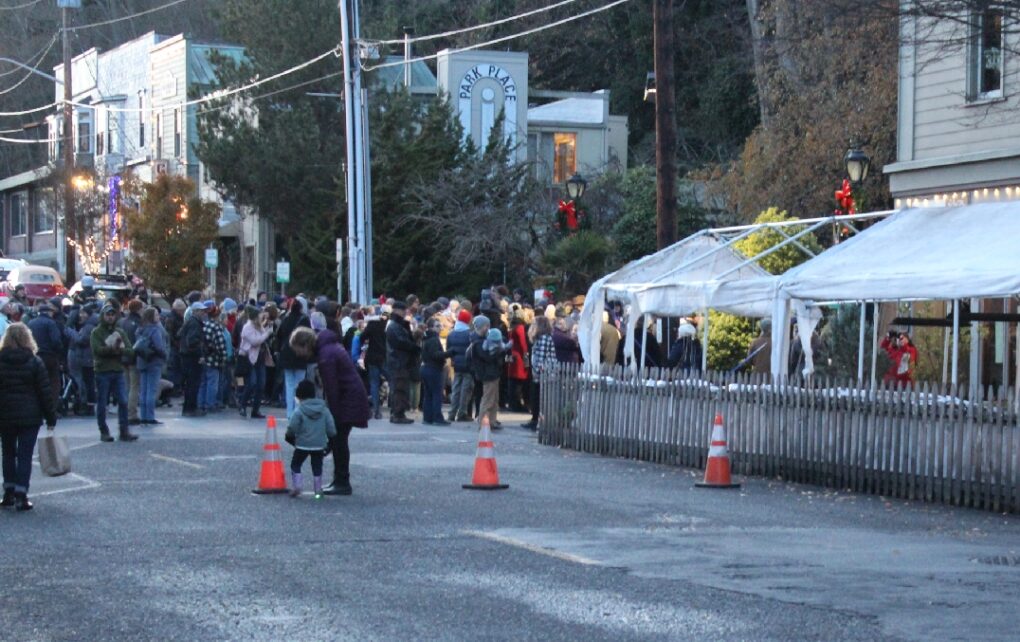
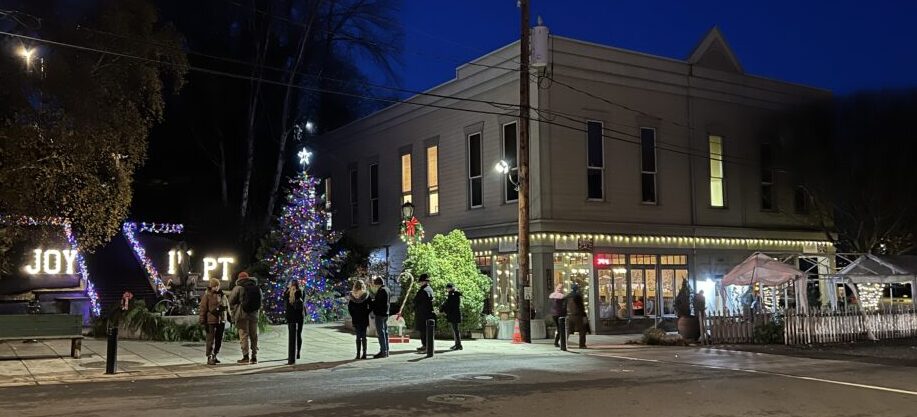
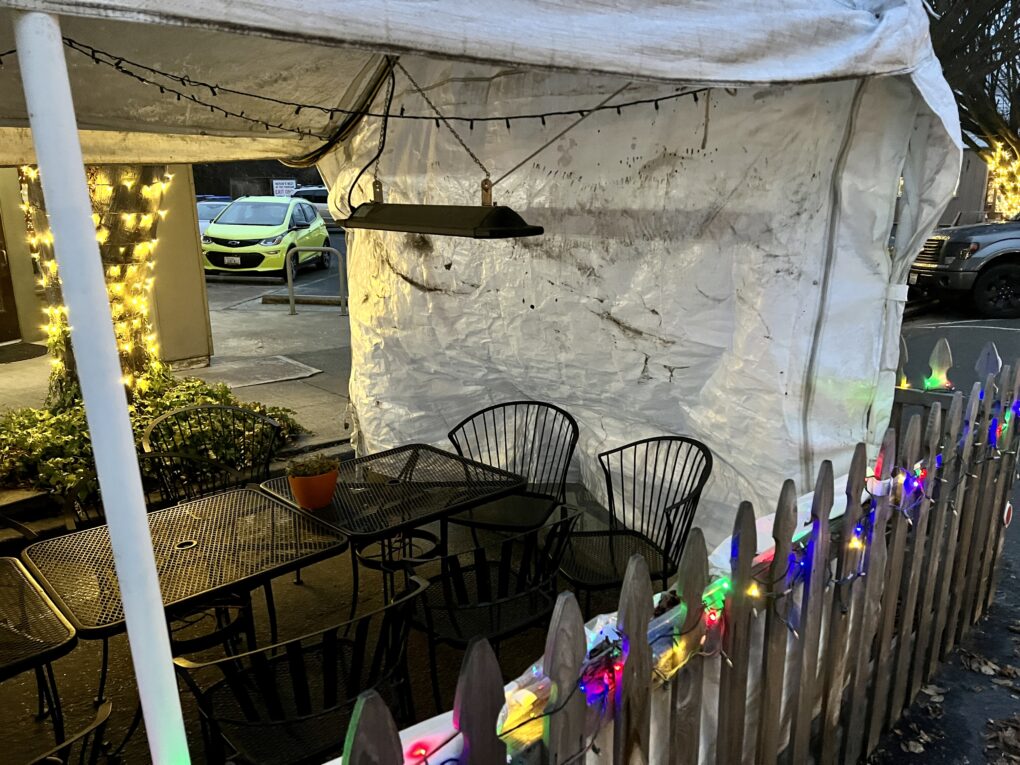
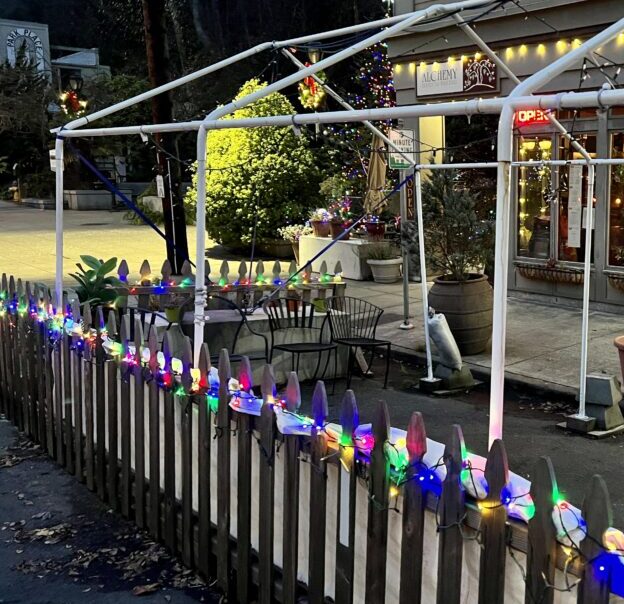
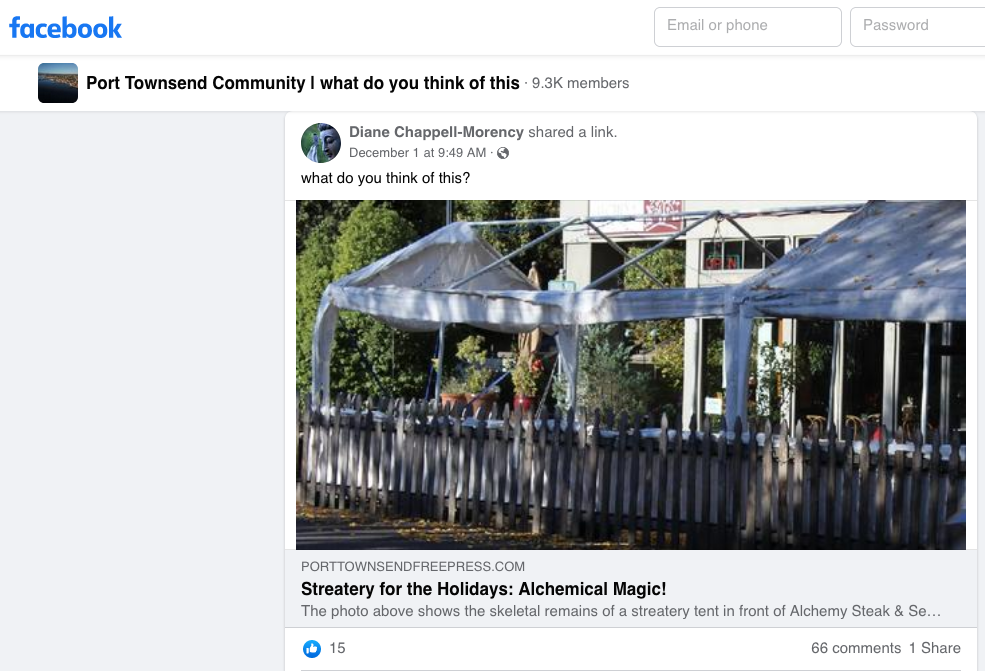

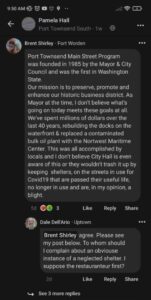


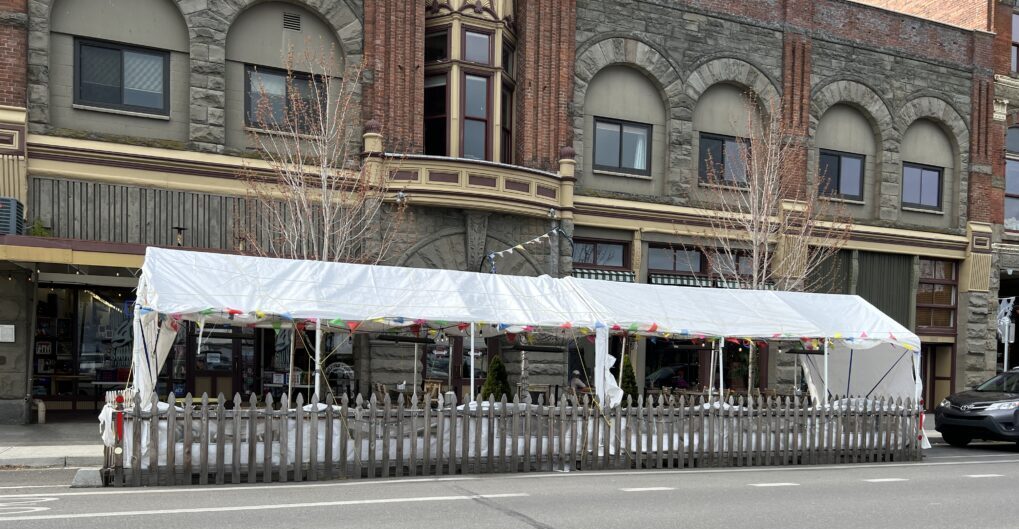
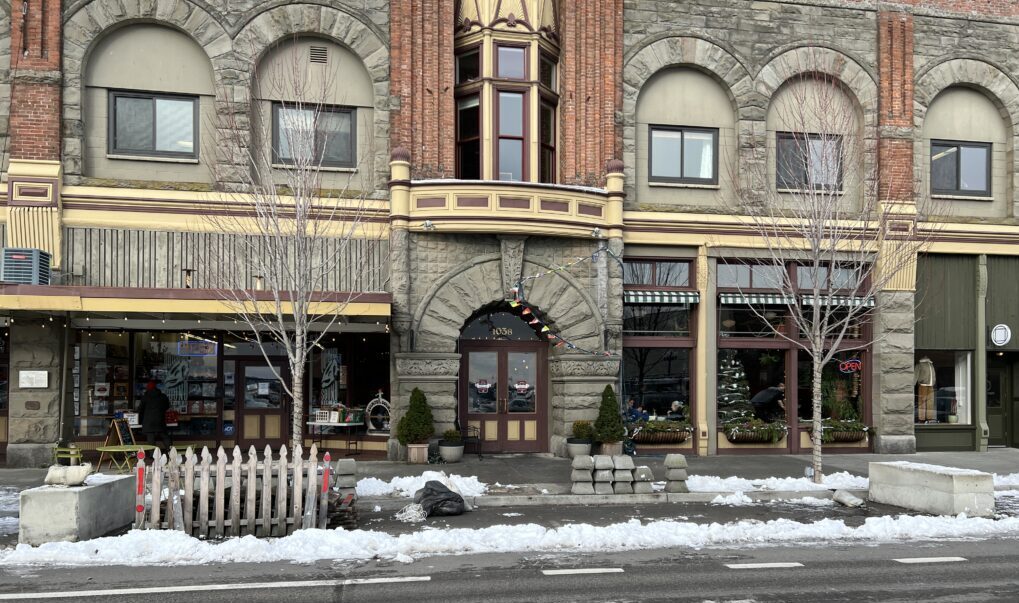
 y between Quimper Sound Records and The Old Whiskey Mill are what gives our downtown a rich ambience and celebrated appeal.