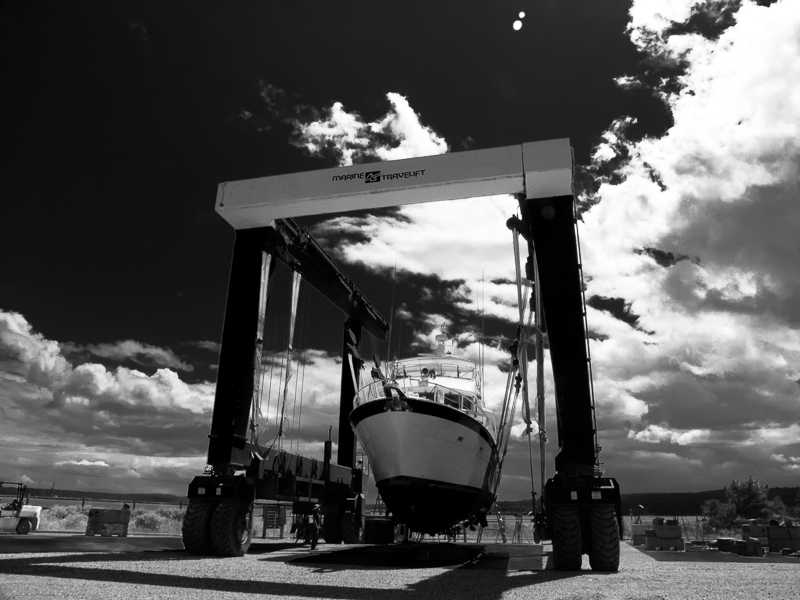
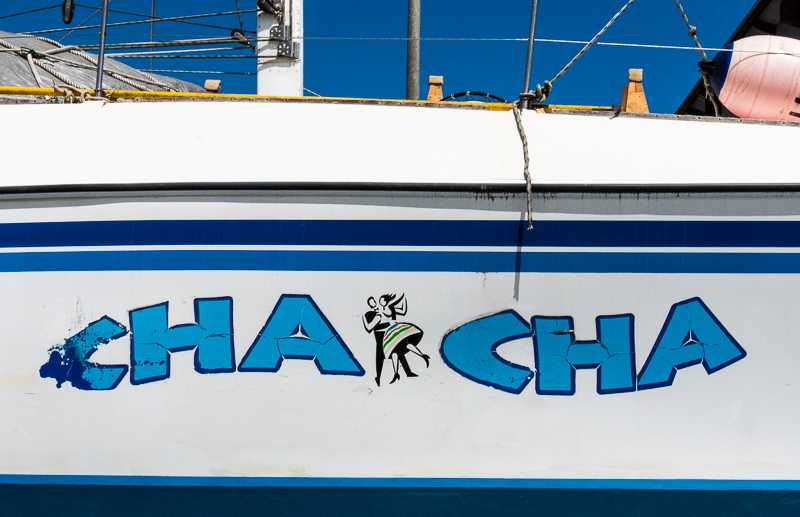
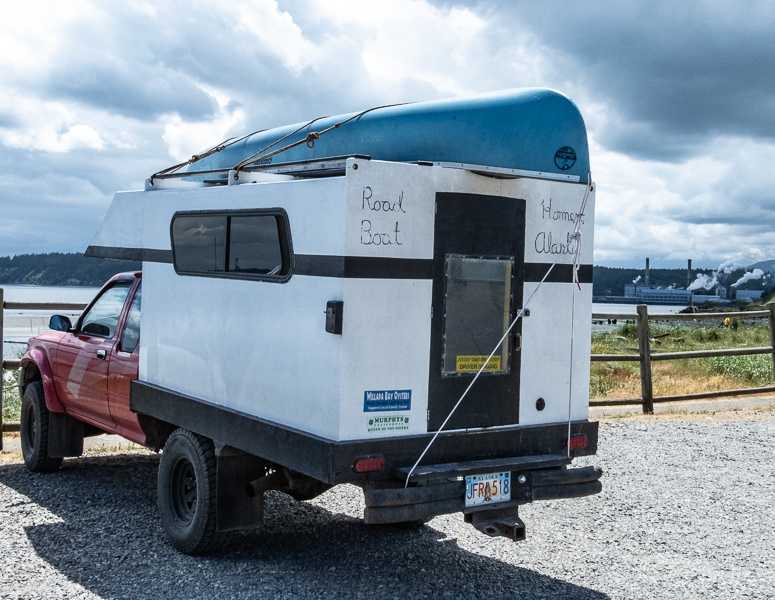
Vintage Auto Art Around the County
Photos by Kara Kellogg


Electric cars run on the suffering of Black children living like slaves.
Amnesty International exposed this painful truth in 2016. You can read their report by clicking on its title, “This is What We Die For.” Most of the world’s cobalt comes from the Congo. Lots of cobalt is needed for electric car batteries. Its production is controlled by warlords and corrupt government officials. They are getting rich off children who dig and haul and wash cobalt in hellish conditions.
A subsequent Sky News television report (click here) is heartbreaking and infuriating.

Cobalt mines outside the Congo might be able to meet the demand from manufacturers of smaller devices. But so much cobalt goes into electric car batteries that the Congo’s 60% share of the world’s reserves must be utilized.
Amnesty International’s findings were confirmed by UNESCO, CNN (see below), The Washington Post(a comprehensive multi-media report, 9/2016), The Daily Mail, (8/2017), and Al Jazeera (12/2017). This is just a sample of the reporting.
The mines cause other dire problems. As reported by The Daily Mail:
Soil samples taken from the mining area by doctors at the University of Lubumbashi, the nearest city, show the region to be among the ten most polluted in the world. Residents near mines in southern DRC had urinary concentrates of cobalt 43 higher than normal. Lead levels were five times higher, cadmium and uranium four times higher.

Battery makers, car manufacturers, Apple, Microsoft and the Chinese companies buying Congolese cobalt promptly decried the brutal situation uncovered by Amnesty, declared their supply free of cobalt mined by slaves and children and pledged vigilance to ensure humane conditions in the mines and to exclude “blood cobalt” from their products. A Responsible Cobalt Initiative was launched by the Chinese cobalt middlemen and Chinese battery makers.
Two years later, the conditions Amnesty discovered persist.
CBS News reported March 5, 2018, it found children still working the cobalt mines:
CBS News found what looked like the Wild West. There were children digging in trenches and laboring in lakes — hunting for treasure in a playground from hell.
The work is hard enough for an adult man, but it is unthinkable for a child. Yet tens of thousands of Congolese kids are involved in every stage of mining for cobalt. The latest research by the United Nations Children’s Fund (UNICEF) estimates 40,000 children are working in DRC mines.
More than half of the world’s supply of cobalt comes from the DRC, and 20 percent of that is mined by hand, according to Darton Commodities Ltd., a London-based research company that specializes in cobalt.
In a May 2018 report CNN updated Amnesty’s 2016 findings that car makers cannot determine the source of the cobalt in batteries. They exposed the Congolese certification system as a sham. The certificates are supposed to assure upstream users that their cobalt was not mined by slaves and children. CNN showed that the certificates are issued by the same people responsible for inhuman mining conditons. They found that the Congo’s Presidential Guard protects the facilities trafficking in “blood cobalt.”
Despite the pledges and denials, CNN concluded that no car manufacturer can assure buyers that their electric car does not run thanks to cobalt mined by African children.
We sought to determine how area owners and advocates of electric cars deal with this knowledge. What we learned is that they don’t want to talk about it.

We started with the Jefferson County EV Association. They participated in this year’s Rhody Festival Parade, silently rolling past the crowd in electric cars with signs declaring their vehicles’ virtues. We first contacted them without revealing the subject we wanted to pursue. Their spokesperson was willing to answer questions. But since we asked the specific question of how they handle knowing about the suffering behind their cars’ engines we have received no response.
We put the same questions to the four electric vehicle owners who tell their story on theassociation’s website. One of them is an elected PUD commissioner. None responded.
We reached across Puget Sound and put our questions to the woman who runs Seattle’s Green Fleet Management. The City of Seattle holds frequent press conferences and issues press releases touting its ever-increasing fleet of electric vehicles. We received no response to our questions.
We reached out to Coltura, a Seattle advocacy group whose mission is seeing the United States rapidly transition completely to electric vehicles. A recent report by Coltura lamented the failure of local governments to meet the Legislature’s directive to run all vehicles on electricity or biofuels “to the extent practicable.” Coltura did not respond to our questions.

While attending a climate change summit in Paris in 2015, Governor Jay Inslee unveiled an electric fleet initiative to ensure that at least 20% of all state vehicle purchases are electric by 2017. So we reached out to the State of Washington with our questions about the morality of buying electric cars that rely on child and slave labor.
Off the record we learned the state is buying mostly Chey Bolts. The batteries are made in Michigan. So far, so good. But our research showed that the batteries in Chey Bolts come from LG Chem of South Korea, which buys its cobalt from the same Chinese outfit implicated in all the reports starting with Amnesty. In the Amnesty investigation LG Chem admitted using cobalt from the mines where the horrible conditions were found. The Washington Postasked LG Chem where they got their cobalt. They claimed their cobalt comes not from the Congo, but from New Caledonia. However, minerals experts consulted by The Post concluded that could not be true, as LG Chem uses more cobalt than New Caledonia’s entire national production.
We are still waiting for a statement from the state.
Another Seattle activist organization, the Alliance for Jobs and Clean Energy, is pushing I-1631, a ballot measure which would impose an annually rising charge on gasoline and other carbon-based fuels. Their goal is to force people out of their gas-powered cars into electric vehicles or mass transit that would also run on electricity. Their equivalent of a carbon tax, they claim, is based on social justice and racial ethics.
Months ago we asked them to respond to the findings of the racial injustice inherent in the cobalt supply system that leads straight to the electric vehicles they advocate. They never responded.

In the United States, it is whites with enough money to pay the premium prices who buy electric cars. Yet it is poor African Blacks who pay the highest prices in terms of their freedom, their health and their lives.There may be white people in the US and Europe who might defend this human suffering in Africa as necessary in the fight against what they consider a greater concern–climate change. But they are never going to volunteer themselves or their children to take the place of Blacks in the cobalt mines. They prefer someone else doing the dangerous, miserable jobs in the struggle for climate justice. And it’s not someone who will ever have the money to enjoy owning an electric car.
Consider this: Most of the high-paying jobs in the oil and gas industry in coming years will go to Black and Hispanic workers. (Women are also snagging a big chunk of those lucrative jobs). Unlike warlords and corrupt officials who exploit Black laborers, the US oil and gas industry gives workers in the US a very good life.
Efforts are underway to find a substitute for cobalt. There are also calls for including cobalt in the US law that targeted blood diamonds and rare minerals controlled by African warlords. Developing technologies promise carbon capture on a scale that will let people keep their internal combustion cars. Mazda is rolling out gasoline-powered cars next year that promise lower carbon emissions than electric vehicles.
Some very intelligent people, such as environmental economist Bjorn Lomberg, contend that electric cars don’t do that much to reduce carbon emissions and may actually be detrimental to the environment and broader social justice causes.
Electric cars may not be all that green. As reported by the National Review:
In 2013, the Environmental Protection Agency described these batteries as having the “highest potential for environmental impacts,” with lithium mining resulting in greenhouse-gas emissions, environmental pollution, and human-health impacts. The Union of Concerned Scientists, a group that specializes in “science for a healthy planet and safer world,” agrees: For long-range electric vehicles such as Tesla, manufacturing emissions are 68 percent higher than for conventional cars.
It may be more ethical to hang onto your gas-powered car as long as it keeps running. You avoid the carbon emissions and pollution that come with manufacturing a new one. You won’t be rewarding people who profit from inhumanity. And you won’t find yourself in the hypocritical position of shopping for free trade goods in a car that runs on human suffering.
The young man was dead.
He lay on his back, eyes open, skin the color of ash, no sign of breathing. It looked like he had fallen off a new Cannondale road bike. The bike–carbon fiber, electric transmission, high-end wheels–was on his chest. He wore earbuds for a cell phone tucked inside his clothing. What looked like prison tats scrolled from his wrists and disappeared under his shirt.
A bottle of Jim Beam Apple Whiskey nested in the backpack’s side pocket.
The Port Townsend police officer shone a bright light into the young man’s eyes. No reaction. No blinking, no change in the pupils.
The young man under the expensive bike wasn’t breathing.
“Hey!” the officer shouted. “Are you all right?” He shouted it again.
No response. The young man was dead.
I said a silent prayer. Sadness crossed the officer’s face.
“Whah?”
From death the young man spoke and the officer moved in to sit him up and check him for weapons. Slowly, the young man regained consciousness. His speech was slurred, but he was coherent. He said he was having a bad time. Four friends had died from heroin overdoses in the past six months. He’d been closed in a room with one of them.
He reached for a cigarette and asked the officer, “You ever perform CPR on a corpse?”
I’ve twice gone on patrol with the Port Townsend Police . The first time, the officer behind the wheel educated me about the troubles most of the city never sees–the drugs, the violence, the aggressive transients that come to Port Townsend from Seattle, California, the East Coast. They’d heard it was a cool place to hang and get high and get lots of free stuff and tender care.
But that night the only call was about a stolen battery from a vehicle impounded at All City Towing. Nothing else to do, both units on duty responded. The police officers recognized the truck. They knew its owner, a troubled woman suffering from mental illness made worse by meth abuse. She came out of the darkness and they greeted her by name. The call about the missing battery was a ruse. She wanted them to recharge her cell phone.
This night, June 9, 2018, I walked with two officers along Water Street. People participating in the Steampunk Festival passed in outlandish costumes armed with fake swords and ray guns.
We were notified that a man “in a fetal position” occupied the floor in the handicap stall in the men’s room at the public bathrooms at Pope Marine Park. He had locked himself in. A bag with cans of fortified beer and other possessions was pushed against the wall. He did not appreciate being disturbed. He said he was trying to get some sleep.
The officers knew this man. He had been harassing women at the bus stop at Haines Place earlier that day. He had a long history of arrests for violence against the homeless. He had threatened the life of one of the officers. He had threatened the officer’s family.
He was placed under arrest for disorderly conduct. When notified he had the right to an attorney, he told the officers exactly what they had the right to. It did not involve appointed counsel or keeping their mouths closed. He bragged how the judge would let him out and be angry at them. “You know Judge Landes will turn me loose and be pissed at you.” More profanity, more mocking, more bragging about a court system he felt confident would put him back on the street after he got a good night’s sleep. “Thanks for a free bed,” he said.
He looked at me. Reeking of alcohol, front teeth gone, clothes filthy, he snickered, “They wish they had me for more than disorderly conduct.”
A minute later, the mean drunk became an assailant. He kicked one of the officers and was now under arrest for assault.
These officers had spent years trying to help this man. They had bought him food and once showed him respect to lay a foundation for trust.
“My guys are going to get you,” he said to the officer whose life and family he had previously threatened.
At the shelter under the American Legion we were told this man “cold cocks you. That’s his MO.” He carries a knife, as do most of the transients on Port Townsend’s streets. He had used it to threaten the shelter’s manager.
Over a break for food back at the police station, officers talked about the city’s transients. They’ve bought food for almost all of them. The man arrested that night had destroyed a guitar that gave joy to another man who frequented the Boiler Room. Officers collected funds to buy a replacement and hunted for the guitarist until they found his camp and delivered his new instrument.
All the money spent on clothing, food, and coffee comes from the pockets of police officers who get to know these people by name, arrest them, call for ambulances to get them help, or find them dead.
Back to that young man with the bike. He looked familiar to the officers but they couldn’t be sure. He gave his name and they learned those tattoos were in fact prison tats. He claimed he had a wife with a good job. An EMT crew from Jefferson Healthcare determined that, despite his high alcohol blood level (.333), he was not in danger of dying. He did not want to go to the hospital. The police could not force him off the street.
Washington does not have a public intoxication statute.
He had collapsed where camping was not permitted. But if they forced him to move, there was a good chance he could become a victim. His shiny, expensive bike would be a magnet for predators.
The police talked to him as a human being, not a pitiful drunk. They did not want to see him hurt. They wanted him to get help. They worried about what he was doing to himself, but there was only so much they could do.
They gave him a blanket, Gatorade, and let him hide in the dark. They would check on him later that night to see how he was doing. They poured out the whiskey because just a few pulls more could kill the young man.
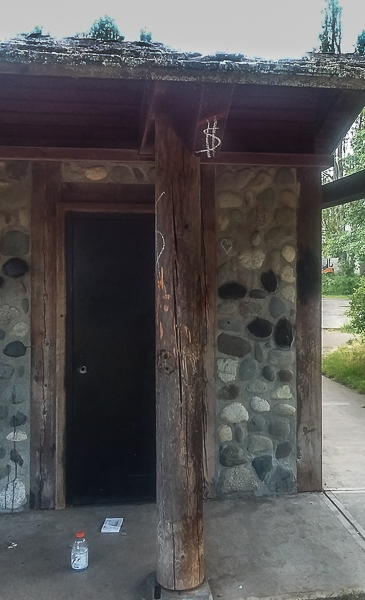
I returned the next morning and took the photo shown above. The bottle of whiskey the police had emptied was there. The young man and his bicycle were gone. A large, wild-looking man in the bushes screamed at me about money and being on his turf. I got out of there. I warned an elderly couple with a fluffy dog who were starting on a walk what lay ahead. They got in their car and left.
Lights in the Darkness
They’re tough. They’re firm. They are imposing with their physical presence and the impressive weaponry they carry.
Inside those vests loaded with extra bullet magazines and a second gun, hearts beat for the broken souls these police officers meet every day. We may avert our eyes, walk away and ignore strangers who might frighten or repulse us. Police officers go looking for them to make sure they will live through the night.
They get spat and puked on, insulted, punched, kicked and attacked with human waste and blood. Their lives and those of their loved ones are threatened. They face guns and knives and never know what to expect of that person who won’t get out of their car or who won’t take their hands out of their pockets.
But they don’t stop. They don’t quit.
For people living on the streets, on the beaches, under trees, huddled against dumpsters, in cars littered with used needles and filth, their nights are a little less black because of these compassionate, powerful men and women in uniform. They are lights in the darkest corners of our town’s nights.


Scott Hogenson is a resident of Jefferson County. His column will appear Wednesdays. Responses, no more than 700 words, may be sent to ptfreepress@gmail.com.
We rate everything from Port Townsend Brewing as quaffable, top-notch suds. That is our considered position on local beer and we’re sticking to it.
Scott’s columns will likely be provocative. Let me restate that: Scott’s columns will definitely be provocative. I may not agree with what he says. This will be his column expressing his unique viewpoint. We welcome well-written responses to Scott and will be happy to publish them. No more than roughly 700 words, please, the same rule Scott works under.