White, Twenty-Something and in Jail: Life Behind Bars in Jefferson County

On any given day, fifty-plus young men and women live locked behind bars in the Jefferson County Jail in Port Hadlock. They range in age from twenty to twenty-eight years old.  Seventy-five percent are male. All are white. Instead of building careers and raising families – they spend their days in narrow cells and cell blocks, with brief access to an “open air exercise facility.”

Crimes range from theft, to assault, to burglary, to forgery, to drug offenses – but actually – almost all are drug or alcohol-related. Most are committed under the influence of drugs, or to acquire resources to buy, sell, or use drugs. The poison runs the spectrum from OxyContin and Oxycodone to Fentanyl and Methamphetamine, with a wide range of deadly hybrids including Fentanyl-laced synthetic marijuana (K-2), Fentanyl-laced heroin, and even Fentanyl-laced cocaine.

These are not victimless crimes. Desperate cravings and the maddening hunger of withdrawal leads inevitably to broken promises, broken families, broken laws – broken bodies and broken lives. But according to Jefferson County Jail Superintendent David Fortino, for those awaiting sentencing – or those serving time, jail can be a haven of sorts, providing a humane “time-out” for inmates – and the community at large.

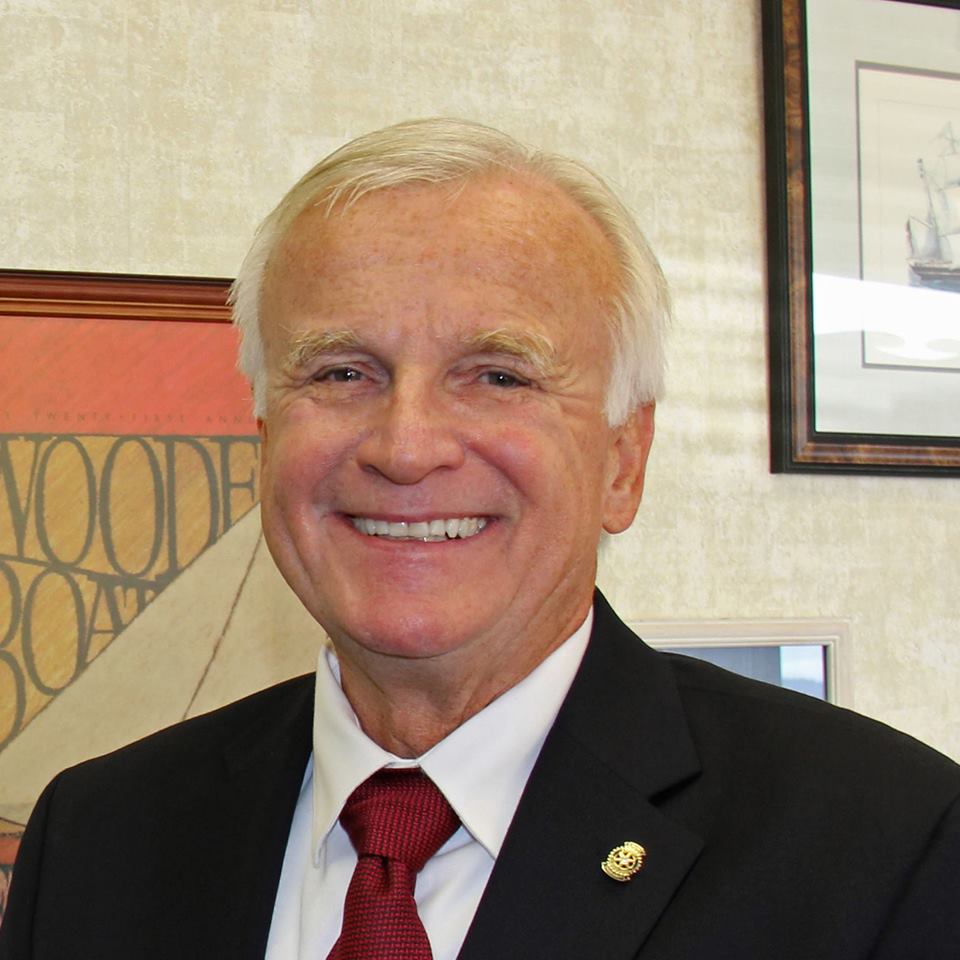
Superintendent David Fortino

“We’re not mad at anybody. We’re not here to punish anyone,” said Fortino. “We are committed to providing a safe, secure environment, and care for them while they are here.” But haven or not – jail is bleak.

Jefferson County contracts out for inmate meal service. Two chefs serve up three nutritious meals, typically: a cold breakfast, a hot lunch, and a hot dinner. Jail staff deliver the meals on carts. One tray per person, per meal – no second helpings, exchanges or substitutions. The tray, spork, cup and bowl (if applicable) must be returned immediately following the meal, when trays are collected by jail staff and/or kitchen workers. If you miss the cart, you miss the meal.

At 5:00 a.m. inmate cells are unlocked, and the lights, TV and phones are turned on. From 5:00 a.m. to 6:00 a.m. meds are distributed, and breakfast is served. Superior Court video appearances are scheduled for 11:30 a.m., and lunch is served at noon. Afternoon classes begin at 1:00 p.m. and midday medications are distributed from 1:00 p.m. to 2:00 p.m. District Court video appearances are scheduled after 1:15 p.m. Dinner is served at 5:00 p.m. Evening meds are passed from 8:00 to 9:00 p.m. Lock down at 9:00 p.m. Lights-Out is at 10:00 p.m.

A cell at the “Hadlock Hilton”

On the whole, it’s a pretty drab existence. Yes – a non-denominational group conducts weekly Bible Study Sunday nights. Inmates can request assistance to get a G.E.D. or complete high school. Alcoholics Anonymous, Narcotics Anonymous, and Anger Management programs can assist inmates through personal difficulties. Some inmates may qualify for work crews or inmate worker status. Life Skills classes are held weekly – encouraging healthy ways to cope with life changes and relapse prevention.

Yes – inmates have access to medical and emergency dental services, and necessary medical care is never denied based on inability to pay – but it’s not boutique healthcare by any means.

And yes, the jail provides controlled access to a telephone (collect calls only), and limited visits with friends and family on visiting lists (on either side of glassed partitions with phone handsets on either side).

But there’s not getting around it, life behind bars is grim.

Hollywood and the “entertainment industry” tend to glamorize the world of illegal drug use. Beautiful people with beautiful clothes in beautiful cars – rolling in money and influence. A touch of rebellion, a big dose “sticking it to the man.” There’s none of that in Jefferson County. No one gets rich – or stays “in the money” for long, and the superficial thrill of the first hit hurtles the user inevitably and rapidly towards the terrors of dependency. The drugs are unimaginably addictive and unimaginably destructive. Addicts lose their jobs and families, their health, and too often, their lives.

Cold-turkey detox in initial holding cells offers the inmate a clarity he or she hasn’t experienced for years. But there is little joy. As their minds clear, the severity of their situation sinks in. After a week or so of regular meals, rest, and mandatory hygiene, some of the visible sores, injuries and wounds that are the outward sign of the addict may heal. But the damage caused by prolonged drug abuse leaves lasting scars – external and internal, physical and psychological.

Some wags refer to the Jefferson County Jail as the “Hadlock Hilton.” It’s an unfortunate joke, evoking dark memories of American POWs being abused by the North Vietnamese. There is no abuse – certainly no institutional abuse – at the Jefferson County Jail. Inmate Rights are carefully enunciated and scrupulously enforced. On the other hand, the facility is absolutely no “Hilton,” in any way, shape or form.

According to statistics in the current Jefferson County Sheriff’s Office (JCSO) Strategic Plan, since 2001, 57 percent of inmates have returned to the jail at least once. Veteran corrections deputies have established long-standing professional relationships with many local offenders. This familiarity can help prevent confrontations and reduce the need for use of force – but it is no “Kumbaya” bonding.

l“We try to treat inmates with the maximum degree of compassion, dignity, and even respect possible under the circumstances,” said Superintendent Fortino. “But still, I’ve never had anyone say to me that they can’t wait to see me again next time.”

Even at full strength – the Jefferson County Sheriff’s Office (JCSO) does not enjoy robust staffing – and overtime and extra shifts are common. While competitive salaries are a major goal of current strategic plans, the JCSO has experienced high turnover of patrol and correction deputy staff – and are currently understaffed.

Nonetheless, the JCSO (operations, county jail, civil division and administration) annual budget exceeds $6 million. When linked to peripheral services ranging from lawyers, bail bondsmen, and counselors, to academia, charities, foundations, contractors, and healthcare providers, and Port Townsend and state law enforcement and health expenditures, drug-related crime looms as one of the largest economic drivers in Jefferson County.

Sadly, with recidivism on the rise, and the opiate crisis showing no signs of peaking soon, it has all the trappings of a growth industry.


Knowing the Homeless:  The Individuals on Port Townsend’s Streets

Knowing the Homeless: The Individuals on Port Townsend’s Streets

2012 was the year I moved to Port Townsend from Tacoma.  While I immediately loved this place, our proximity to nature and the beach, I found myself having difficulty relating to people in my new home town.

It wasn’t that I felt anyone gave off a negative vibe.  Most of the people I met in my Uptown neighborhood  just seemed like they were worlds apart from my own.  I tried volunteering at the Wooden Boat Festival, Film Festival, etc.  I spent some time at the Uptown Pub.  While I had a good time, I never met anyone I connected with.

I grew up in Federal Way.  The people I’d known there and later in Tacoma were, you might say, a bit rougher, grittier, more down-to-earth than the people I was meeting in Port Townsend.

Perhaps strange, I began to feel most comfortable at the Penny Saver, often late at night.  Many folks coming in late in the evening were dirty, just ending a long day of work at the boat yard, mill or other blue-collar job.  I’d built my own automotive businesses.  I knew the dignity and joys of getting dirty in work you love. I found it easy to strike up conversations with this side of Port Townsend.

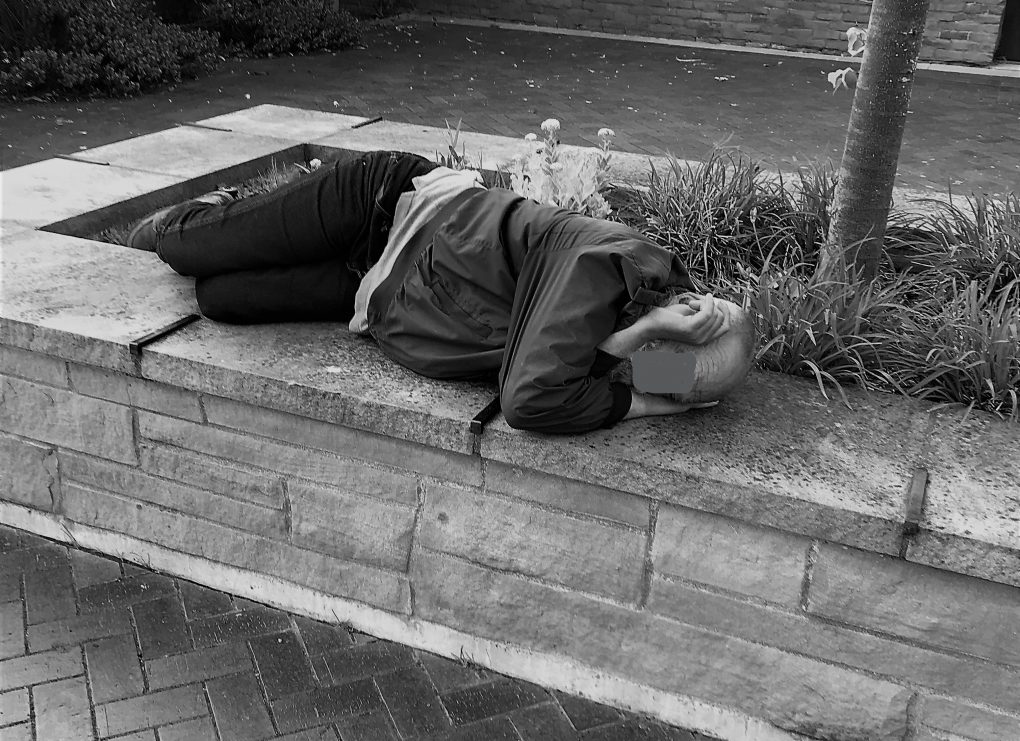
Many of the homeless would come in during the later hours. I was honestly more comfortable talking to the homeless than pretty much anyone at the Co-op and the parties I’d attended since landing here.

I’d been through plenty of highs and lows in life by this time.  I’d never been homeless myself, but it was easy for me to relate to these people.  I enjoyed listening to their stories.  We had shared experiences.  I’ve seen things they’ve gone through and I was really at ease around them.  

Over the years, I have gotten to know many of the homeless, mostly those who are “from here.”  I’ve gotten to know their stories.  They’ve shared their struggles and triumphs. 

I’ve seen things that bothered me:  the people who come out of Penny Saver with a six-pack of beer and give a can or bottle to a homeless person leaning against the wall.  Or the teenagers who pay homeless person to go in and buy beer for them. 

In all the time I’ve spent with this town’s street people, I have only had a couple uncomfortable experiences.  A homeless alcoholic man threatened me and stuck his head and hands in my car through the window.  He said, “You better watch you back and hope you have good insurance on your car.”  I immediately stepped out of my vehicle and confronted him.  He backed down and apologized.  The cause for his anger:  I refused to give him cash for the sandwich he said he wanted and instead offered to buy him one.  I had known any cash in his hands would only be used to get him drunk.

Another time, I found a bicycle in the middle of the road behind McDonalds. This was late at night. The homeless hang out back there in Kah Tai Park or in the landscaping around the parking lot. I got out of my car to move the bike to the sidewalk and someone I couldn’t see started throwing rocks at me.  I calmly but loudly shouted, “If this is your bike, please, I was just moving it out of the road.”  Instead my car and my person continued to be pelted with rocks.  

Each week I will be telling a story about someone who is or has been homeless that I have come to know.  I hope my personal experiences can open up the minds of our readers and tie in these experiences to our past article by our anonymous contributor entitled, “Knowing the Homeless.”

It is my intention that by putting a face on the homeless, being realistic about who they are, their problems, and the dangers and problems they pose for the rest of us, my writing might help us have a better informed discussion about things such as a homeless shelter, the increased crime attributed to transients, and the impacts of the homeless on our public resources.  We can’t start to address the problem of homelessness unless we know who these people are.


Tweek Watch Olympic Peninsula: Facebook Crime Fighters

Tweek Watch Olympic Peninsula: Facebook Crime Fighters

A game camera is triggered by motion at 3 a.m.  A black Dodge pickup truck is photographed leaving a meth compound in Sequim.  The pic goes up on the Facebook page of Tweek Watch Olympic Peninsula where it is seen by over 2,500 people.

This truck and unidentified driver was caught leaving a major meth compound in Sequim at 3am on our game cam. If this truck is near your property they are likely on the prowl. The people living at the compound are involved in a major drug – theft syndicate in Clallam County! Beware!

Someone comments there are three identical trucks in Sequim.  Possibilities are narrowed down.  The truck is spotted at Lincoln Park in Port Angeles. It doesn’t take long to rule that one out.  Someone wants to know where the meth compound is located and the page administrator provides not only the intersection but a photo.   People weigh in.  They’ve seen the traffic and stolen property collected out there. But who owns this particular truck? Suggestions pour in, are  evaluated.  Finally, the community settled on the meth truck being regularly seen outside a particular tattoo stop.

Virtual vigilantes?  One commenter says “Call the cops…Starting vigilante sh#t could get you killed.”

The discussion rolls on, undeterred.

A “tweeker,” if you didn’t know, is a meth addict.  The term frequently encompasses heroin and other drug addicts, as it does in the case of this Facebook page.

We could not find out who runs Tweek Watch.  We were in communication with the administrator who initially agreed to answer questions but then the dialogue stopped.  We succeeded in locating people who know the identity of the administrator.  They say this person does not want to be publicly identified because of the potential for retaliation from users and dealers.

We understand.  Who would want to be outed for standing up to the crime associated with meth and heroin addiction on the Olympic Peninsula?  In one post the administrator stated that the tweekers had already found the site.  “Ban button wearing thin! Have a nice weekend was the response,” along with an expletive thrown at the tweekers who might be reading his post.

While readers of The Port Townsend Leader objected to naming arrestees in police reports, and the editor capitulated, the Tweek Watch community delights in posting photos and names of people they believe are engaged in criminal activity.  They post photos of RVs engaged in allegedly selling drugs on Port Angeles streets.  Someone posted having just seen a drug deal on Frost Road at the PUD gate. Photographs of persons accused of theft by a member of the community are posted, with full names.  Photos of recently stolen vehicles are posted with a request to speak up if they are seen. A Port Townsend man posts a photo with the message, “If you see this car in the hood, you are about to get robbed. PM me for details.”

Stash of hypodermic needles with location posted on Tweek Watch

We started watching this site months ago and have seen its following grow steadily.  What does law enforcement think?  We asked a Jefferson County deputy who hadn’t know about the site.  He thought it was a great idea and joined the page. Police are reading the comments.  They are part of the community.

Tweek Watch posted this on its “About” page:  “Meth and heroin thieves are victimizing too many good people on the Peninsula! It’s time to fight back! This page is to shed light on the tweeks.”

Not fearful of being sued, Tweek Watch also posts photos very clearly identifying homes and commercial properties as places where drugs are sold and used, or where tweekers reside and gather.  The administrator uses far saltier language to describe the locations and people there.

Some of the posts are followed with news that the wanted person had been arrested.  Police have raided some of the locations.  There’s no way of knowing if pressure from Tweek Watch motivated and informed police, or if information from police found its way to the site.

One thing is clear:  The Tweek Watch community knows quite a few of the miscreants and dodgy properties.  The anger about the situation is obvious, as is the determination to do precisely what the site set out to do:  fight back by dragging this activity and these people into the light.

This is not the only social media crime fighting effort.  In Seattle, the Next Door social media site has increasingly been used to share information about dangerous and criminal transients.  It has been reported to us that the Next Door network in Port Townsend is also engaging in rapid responses to drug crimes.

“When seconds count, the police are only minutes away,” the saying goes.  On-line crime fighting can bring the speed and sweep of the Internet to the battle.


Teen Marijuana Use in Jefferson County: A Growing Problem Needing An Aggressive County Commission

Jefferson County has a real problem with teens using marijuana.

 Marijuana use among our kids, starting in the sixth grade, is significantly worse than the rest of the state.

 Marijuana use by teens, medical experts agree, damages brain development and can lead to memory loss, diminished verbal ability and learning and performance difficulties. 

 Most teens who enter drug treatment report their primary problem is marijuana abuse.  Teenage use greatly increases the risk of addiction.

 Marijuana use by teens can lead to more severe anxiety and depression, or the onset of those psychological problems.

 Does anybody care?  There has been less attention paid by our local newspapers to this serious problem than stories about Port Townsend’s deer.

 We learned about these alarming statistics from the 2016 Washington State Healthy Youth Survey in connection with reporting on the prospect of a marijuana retailer, Greg Brotherton, being elected to the County Commission.  In that position, he would have power over public efforts to fight teen marijuana use and educate consumers about its harmful effects.  We return to coverage of that looming conflict of interest in a future article.

 Our report about Brotherton highlighted marijuana’s adverse physical and health risks and drew some of the most vitriolic reader responses to anything we have written.  Repeating facts about marijuana’s dangers, such as increasing the risk of testicular cancer by 250% or more than doubling a pregnant woman’s chances of giving birth to a dead baby, or that marijuana smoke contains more carcinogens and tar than cigarette smoke…look out.

 Fact-resistant worship of marijuana is making things worse for our kids.

 According to that Healthy Youth Survey, more than half of our teens think regular use has no harmful effects.  A good deal of this ignorance is attributable to the perception that adults don’t see anything wrong with marijuana use. 

 Perception of harm is decreasing even as scientific evidence establishes more physical and mental health problems related to marijuana use, especially with the more potent varieties finding their way to teens.  Today’s dope is nothing like what sent the Grateful Dead on mellow (and boring) hour-long versions of “Truckin’.”  Today’s genetically and chemically manipulated THC-soaked pot is green crack.  Yet this Franken-weed is being marketed as “organic and gentle.”

 Back to the scary statistics.

 Sixty-eight percent of teens report marijuana is easy to obtain.  The black market is all but gone. This means that teens are using marijuana coming out of retail shops.

 Seventy-eight percent of teens who use marijuana smoke it, a statistic comparable with adult use. There is no safe way to smoke marijuana, any more than there is a safe way to smoke cigarettes.

 More kids in Jefferson County drive stoned or in a vehicle driven by someone who is stoned than kids statewide.

 Teen marijuana use was declining markedly until 2010, started rising and has since stayed at about 32% of Jefferson County teens. 

 Legalization has made the problem worse with the marketing of marijuana promoting its use and acceptance and pooh-poohing its dangers.  The Chimacum Prevention Coalition has recognized this, as there are two marijuana retailers just down the road from the high school.  Marijuana retailers spending their advertising budgets to remove the stigma of marijuana use are not helping young people make the right decision.

 Instead of accepting worsening trends, we could be leveraging legalization to fight teen use and better educate the public so that the perception-of-risk trend line turns around.  We could fight marijuana use as we have fought cigarette use, by advancing facts that justify stigma and ridicule.

 The pot shop could become a classroom about the dangers of marijuana, if our county commissioners would take decisive action.

 The state law legalizing recreational marijuana empowered local governments to require more consumer information than the state mandated, which mentions health risks but glosses over specifics.  Just like Big Tobacco lobbyists blocked consumer education, pot’s lobbyists in Olympia have also been busy.

 Our county commissioners could require signs prominently displayed in every retail outlet and the distribution of printed material before every purchase providing the following information that comes through the county’s Public Health Department website (all hyperlinked in our previous Brotherton report).  After all, if the information is important enough to be made available by the county, why not make sure the intended audience gets it? 

-Marijuana is addictive.

-Marijuana can damage brain development, from babies absorbing THC through their mother’s placenta or breast milk to anyone up to age 25.  It can cause long term damage and a permanent drop in IQ and loss of verbal ability and memory.

-Pregnant women who use marijuana have 2.3 times greater incidence of still birth.  Marijuana-exposed children are more likely to show gaps in problem-solving skills, memory and the ability to remain attentive. Parental marijuana use is associated with a greater likelihood of using marijuana at an early age.

-Marijuana smoke contains carcinogenic combustion products, including about 50 percent more benzoprene and 75 percent more benzanthracene (and more phenols, vinyl chlorides, nitrosamines, reactive oxygen species) than cigarette smoke. Marijuana smoking leads to four times the deposition of tar compared to cigarette smoking.

-Marijuana smoking is associated with large airway inflammation, increased airway resistance, and lung hyperinflation.

-Marijuana use has been linked to increased psychiatric disorders, including depression, anxiety and substance abuse disorders.  It is particularly dangerous for individuals with a genetic predisposition to schizophrenia and psychosis.  The high THC content of today’s marijuana products increases the risks of psychiatric problems.

-Marijuana’s negative effects on attention, memory, and learning can last for days or weeks. A daily user may be functioning at a reduced intellectual level most or all the time.

-Chronic use can lead to Cannabinoid Hyperemesis Syndrome—a condition marked by recurrent bouts of severe nausea, vomiting, and dehydration.

And don’t forget that cringe-worthy fact about marijuana use by young men increasing their risk of testicular cancer by 250%.

We have a real problem with teen use of marijuana. But with a marijuana retailer likely winning the open seat on the county commission, and the other two commissioners supporting his candidacy, what are the chances they will aggressively use their lawful powers to help our kids?

Related:  Marijuana Facts for Teens from National Institute on Drug Abuse

Two Million Teens Vaping Marijuana, Survey Finds

Spike in Marijuana Overdoses Blamed on Potent Edibles, Poor Public Education

America’s Invisible Pot Addicts

What You Need to Know About Marijuana Use in Teens

Marijuana Addition is Growing and Teens Face the Highest Health Risk

17 and Pregnant–A Story in Three Parts

17 and Pregnant–A Story in Three Parts

The First Trimester

Stories not being told, voices not being heard.  Port Townsend Free Press set out to address that shortcoming in our local journalism scene. That means more than politics and investigative reporting, if we are to meet the goals we have set for ourselves. This young woman approached us with the idea of writing about her teen pregnancy and sharing what was in her head and heart at each step towards her son’s birth. Jefferson County is old, face it.  Most people are far removed from the challenges of the children and teens around us.  We need to be reminded, to learn and understand better what they are facing.   We do not know where Ravyn will take us, but she has our trust and confidence.  We hope and pray for the best, and want to let her know we support and admire the strong woman is becoming through the way she is embracing this huge challenge early in her young life.  We publish her articles under the name which she has chosen for herself and by which she is known in her community–The Editor 

A bright, new life enters the world through me. Even at 17 and knowing the impossibilities and challenges ahead, I know this child is more than me. God saved me through my baby boy.  I had been a horrible person, to myself and others.  This baby inside my body is transforming me.  I wouldn’t do a thing to change His plan for me, and this child that now depends on me for everything.

Rent, diapers, stroller, car seat, food; a whirlwind of sudden expectations and needs that most won’t face at this age. That’s what this pregnancy has brought upon me–me and my husband, who is still a teenager himself. As a pregnant teen, I had many choices. Even as an adult I would have had these choices but they seemed more crucial at this young age. Do I abort my child? Give him up for adoption? Do I marry the father? Do I love the father? Was this even remotely a good mistake…? No, no, yes, yes, and no. There was no mistake, no accident. It all happened for a reason. I am convinced of that.

I hadn’t expected the test to be positive. Stress and hate and sadness and loneliness were all I could see and taste. My period being late? Common in situations of distress. Tired? Aren’t I always? But that test proved what many had said and told me was the truth. Maybe I was denying it to myself, but that extra pink line on that test card was unmistakable. My boyfriend at the time was sitting outside the restroom I was using. When I showed him the card with the colored lines, his whole face seemed to collapse, age, then brighten all within seconds. There was no doubt what we would do.  It was ours, and this child would stay with us no matter the consequences.

Days passed. Another test. Another positive result. We had to tell our parents.

Everything went by in a blur after that.  Our parents wanted to make sure we were not reading the results wrong. More tests followed. Papers were signed.  I had to start learning about insurance, how much doctors cost and how medical bills get covered.  Lots of appointments, the school year ending, the anxiety and joys of ultrasounds; my future was changing fast as my past dropped away. I married the father of my child on the 23rd of June, sealing our family together and starting a new chapter in three lives.

We moved in together. We pay rent together, laugh, cry, fight, and dream together. I couldn’t ask for more and I wouldn’t want any less. It seemed perfect. I got my old job back. I had my lover with me. My baby was healthy and growing. I was a new person.

Then my first paycheck came in….and the second.  Realty hit hard.  How could we ever make it on this small income? The Social Security for my husband stopped. He didn’t have a job and there suddenly was less than $500 a month between us…when rent was $700! I cried. “We can’t make it,” was my only thought. I was bringing my child into a world of disappointment, crime, sadness. The grim, daily news on the television and radio, the money not being enough, and not enough love in the world—in my life!—to compensate for the bad.

Oh, Lord, why has this happened to me?

NEXT: The Second Trimester


Reefer Madne$$

Reefer Madne$$

Reefer Madness is gripping America. I’m not talking about the 1936 cult movie classic that so many of us rolled our eyes at as teenagers. I’m talking about the billions of dollars that are flowing into U.S. and Canadian stock markets to buy shares of companies that sell legal marijuana and other cannabis derivatives. 

With news that Canada will be the first nation in the industrialized world to legalize recreational marijuana beginning October 17, there’s been a lot of attention paid to Canadian firms poised to enter this multi-billiondollar market. Lately, this attention has been laser focused 

Stocks in cannabis companies have soared in recent weeks, sparked in large part by the August 15 announcement that one of the largest beverage companies on earth – Constellation Brands – was investing $4 billion USD in the Canadian cannabis company Canopy Growth Corporation. Since then, Canopy’s stock has risen more than 75%, making it the world’s largest legal marijuana company based on market capitalization. 

Other marijuana stocks are also riding high, with investor speculation of similar deals and growth potential involving other cannabis companies. Tilray, Inc. debuted on the NASDAQ Stock Exchange in mid-July with an initial pubic offering price of $17 a share. As of August 28, it was trading at nearly $60 a share. Another company called Aurora Cannabis has also seen significant gains in recent weeks, as have other companies. These are gains that dwarf the returns of the Dow Jones Industrial Average, the S&P 500, NASDAQ and other global indices. 

Much of this explosive growth is being fueled by institutional investors who see big profits to be made in cannabis. Wall Street suits are now buying tens of millions of shares in these companies. Marijuana has gone mainstream in the centers of finance. 

Some investors liken the opportunity to buying stock in Anheuser-Busch in the months before the 21st Amendment was ratified in 1933, ending the nightmare of the noble but doomed experiment of Prohibition. As with any other emerging trend, there’s no shortage of hyperbole and hype. Some financial writers have called Canopy the “Google of Pot,” while other headlines have referred to various cannabis companies the “Amazon of marijuana,” providing no shortage of click-bait for those who read financial news online. 

Set aside for a moment the issue of whether one holds a moral position regarding the legal use of marijuana, recreationally or medically. This industry sector is now a part of the macro-economy here, in Canada and around the globe. It is a very small part of the economy but nonetheless contributes to it. Over time, it’s contribution to the broader economy will only grow. 

Whether the industry is petroleum, consumer goods, restaurants or anything else, cannabis can only successfully contribute to the economy through adherence to applicable laws and regulations. Failure to abide by these legal strictures not only risks individual businesses but entire sectors. Decisions to not abide to the rule of law casts a shadow over individual corporations and, potentially entire business sectors. 

This is particularly true when it comes to new and emerging businesses like cannabis, which is already having a significant impact in Washington state. Washington state collected some $319 million in taxes and fees associated with legal cannabis in 2017 on sales of $1.3 billion. That’s not nothing and the only way to continue to grow this nascent industry is to make sure that every participant runs a buttoned-down operation. 

The only way to ensure that this new industry, like it or not, continues contributing to our economy, is to make sure that bad actors do not circumvent the law. Doing so harms growth, stifles job creation and creates a drag on an industry that is otherwise adding to our economy and tax base. Diligent adherence to law and robust enforcement are absolutely vital to ensure public trust and the future viability of the industry in Washington state and elsewhere. 

As a small-government guy, I’m no fan of bureaucratic overreach on regulatory matters. But we do need some degree of oversight to ensure consumer protection and responsible corporate citizenship. It’s critical in all industries and especially so for new industries like cannabis.