by Jim Scarantino | Mar 5, 2020 | General
Homeowners don’t have cash to pay higher property taxes. It is tied up in their homes. Homebuyers need all their cash for downpayments and higher mortgages. Home sellers have cash only briefly. The proceeds from the sale of their home go towards buying a new place to live, and those places are also more expensive as real estate prices rise across the board.
But realtors have cash sitting on the table at every closing.
If we are going to tax anybody for affordable housing programs, tax realtors. They have money on hand and it is money that doesn’t build, buy or maintain housing.
Consider a sale I just watched in my neighborhood. A home was listed with a realtor. The owners did a lot of work getting it ready. The property received many views on Zillow and Redfin, but we saw very little activity in terms of showings. Indeed, I don’t recall ever seeing the realtor there.
Then one day the house sold to out of state buyers. It went for about $700,000. After closing costs, the state excise tax, and realtor’s commission, the owners had about $650,000. They needed all of that for their new home, the costs of moving and setting up a new residence and to recover the substantial cost of improvements over the years in the dwelling they just sold. The realtor got roughly $42,000.
$42,000 for what exactly? For advertising on Zillow and Redfin, mostly. For posting a sign at the street. For a few showings. For phone calls. For getting paperwork to the title company that really does most of the work on closing the sale.
The realtor paid the small 1.5% broker’s tax, $630, and still had more than $41,000 cash left. I have proposed a ten percent tax on real estate commissions, with the existing 1.5% going to the state and the additional 8.5% retained here in Jefferson County for affordable housing, or to tackle our homelessness needs. In the case of this transaction, that would translate to $3,570 for local housing programs from the sale of just one house. The realtor would still pocket $37,800 for not much work. For most families in our county, it takes a year of full-time labor to earn that much.
That amount of money is still plenty of incentive for realtors to continue to list $700,000 properties. They may try to increase their commission rate, but homeowners are chaffing at paying 6% and would likely resist. There may be enough competitive pressure building with on-line marketing options to prevent realtors from simultaneously raising their commission rates, in effect, engaging in illegal price fixing. As we discussed in a previous article in this series, realtors are already under scrutiny for their anti-competitive practices, practices which contribute inexorably to higher real estate prices.
Why Haven’t Housing Activists Looked at Realtor Commissions as a Funding Source?
It seems so obvious. The money is right there, on the table at every closing. It is an enormous pot of money. In 2019 Americans forked over about $75 billion in realtor commissions. That is 7.5 times the amount of commissions paid to Wall Street for stock and bond trading, even though the value of real estate traded was 2.5 times less. (Some of the statistics cited here come from a 2/15/2020 Economist article, “Tearing Down the House: Technology is Poised to Upend America’s Property Market.“)
Activists continue to seek increases in property taxes to fund housing programs, with the result that they make housing more expensive and also contribute to rising rents. Property tax increases for affordable housing have been defeated in several communities around Washington state, and are increasingly unpopular even in Seattle. The harsh reality is that Washington homeowners are close to breaking under the weight of constantly heavier property taxes.
Housing activists certainly are aware of the enormous amount of money coming out of property sales and going to realtors. They know these commissions could fund affordable housing. But they have chosen not to go there.
For one thing, many housing activists are too dependent on funding from certain realtors. Realtor trade groups also provide funding to housing activists. Considering how realtors behave as a cartel, driving prices up by restraining competition and information, their token support for housing activism could be viewed as a public relations stunt. If they were serious, they would be driving down commissions and closing costs and embracing, rather than fighting, technological innovation.
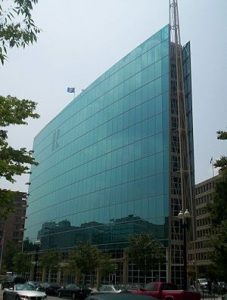
Realtors and their trade groups also possess a good deal of political influence. There are 2 million realtors in the United States. The National Association of Realtors is the nation’s largest trade group and displays its power with an impressive high rise headquarters in Washington, D.C.
Locally, some realtors not only have great political influence, they are also influential politicians and office holders. Many of Port Townsend’s problems have been caused by regulations and infrastructure strategies that favor higher end real estate to the detriment of work force housing, and blue-collar jobs. The net result biases the market toward higher real estate prices, which makes it easier for realtor/politicans to earn higher commissions with the same amount of effort.
Housing activists run the risk of losing what political clout they enjoy by suggesting that realtors should be paying more to address the crisis they have helped to create. Rather than take on realtors, activists often target property owners, a group lacking equivalent political organization and power.
One salutrary effect of taxing realtors would be motivating them to use their considerable influence to see that their tax dollars were applied with maximum cost-effectiveness. A sunset provision, say of ten years, would give realtors a target date for demanding real results so that the higher tax rate on their commissions need not be renewed.
Instead of settling for the few crumbs realtors cast their way, housing activists, perhaps gaining some insights and motivation from this series and articles we have linked, may realize that a more rational and more progressive source of funding should be seriously considered.
Related:
Tax Realtors to Fund Affordable Housing: A Proposal for Housing Activists
Realtors’ Anti-Competitive Practices Inflate Housing Costs
by Jim Scarantino | Feb 28, 2020 | General
After three years and a budget of $3.2 million, the Cherry Street Project welcomed its first tenants. Not in the 70-year old building contaminated with asbestos and lead. No, these tenants are living al fresco in a homeless encampment.
The photograph for this story was taken February 27, 2020. It shows a trashed out camp in the trees just below the empty building that was barged from Victoria, B.C. nearly three years ago. The grounds are now full of trash–a discarded tire, broken gate, plastic, construction waste–and showing signs of severe erosion. The encampment itself is a heap of soggy sleeping bags, discarded clothing, loose garbage, bags of unknown items, and what appeared to be drug paraphernalia. More than one person has set up camp in the heart of what was once a very nice neighborhood.
Property values of surrounding houses were no doubt already in decline due to the proximity of the unfinished building and the neglected lot. It is unlikely the building will ever be completed. Our last report detailed how Homeward Bound Community Land Trust, the group behind the building–which already has nearly $2.2 dollars of taxpayer commitment through a loan from the City of Port Townsend and the gift of $600,000 in land–is going to default when its first payment is due this summer. They have been burning through the grace period that was supposed to have seen completion and rental of the building so that the group could start earning income with which to pay back the taxpayers. We explained more than a year ago how the loan package was doomed to result in default. See our December 12, 2018 report, “The Tragedy of the Cherry Street Project.”
The last word from the group behind the project, as we reported previously, was they needed at least another million dollars to finish the project.
A letter to the Port Townsend and Jefferson County Leader from former Port Townsend City Councilor Bob Gray, published after our last report, explained that nothing is happening to move the project forward because neither Homeward Bound nor the city has the money the project needs so that it can be rehabilitated, brought up to code and rented.
Who is responsible for this mess? Who should be held accountable? On one side is Homeward Bound, the group that has received generous taxpayer funding but in three years has failed produce any shelter except for this homeless camp. Kate Dean, a Jefferson County Commissioner, has been deeply involved in Homeward Bound for the past three years and is one of their longest serving board members. On the city’s side, Mayor Michelle Sandoval was the most vocal supporter of the project at its start when she boasted it would be “a demonstration project.” Our upcoming report will focus on the role these two officials have played in this fisaco.
by Jim Scarantino | Feb 24, 2020 | Politics
We are not putting our survival in danger. Apocalyptic fear mongering about climate change has no basis in science. Those who fan the flames of climate panic are causing real harm.
So says award-winning, highly respected environmental champion Michael Shellenberger. He was named a Time magazine Hero of the Environment. He enjoys international respect. He’s had it with people who exploit climate fears to push political agendas.
He would no doubt roll his eyes were he to attend the meetings of the Jefferson County Board of Health. There you can hear all kinds of fantastical, speculative scenarios being used to lay the groundwork for declaring a “climate emergency. (We’ve written about this in two earlier reports, here and here.)
Everything from drowning communities, uncontrollable forest fires, Biblical natural disasters, lethal contagions, to murderous heat waves. When we will not be expiring from unrelenting heat we will be succumbing to killing cold, and we’ll be fighting massive flooding when we’re not dying from dehydration in permanent droughts–because “climate change” explains everything that can possibly go wrong. And if the dire predictions don’t come true, that is also due to “climate change.”
I put “climate change” in quotes not only to indicate sarcasm but because with all the fabulist, ever-changing climate scenarios there’s just no knowing what this term means any more.
Don’t forget we’ll also be starving to death, because “climate change” will destroy agriculture. The mass migration of “climate refugees” will topple nations and engulf the planet in war.
These images are from the January packet of information presented at the Board of Health’s meeting to justify declaring a “climate emergency.”
Back to Shellenberger.
He’s had it with this stuff. These apocalyptic scenarios are built on lies. Crop yields are not falling; we’re producing 25% more food than the world needs. What Africans need is better distribution and the same agricultural tools–tractors, fertilizers, pesticides and irrigation–the developed world enjoys.
We’re terrifying our kids, making them believe their lives are hopeless and doomed, when the planet does not face any existential threat.
We are seeing a huge decline in human deaths due to natural disasters, not an ever-rising body count caused by “climate change” This nonsense about “mass migration” and global population disruptions–well, it is nonsense and made up on the fly by opportunist climate panic exploiters.
Here is his article. Read it for yourself, and better understand why all this talk of a “climate emergency” is really mostly about politicians, their activist allies and bureaucrats grabbing more control over our lives and resources and not about anything based on solid data and science.
Michael Shelleberger: “Why Apocalyptic Claims About Climate Change Are Wrong,” Forbes, 11/25/2019.
by Jim Scarantino | Feb 21, 2020 | Politics
Forget facts. Forget failed predictions. Forget the best, most relevant science. Climate fear exploiters are set to ram through a “climate emergency declaration” that will give the Jefferson County Board of County Commissioners greater powers to dictate just about every aspect of life in our community, and make everything we do and need much more expensive.
The groundwork is being laid in the Board of Health, on which all county commissioners sit. The charge to declare a fake climate emergency is being spearheaded by County Commissioner Kate Dean and Hospital Commissioner Kees Kolff. Once the Board of Health declares the fake emergency the next step will be having the Board of County Commissioners implement what will no doubt be explained as “emergency measures” to address the fake crisis.
The fears behind any emergency declaration are baseless, a bit dishonest and grounded in something closer to fervent religious belief than an objective, dispassionate consideration of the best available science.
Instead of fear-mongering, these leaders should be celebrating good news on the climate. But it seems that good news is the last thing they want to hear.
Take for instance, the best, most relevant predictions on what would happen in Jefferson County if the theory of man-made catastrophic global warming proves true. (A big “if,” as the computer models predicting disaster by now have repeatedly been proven wrong. See further discussion below).
As we previously reported, the best, most relevant predictions for Jefferson County show we do not face a climate emergency. This conclusion comes from University of Washington atmospheric scientist Dr. Cliff Mass and his team of researchers. They have concluded that climate change poses “no existential threat” to Washington. Jefferson County and the Olympic Peninsula are actually in a “sweet spot” and will see no severe increases in temperatures, no droughts, no significantly increased fire risk and no heightened danger of extreme storms.
But, never mind that good news. It is “Polly Anna,” according to Kolff, who without any scientific foundation for his claim, insists we will see even worse temperature increases than predicted not only by Washington’s preeminent meteorologist, but also by the Intergovernmental Panel on Climate Change.
At the Heath Board meeting in January, Kolff claimed repeatedly that “99% of scientists” agree with his catastrophic climate predictions. “The consensus is almost unanimous,” he said. But, when faced with contradictory conclusions from Mass and his University of Washington researchers, Kolff breezily acknowledges that there exist “different schools of thought,” and promptly rejects Mass’s work out of hand.
So far nothing has been presented to the Board of Health that contradicts Dr. Mass’s predictions. Nothing has been presented to show that Mass has it wrong. Nothing from the IPCC or the University of Washington Climate Impacts Group addresses as specifically as Mass what is the most likely scenario for western Washington in the context of a climate change analysis.
Mass explains that, due to the cooling Pacific Ocean (underway for decades) temperatures in western Washington will continue to be moderate and will not experience sharp spikes. Kolff dismisses the best science available with the claim that “researchers have shown that people have already died in King County” due to increasing heat waves from climate change.
The fake climate change emergency declaration may rest on falsehoods such as this. King County in recent years has experienced but a single death somewhat connected to heat. That was in July 1999 when heat was ruled merely “a factor” in the death of a 66-year old man who already suffered from hypertensive and artherosclerotic heart disease. On that day, Seattle experienced its hottest day on record, 103 degrees, quite hot for the Pacific Northwest but hardly life-threatening.
Global warming cannot be blamed for a hot day in summer. The hottest day in June in Seattle history was in 1955, decades before global warming became a thing. The hottest August day was in 1960. Washington, particularly the eastern side of the state, suffered through prolonged heat waves in the 1930s, well before global CO2 levels were rising significantly.
That ten-year record for July has not been broken, even though climate fabulists tell us we are experiencing runaway temperature increases right now. Indeed, rather than seeing runaway high temperatures, the Puget Sound this past winter saw record low temperatures. February 2019 was the coldest on record since SeaTac airport started keeping track in 1945.
We have been warned that “snow would be a thing of the past.” Not long ago Gov. Jay Inslee predicted nearly snow-less winters as our state’s future. But February 2019 saw record-breaking snowfall and this year the mountains are again doing well, and winter is still with us.
Never mind facts. Never mind actual data. Kolff, Dean and others are going to get their climate emergency declaration regardless.
Surely news of record cold temperatures should come as relief if one is laying awake worrying we are all going to die from heat waves that will produce desert conditions in the Pac NW.
That last bit you may take as unfair. Kolff, Dean and allies certainly can’t be saying that the Olympic Peninsula will become another Sahara.
But they are. Here is an image from the information packet distributed at January’s Board of Health meeting. This was from a page depicting what climate change will do to our area:No serious scientist has predicted anything like this for the Pacific Northwest, let alone Jefferson County where the predictions are for continued moderate temperatures with increasing precipitation.
There is lots of good news on climate. None of it is welcome by activists and politicians who want to use the excuse of climate panic to boss other people around.
But good news does abound. Snow is not a thing of the past. We are not seeing the predicted global crop failures, endless droughts and famine.
In 1998 the Pentagon commissioned a study on the impact of global warming, examining what would happen if the doomsayers were right. That study, which the military kept secret because it likely would have caused panic, predicted that within twenty years millions–millions-of people would be killed in wars, famines and natural disasters caused by runaway global warming. The world was going to teeter at the edge of anarchy as civilization unraveled and people murdered each other for scarce food and water. A dramatic rise in sea level would drown cities, maybe entire countries. Britain would be trapped in a permanent Siberian winter because global warming was going to interfere with the Gulf Stream.
None of it happened. None. Great news, right?
Not if you want to terrify people so you can grab more power over their lives.
Here’s more good news: CO2 emissions have leveled off. Advanced economies are actually decreasing their CO2 emissions. At a time of historic economic growth, of record low unemployment for Blacks, Hispanics and women, with wages rising for those lowest on the income ladder and manufacturing expanding, when it has attained energy independence and leads the world in production of oil and gas, the United States also led the world in reducing CO2 emissions, cutting its output by 2.9%. Wow.
Arctic Sea ice has recovered, glaciers are growing in Greenland and polar bears are doing just fine. Crop yields are up, hurricanes are down, New York City is not underwater, and the Obamas, not fearing rising seas, bought a $15 million mansion on an island at sea level. The Maldives, we were once told, would be submerged by now due to rising seas driven by climate change. Instead, the government of those Indian Ocean islands has spent hundreds of millions of dollars building five new airports at existing sea level.
The sky is not falling. We do not face any climate crisis that would justify an emergency declaration. The only crisis confronting us is one of confidence in our local leaders.
by Jim Scarantino | Feb 18, 2020 | General
Realtors drive up housing prices. The restraints of trade ingrained into the way realtors work make the housing affordability crisis worse. Even the buyer’s agent is part of the problem, for they are incentivized to seek a higher sale price though that goes against the interest of their client.
But things are changing. The same lawyers who took on Big Tobacco are seeking to change the way realtors work. The Federal Trade Commission is pursuing anti-trust investigations of realtors. Technology is shaking up the industry and stripping away justification for high real estate commissions and disrupting realtor controls on markets and data.
Housing activists have been slow to focus their attention on the impact realtors have on housing affordability, even though the transaction costs realtors impose on the market are a huge part of the problem. In the face of resistance to increasing property and other taxes–both political and practical, as many homeowners face losing their homes under the pressure of rising taxes–activists would do well to turn their attention to a sector of the housing market that profits handsomely without contributing to building or maintaining housing.
In our first installment in of this series, we proposed that housing activists should seek an increase in the negligible taxes on broker commissions, a step that could generate sizable funds for affordable housing without adversely impacting housing affordability.
Rigged for Ever Higher Prices
Realtors on both sides of a transaction get paid from the standard 6% commission that comes out of the sale price. It is easy to see why the seller’s representative wants a higher price. The buyer’s representative faces the same incentive structure. Except for a bit of fleeting gratefulness from their client, the buyer’s agent really has no motivation to pursue lower priced properties. Splitting 6% on $600,000 puts more money in their pocket than a 6% commission on a $400,000 house.
Industry observers have noted that there is evidence that realtors representing buyers steer them away from “for sale by owner” listings, because those homes are often priced lower, and also don’t come with the prospect of a 6% commission to divide. Ever notice how a FSBO property goes unsold for a long time, but, when the owner throws in the towel and signs with a realtor it suddenly sells, even at a higher price? This could be the result of realtors steering their clients away from the FSBO. There has been some litigation around the country raising claims of boycotts by realtors of FSBO properties, a violation of anti-trust and fair trade laws.
The inherent conflict of interest in this arrangement–where the buyer’s representative personally does better if their client does worse–would seem to crumble under the pressures of a freely working marketplace. But realtors have not worked long and hard for a free market place. Their industry has repeatedly been described as “a cartel” that suppresses competition and imposes rules to exclude innovation that would undercut their control and profit margins.
Enter the plaintiffs’ lawyers.
Taking on the Realtors’ Cartel
A class action lawsuit was filed about a year ago against the National Association of Realtors claiming that NAR’s compensation policies, which require all member brokers demand blanket, non-negotiable buyer-side commission fees when listing a property on the Multiple Listing Service, constitute a violation of federal anti-trust laws. Sellers who listed their properties on 21 Multiple Listing Service around the country are plaintiffs, and more are being actively recruited. NAR has faced similar claims in the past, but none have been brought by such a well-funded, experienced and skilled team of attorneys. The lawyers bringing this lawsuit are among the nation’s most successful, and most feared class action lawyers. They have prevailed against Big Tobacco, Big Pharma and Big Tech. They now have the realtors’ cartel in their sights.
No plaintiff has yet emerged from Washington, though the same NAR policies challenged in the suit are in effect here. Anyone who has bought or sold a home in Jefferson County and used a realtor experienced the same fixed, mandatory commission arrangement.
Experts who have studied the lawsuit say it would revolutionize the American real estate market. Real estate commissions here are higher than in other countries where buyers and sellers each directly pay their own agent. A 2002 study by the International Real Estate Review, cited in the lawsuit, concluded that if buyers negotiated and directly paid their agent, listing commissions for seller’s agents would be closer to 3% than the standard 5-6%. Consumer advocates say we can do better than that, and expect to see commissions in the 1.5% range, what buyers and sellers pay “estate agents” in the United Kingdom and elsewhere.
Further, the suit claims that the NAR mandatory payment arrangement results in buyers agents steering their clients to higher priced, and exclusively MLS listed properties.
According to Michael Walsh, CEO at Exclusively Buyers, quoted in a Forbes report on the suit, a rare real estate firm that works only with homebuyers, “This is no garden variety lawsuit.”
“Potential damages are estimated at $54 billion,” Walsh said. “The plaintiffs allege collusion, hidden payments and anti-competitive practices designed to maintain real estate commissions at artificially high levels.”
You can learn more about the lawsuit at the website established by the plaintiffs’ lead counsel, Hagens Berman of Seattle. If you sold a home in the past five years and believe that you paid too much in commissions due to your realtors’ participation in the NAR cartel scheme, the attorneys may be interested in hearing from you. You can contact them at the link we just provided.
The Federal Government Combats The Realtors Cartel
If realtors had their way, we would not be shopping for homes on the internet. Some innovators who threated their monopoly faced threats of violence, as well as business-destroying harassment by state real estate commissions dominated by and existing for the benefit of influential realtor trade associations.
In 2005, the Department of Justice sued to overturn the NAR’s barricades to allowing the public to search properties on the Internet. That was the advent of websites such as Redfin and Zillow. After three years of litigation, the National Association of Realtors surrendered and entered into a ten-year consent decree. Now most buyers find their properties on-line, many before contacting a realtor. But, real estate commissions have barely budged. Consumer advocates continue to insist that realtors’ anti-competitive practices preserve the inflated commission structure and much more work needs to be done.
The Department of Justice has stepped into the pending class action challenging the NAR commission mandates. Their first step was to inform the court that the NAR had been misrepresenting the consent decree. The DOJ is now an interested party in that lawsuit as it moves forward.
At the same time, the Federal Trade Commission has opened its own investigation into anti-competitive practices by realtors and their trade associations, with an emphasis on broker compensation and restricted access to listings.
In June 2018 the DOJ and FTC held a joint workshop on anti-competitive practices and barriers to entry in the real estate market, as well as the impact of past regulatory actions. These efforts by the DOJ and FTC come as the Trump administration has recognized a national affordable housing crisis. Dr. Ben Carson, Secretary of the Department of Housing and Urban Development, has won bi-partisan support for his proposals for regulatory reform to promote affordable housing availability.
Technology is Disrupting the Realtor Cartel
Zillow and Redfin have already made a huge impact, and shown that sky-high commissions for every real estate transaction are not justified and needlessly raise the cost of housing. Much of the work done in the past by realtors is now being done for them. More and more consumers question whether realtors are worth the enormous commissions they can make for very little effort.
The multi-billion dollar real estate industry continues to draw innovation as entrepreneurs see an opportunity to profit by disrupting the cartel and outmoded ways of doing business. Space does not permit an in-depth look into all the innovation afoot, innovation that will dramatically reduce transaction costs. Home buyers will benefit from lower prices and rechanneling of their scarce dollars into housing instead of unnecessary and inflated commissions.
What Housing Activists Can Do
First, housing activists should recognize that transactions costs are a real problem in making housing less affordable. Inflated commissions are factored into the ultimate sale price. That is why FSBOs are frequently priced lower: the seller does not have to factor into her bottom line having to pay a realtor tens of thousands of dollars. (High closing costs and title insurance are another area deserving of activists’ attention).
Second, housing activists should work to end the conflict of interest present in the current mandatory NAR commission structure. They should press local government to outlaw the practice of sellers and buyers agents splitting the same pot of money. They should urge lawmakers to require that buyers agents be paid directly by buyers. Local laws can override the NAR’s anti-competitive rules.
Housing activists must pursue every opportunity to bring down housing costs. A market hobbled by decades of poor land use regulations, stifling building codes and exclusionary zoning laws–all of which have severely restricted the supply of affordable housing–needs lots of work before it is fixed. But in a crisis no opportunity for improvement must be ignored. Considering how much consumers hate paying sky-high real estate commissions, an effort to correct the anti-competitive forces behind those commissions might find a more receptive public than another call to raise property taxes.
Realtors Are Feeling the Heat
Facing a very serious class action that has been described as a “nuclear bomb” on the industry, and federal anti-trust inquiries, the realtors industry has announced that affordable housing has become “a top advocacy priority for 2020.” The National Association of Realtors is the nation’s largest trade association, representing more than 1.4 million agents and brokers. In a policy forum held this month at its imperial Washington, D.C. offices, the NAR announced it is getting behind various regulatory reforms to increase the stock of affordable housing and make home ownership more accessible at lower income levels. Echoing Secretary Carson, they have called for reforms on mortgage lending, zoning, and local development plans.
One idea they somehow failed to discuss: bringing down the cost of buying and selling by reforming realtors’ anti-competitive, conflict-laden commission structure.
National Association of Realtors, national HQ
In our next installment, we return to the proposal that realtors’ commission should be taxed at a higher rate to raise funds for affordable housing projects.

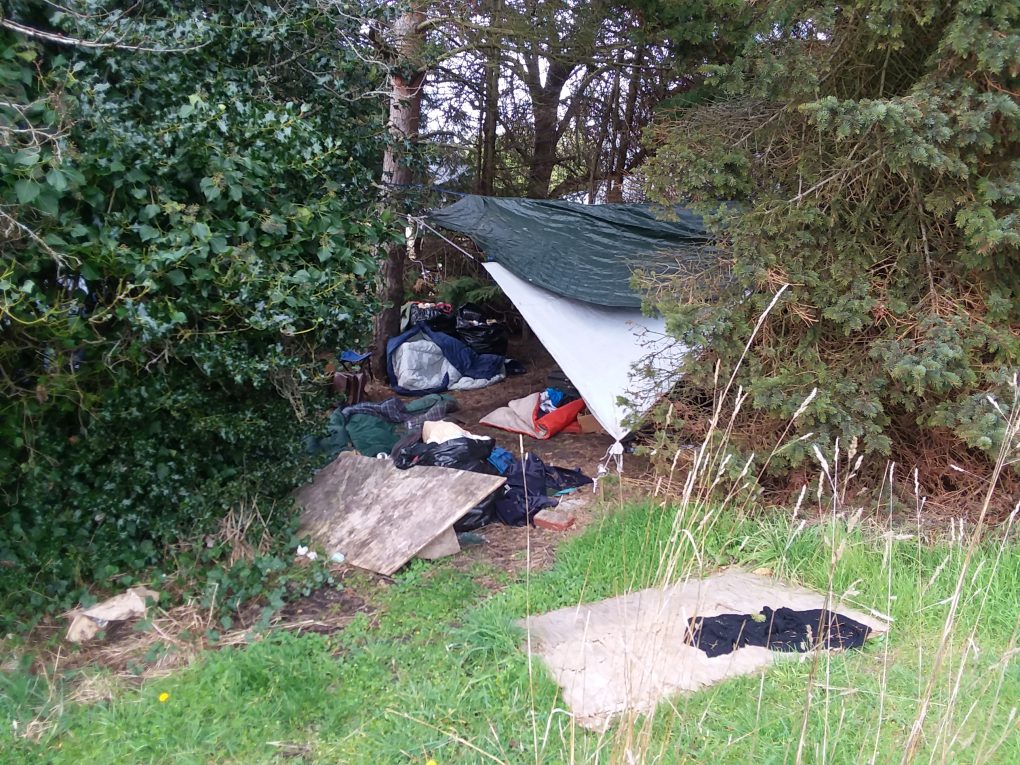
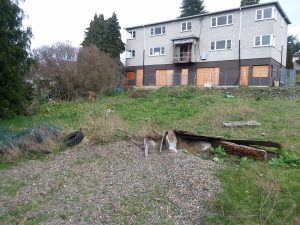 now full of trash–a discarded tire, broken gate, plastic, construction waste–and showing signs of severe erosion. The encampment itself is a heap of soggy sleeping bags, discarded clothing, loose garbage, bags of unknown items, and what appeared to be drug paraphernalia. More than one person has set up camp in the heart of what was once a very nice neighborhood.




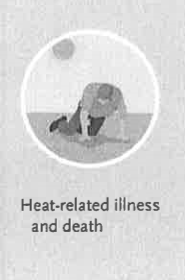 No serious scientist has predicted anything like this for the Pacific Northwest, let alone Jefferson County where the predictions are for continued moderate temperatures with increasing precipitation.